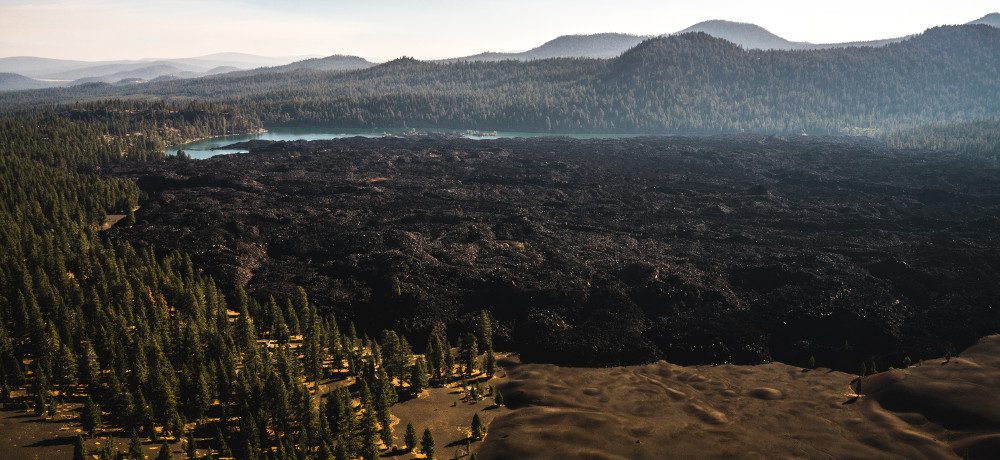
One of the best hiking trips I’ve ever done. This is mainly due to the exceptionally spectacular scenery (Lassen Peak, Cinder Cone, Painted Dunes, Fantastic Lava Beds, clear, blue alpine lakes, rich Sierra Nevada forest, …). Adding to this is that fact that Lassen Volcanic NP gets relatively few visitors (relatively for a national park, mind you; most people visit the better known neighbours: Mt. Shasta, Yosemite NP, Lake Tahoe), so you will find solitude in this wilderness. It’s not a super strenuous hike, but make no mistake: you are at altitude here and you will do 13-14 miles each day and there will be a few hills to get over, not least of which is the ascent to Cinder cone which, though short, is very steep and on loose gravel / cinders and thus quite a bit of a work-out. The most spectacular sights are covered on the second day (the area around Cinder Cone is just magical), so plan extra time for this section so that you can stop here for a bit and take it all in.
How long?
2days, 1 night
How many miles?
27 miles / 43km
How?
Hiking + wilderness / backcountry camping
Map required, compass optional (i.e. well maintained & sign-posted trails & prominent features all around; still I would carry a compass just in case)
Maps?
National Geographic Trails Illustrated Map #268
Itinerary:
Summit Lake trailhead -> Corral Meadow -> Grassy Swale -> Horseshoe Lake -> Snag Lake -> Cinder Cone -> Twin Lakes -> Echo Lake -> Summit Lake trailhead
On top of paying your park admission fee, you will need a backcountry permit for any overnight stay in the Lassen Volcanic wilderness. These are free and there are no quotas, so you don’t have to get them in advance. Just turn up at a ranger station / visitor center (there is one at either entrance of the park on highway 89) and get yours. There is also a ranger station at Summit Lake, but, to my knowledge, they do not issue permits there. You will also need a bear canister for your food.
Leg 1: Summit Lake -> Horseshoe Lake -> Snag Lake
It’s always embarrassing when you get lost right at the start of a hike, particularly if there are still buildings and campgrounds nearby. But that’s what almost happened to me. You need to start at the Summit Lake trailhead, which is a bit north along route 89 from Summit Lake South and North campgrounds. Then the first two-thirds of a mile takes you around both campgrounds and off on the trail to Corral Meadow. The trail to Echo Lake (where you’ll come back from the next day) is impossible to miss and sign-posted. However at Summit Lake South campground there are so many unofficial tracks (both human and animal I would guess) that go off into the forest, that it is not quite clear which is the track you need to take. Anyway, I did about 200-300 meters on the wrong side of Summit Creek, then quickly noticed my mistake after consulting the map and bushwhacked my way back onto the correct trail. From that point on, route finding is easy and every trail crossing is clearly sign-posted.
The first leg of the loop is mostly through dense forest, which occasionally opens up to reveal a meadow or a lake. There are plenty of water sources along the route, so you do not need to carry much onto the hike with you (do use a filter though).
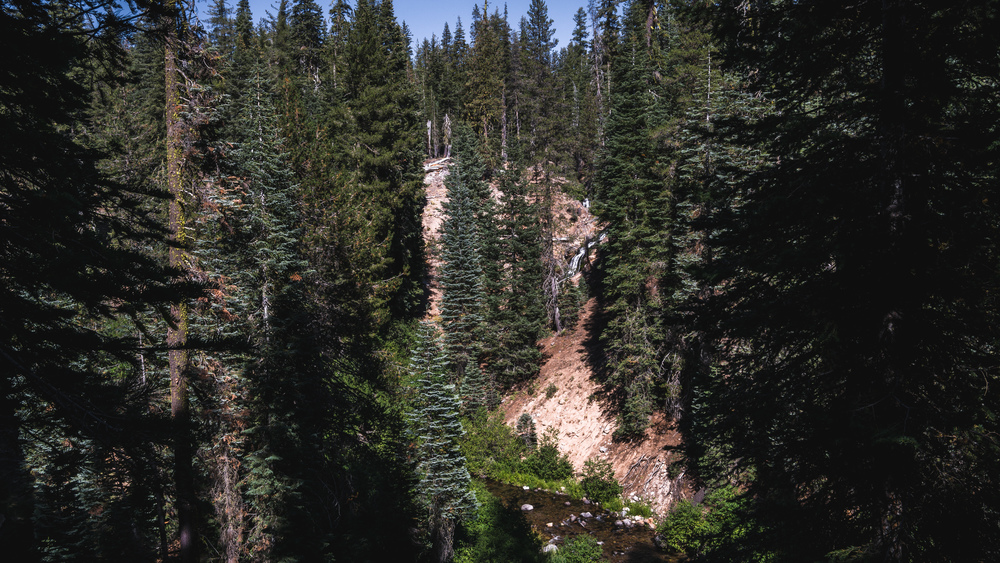
The first few miles are mostly downhill as you follow along Summit Creek. Just before you get onto the Pacific Crest Trail (PCT), look to your left, on the far side of the narrow valley that Summit Creek has carved and there should be a nice waterfall not indicated on the map. Right after the junction with the PCT, you will need to ford Summit Creek (yes you will get your feet wet, but, at least in mid-September, it is not a dangerous crossing: the water is fairly shallow and not too fast flowing) and head north. Near the trail junction should be Corral Meadow, but I did not see it, so I guess it is a bit further south on the PCT. After the creek fording there is a bit of an uphill section before you get to Grassy Swale, which is boardwalked in places. Continue along and watch out for deer, wood peckers and the occasional bird of prey. At the next junction, you need to take the much smaller right fork, sign-posted for Horseshoe Lake. Continue along the trail until you get to the Lake. If you set off in the early afternoon like me you should get here in late afternoon with the sun’s reflections in the water blinding you when you look across the water from the western shore. Here will be another crossing and you need to head north on Grassy creek Trail towards Snag Lake. When I did this trip, there were many deer in the grass along the creek, so watch out for them. There will be two more crossings, and each time you just continue straight, due north. If you don’t want to get water from the standing waters of Snag Lake, then Grassy Creek is your last chance to fill up on water.
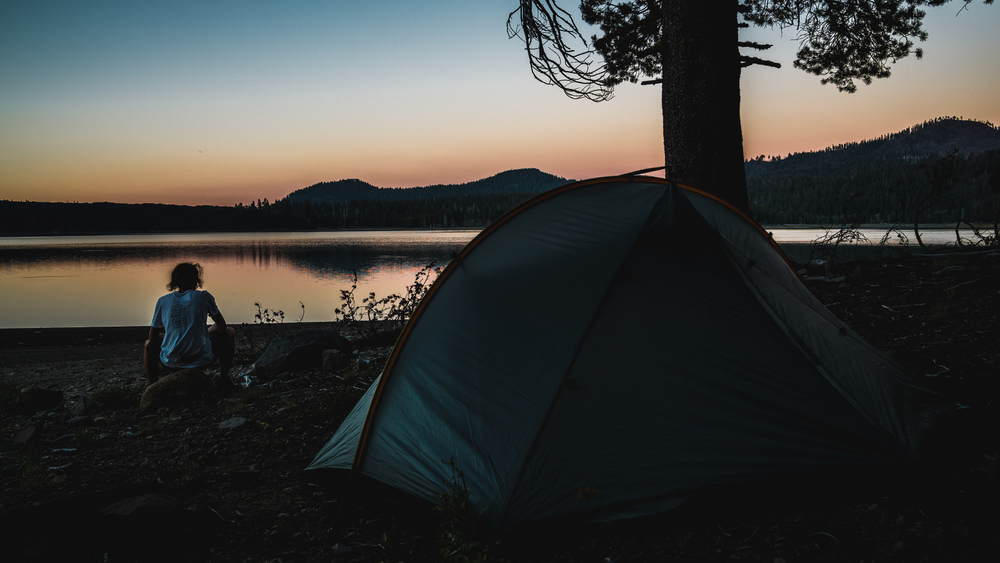
Finally you reach Snag Lake. If you are doing this on a weekend there will be other hikers camping along the lake (when I did the hike, there were 3 groups camped along the eastern edge of the lake, and the next morning I spotted two more tents on the small beach at the northeastern end), so you might have to walk a bit along the lake to find a secluded spot all for yourself. I found a beautiful one on the small peninsula at the southeastern end of the lake.
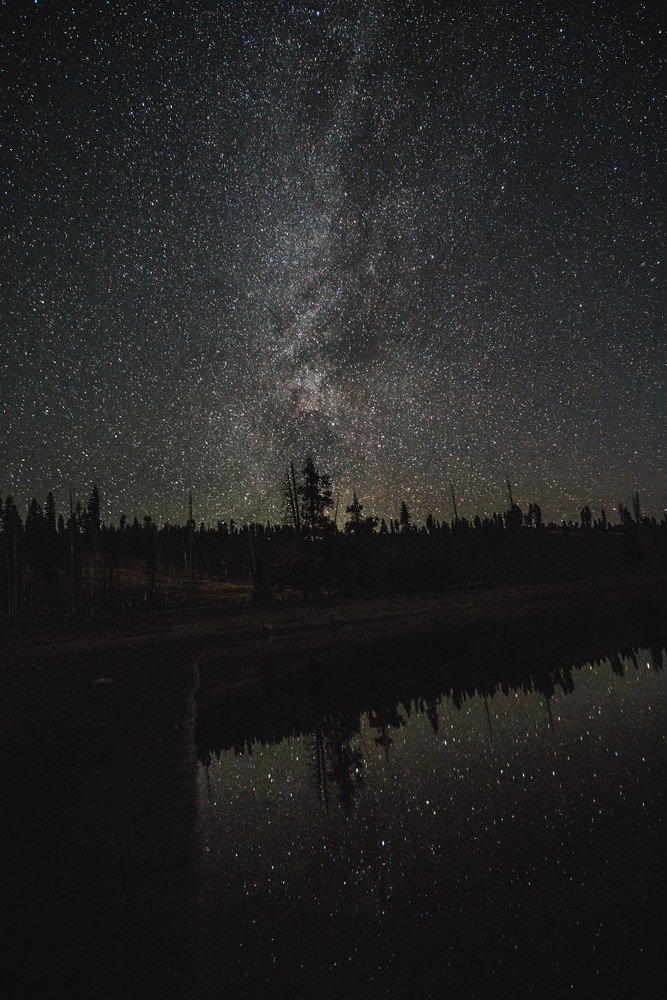
The lake is quiet and a great place to be camping to watch the stars later in the night. Before the sun sets, be sure to check what animal tracks are near your camp site, just so you don’t get surprised at night. There had been some deer tracks near the water, but not where I had pitched my tent. Still, ten minutes or so after switching off my camping light, there was a dozen deer that surrounded my tent as they walked out of the forest to the water’s edge.
Legs 2: Snag Lake -> Cinder Cone -> Summit Lake
Yesterday’s hike was nice, today’s hike will be spectacular, take my word. There will be, however, far fewer water sources, with no water between Snag Lake and Rainbow Lake, so be sure to fill your bottle at Snag Lake before setting off.
Depending where you set up camp along Snag Lake, you’ll have a 2-3 mile hike to Cinder Cone and you want to be there shortly after sunrise (the light will be best and there won’t be many, if any, people that hiked from Butte Lake campground yet), so get up early, have a quick breakfast, pack your tent and set off.
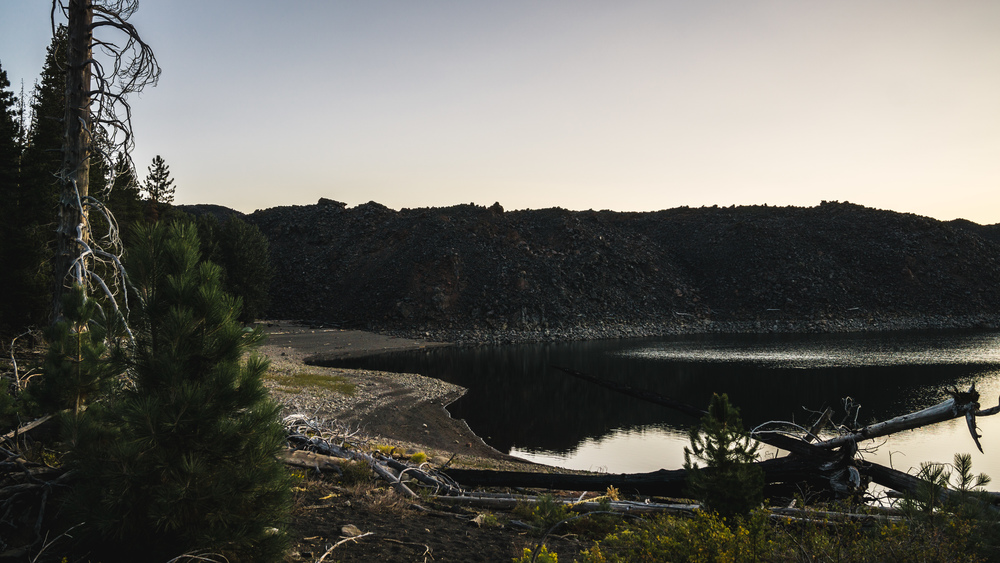
As you reach the north end of Snag Lake you get a first taste of the spectacular geological features that are to come: there is a sheer wall of black rocks, a good ten to twenty meters high, that forms the northern boundary of the lake. This is the southern end of the Fantastic Lava Beds. In fact it is a natural dam wall and the reason why Snag Lake exists. Cinder Cone, which is a, wait for it …, cinder volcano, erupted twice in the mid 17th century (hence quite recently by geological standards) and spew out ash and lava which then cooled to form what is now called the Fantastic Lava Beds. Those lava flows dammed various creeks, thereby creating Snag Lake to the south and Butte Lake to the north. In fact Snag Lake still feeds Butte Lake by water that seeps through the lava rocks. The lava beds are a truly stunning sight, and you will get a good view of them from the top of Cinder Cone (see the cover image for this post, which shows Butte Lake and the northern end of the lava beds). In fact the striking appearance of the lava beds meant that people in the 1870s initially thought that they were formed only a few decades ago. You can also clearly see the lava beds from aerial and satellite images on Google Maps / Earth or Bing Maps etc.
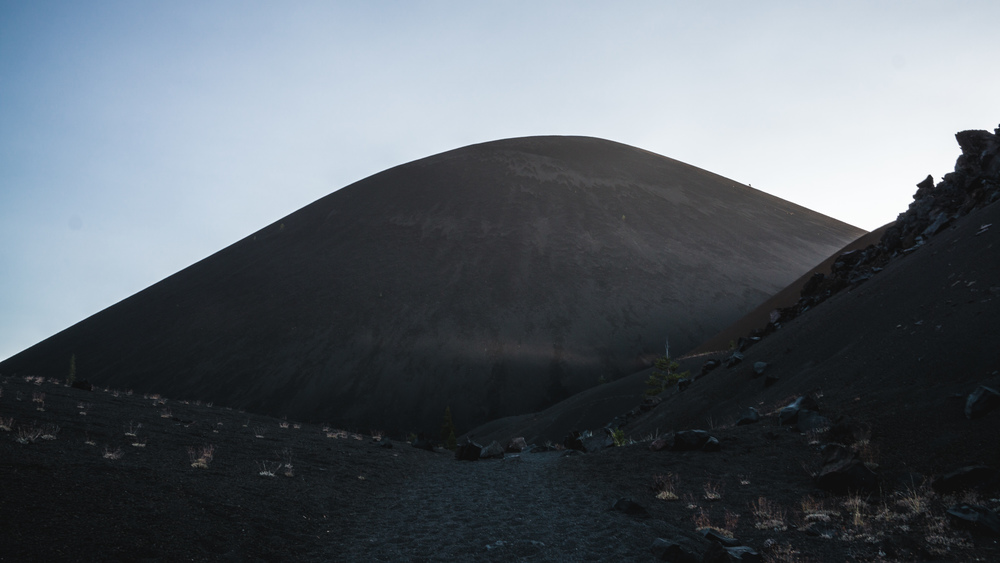
Anyway, after Snag Lake, the trail continues pretty much all along the edge of the lava beds until you get to Cinder Cone. It’s an epic sight, and with all those black and red cinders you might as well be on Mars were it not for the surrounding vegetation.
The ascent, especially with your hiking backpack, is tough. It is very steep and the ground is quite loose, so it is difficult going. The good point about going up from the southern side is that you can just stop now and again, turn around and enjoy a marvelous, incredible view: Lassen Peak in the distance and the Painted Dunes nearby.
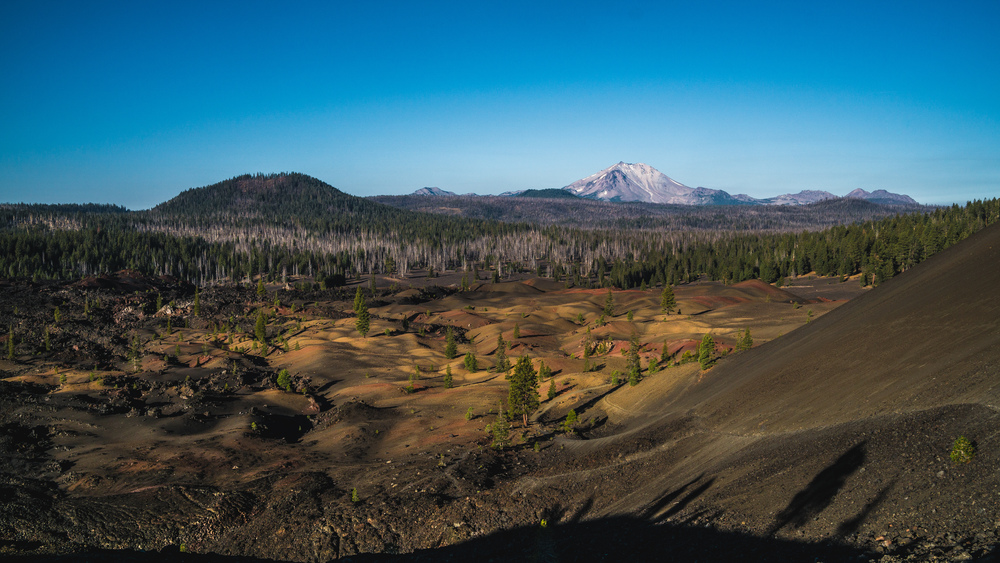
The eccentric colours of the Painted Dunes are caused by volcanic ash that oxidated as it fell on the still hot lava flows. Also if you look carefully, you can see red rocks in between the Painted Dunes and the lava flows to the south of Cinder Cone: these are the remnants of an earlier cinder cone, or scoria cone, that was destroyed by the later lava flows. In fact the Painted Dunes are sitting on lava flows from this earlier cone, with the ash of more recent flows sitting on top. The Fantastic Lava Beds, as well as the Painted Dunes, are all deposits from several eruptions of the two scoria volcanoes.
Anyway, as you struggle your way up Cinder Cone, you slowly get to appreciate the full scale of the Fantastic Lava Beds — it’s a huge area, stretching completely from Cinder Cone to Snag Lake and from the to Butte Lake and then back to Cinder Cone. Lassen Peak in the background adds even more drama to this incredible natural scenery.
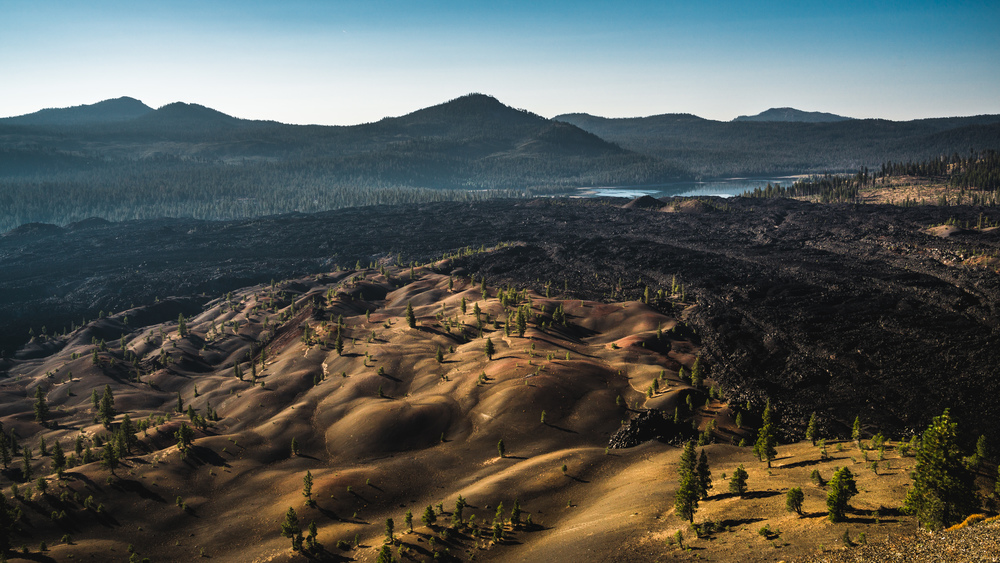
Once you are on top, you can actually walk right down into the crater (though, mind you, you have to hike back up out of there), you can walk around the inner rim, or along the outer rim from where you get dramatic views in every direction. The landscape here is so gorgeous, you just want to run around in excitement like a child, stop, take in the view, scream out in joy or awe, run around some more, stop again, scream again etc. Thankfully the air is thin here and you spent so much effort to get up here, that you don’t actually do this, and instead just walk around, murmuring ‘wow’ now and again. If the ascent hasn’t done it, the view here will take your breath away (see again the cover image for this post).
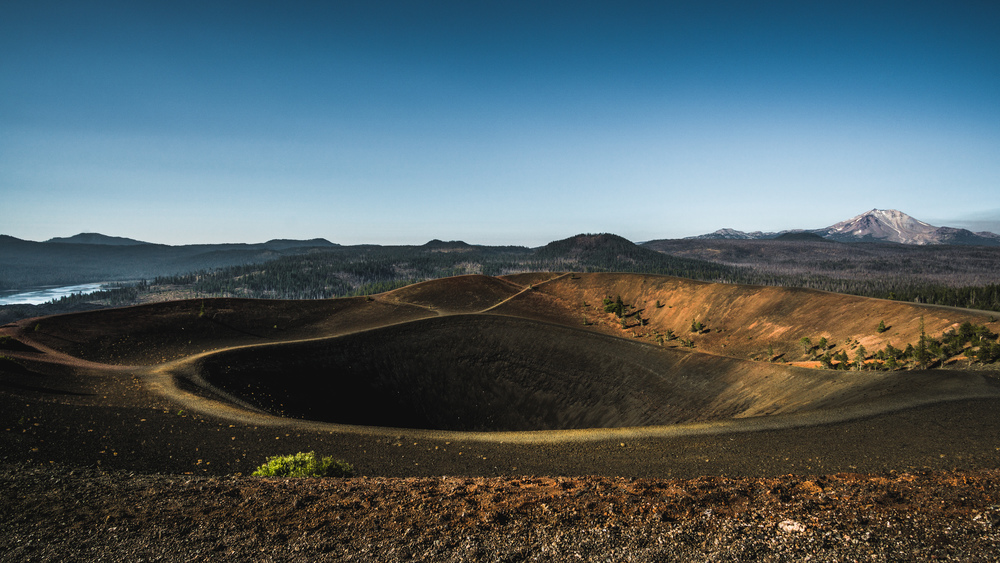
Needless to say, with such beautiful surroundings, it is a great idea to take that apple out of your bag and have a bit of a snack. Stay as long as you want at Cinder Cone — it is by far the highlight of the hike. But then, when you are done, go down the north side, then take veer almost 180 degrees back onto the bypass trail and head back down along Cinder Cone and the lava beds. Originally I had planned to fork off right onto the Nobles Emigrant Trail at the first crossing you get to, then take the PCT or the Cluster Lake Trail to get back to Summit Lake. However the ranger at the wilderness office had advised me that this area has been much ravaged by the 2012 Cluster Fire and so would not be that great to hike through. Hence I opted to only fork off to the right at the junction with the trail leading to Rainbow Lake. The trail will take you uphill for a bit and there won’t be much shade here (most trees around here are dead too), so since it is now getting to be late morning, you will get hot and it will feel to be a tougher uphill hike as it really is. Anyway, soon enough the trail goes back down again to Rainbow Lake.
From here, you just string up the lakes to get back to the trailhead: Lower Twin Lake, Upper Twin Lake, Echo Lake and finally Summit Lake. All of these lakes have clear, blue, refreshing waters, so really do take the chance and go for a quick swim in one of them (I took a dip in Lower Twin Lake) — this will cool you down (even in late summer, early autumn the water will be cold, though you will get used to it quickly) and nicely breaks up the hike for a bit. Do watch out for bears though, certainly leave no food outside, as bears tend to be active around these lakes.
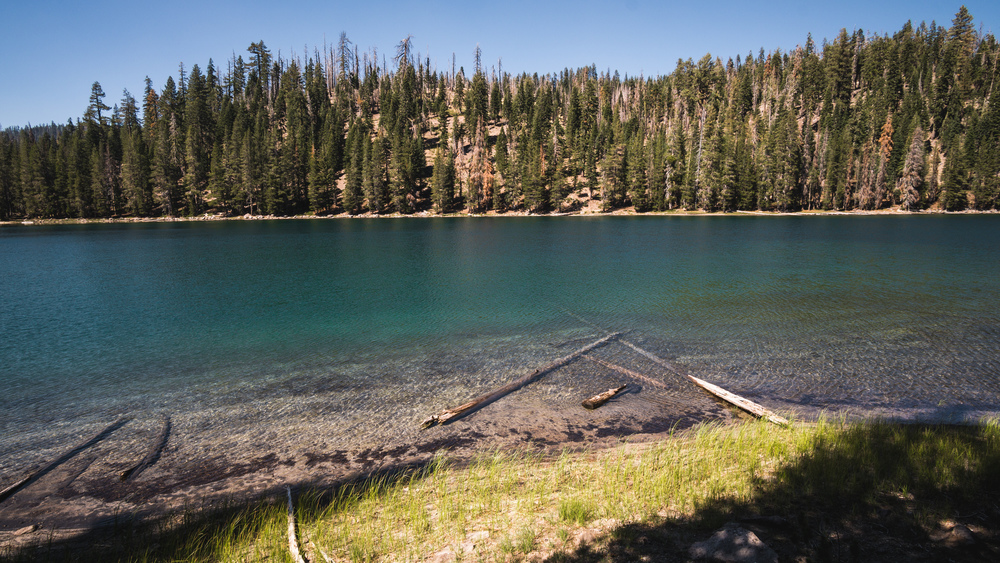
After Echo Lake, you will have to do a last ascent to a pleasant plateau with good views towards Lassen Peak before you head back down to Summit Lake. If you enjoyed this hike as much, you will pretty much be the happy, smiling hiker stepping off the trail onto the parking lot at the trailhead.
Data files (click on the links, then download whatever format you prefer from the gpsies site):
Leg 1: http://www.gpsies.com/map.do?fileId=xpbkcrwutijpxeae
Leg 2: http://www.gpsies.com/map.do?fileId=qnlebscbljhfenlu
Complete route: http://www.gpsies.com/map.do?fileId=waepujmeqbshyzcc
Comments