How long?
2 days, 1 night (though to be fair you have to spend a first half night driving up from Las Vegas…)
How many miles?
540 miles / 870 km (of which ~18 miles are hiking not driving)
How?
Road trip + short wilderness backpacking trip
Map required for driving optional for hiking, compass optional (i.e. you can clearly see where you have to hike to in Panamint Valley)
Maps?
National Geographic Trails Illustrated Map #221
Itinerary:
Las Vegas -> Dante’s View -> Zabriskie Point -> Badwater Basin -> Artist’s Palette -> Panamint Valley -> Father Crowley Point -> Owens Lake -> Rhyolite -> Las Vegas
Leg 1: Las Vegas -> Dante’s View -> Zabrisikie Point -> Badwater Basin -> Artist’s Palette -> Panamint Valley
You want to go to Death Valley to seek solitude? Well, the best airport to get there is Las Vegas, so you’ll have first to escape from the weird concentration of human life and folly that is Las Vegas. Now, I had never been to Sin City, so I was looking forward to seeing all those kitschy hotels-cum-casinos that I only knew from films. Once you got your rental car, you can either speed out of Las Vegas on interstate 15 or you drive leisurely (even at night there seems to be a lot of traffic) along the Vegas Strip before heading onto route 95. I had arrived at 11pm and did not plan to be in Death Valley before 5 or 6am, so I had plenty of time and did the latter.
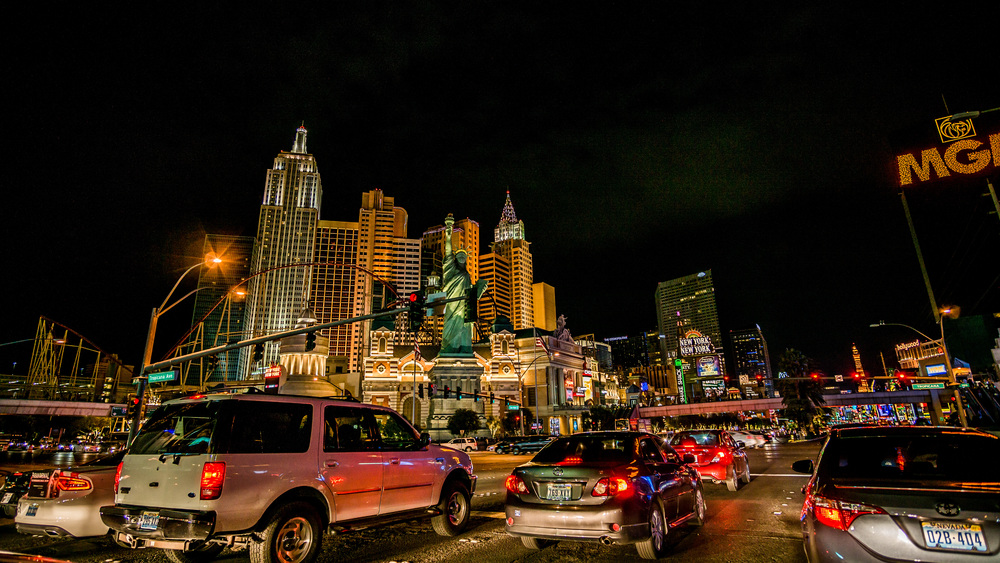
Now if you arrive like me at 11pm or midnight, you have plenty of time to drive up to Death Valley. I caught a bit of sleep on the flight over from NYC, but still, your internal clock will be a bit upset and you will get tired behind the wheel. So you can either drive to a motel along the way or, if you are a cheapskate like me, you can head to the Amargosa Valley rest area at the junction of routes 95 and 373. From Las Vegas it will take you about an hour and a half or so to drive up to here and it will be just over an hour from here to Dante’s View, where you want to be for sunrise. So you will be able to take a nap for a couple of hours in your car (or motel if you went with that option). Hell, at the rest area there’s even a weird Alien / Area 51 store which runs some kind of a truckers’ brothel on the side. The truckers that came out of there looked like you can spend a good few hours in there too! Anyway I also stopped on the way up from Vegas at a superstore to buy a few gallons of water and some food for the entire trip, so you should also calculate some time to do that.
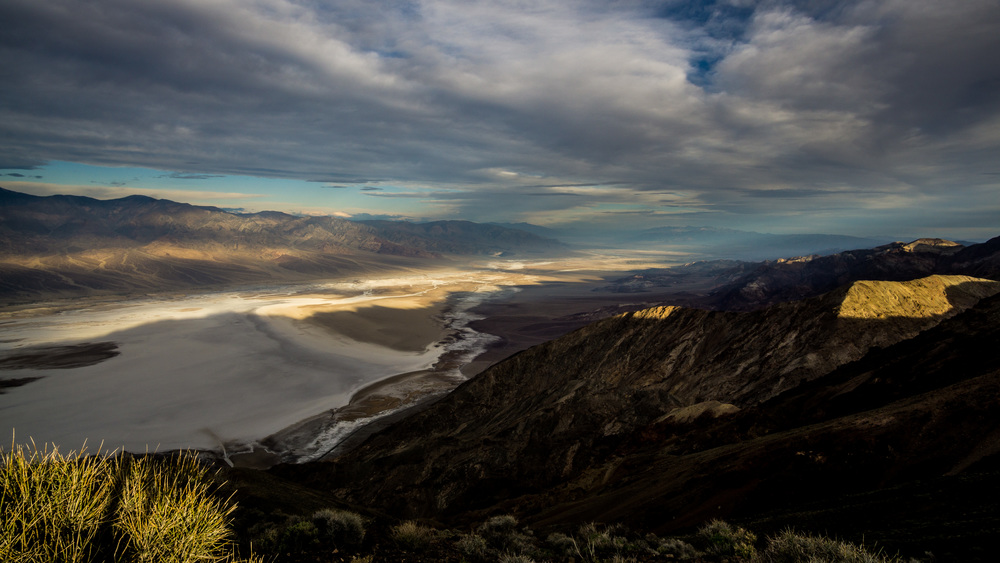
Now, depending on what time of the year you do this trip, you want to leave between 4 and 5am from the Amargosa Valley rest area so as to arrive on top of Dante’s View for sunrise or shortly thereafter. If you don’t have an America The Beautiful multi agency pass, don’t forget to stop at the park entrance to pay your fee at the machine. Dante’s View is the best place to start your trip in Death Valley: you get a full (on clear days) overview of the entire valley from north to south. Badwater Basin lies pretty much straight ahead at your feet and you can clearly see the expanse of the salt flats. Telescope Peak (the highest point in the park) is just opposite across the valley. As the sun rises, the valley slowly catches its rays and lights up. You can hike for a bit along the ridge — a great way to stretch your legs after the drive up here.
Once you filled up on the georgeous view, get back in the car and take the short drive down the mountain and to Zabriskie Point. If you’ve seen Antonioni’s film you probably want to strip naked and make love with someone, anyone, but it’s not a great idea: you’ll probably get arrested. Zabriskie Point is probably THE most iconic scenery of Death Valley. Most people will just walk up the viewpoint from the car park and snap a few pictures (like the feature image of this post), but I highly recommend you take a short hike (or do the full loop; about 6-7 miles) in the badlands. You’ll get up close to Manly Peak and be quite on your own. Considering how much other stuff I wanted to cram into the day, I only did a short 2 miles loop rather than the full hike.
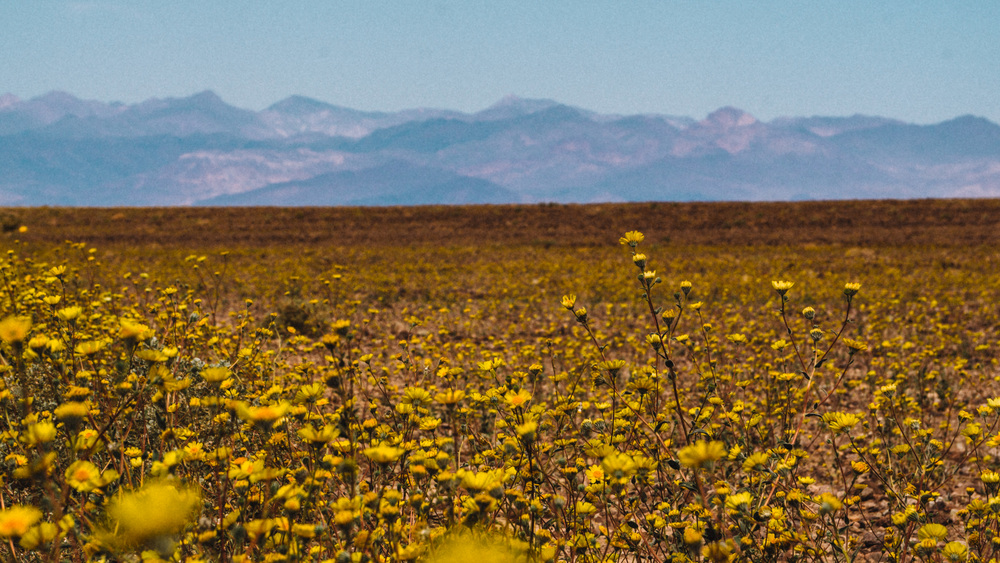
Next up: drive to Badwater Basin, passing through Furnace Creek, where you can get some food, drinks or gas if you are in for any of these. At Furnace Creek, take a left turn onto Badwater Road and from here it’s a magnificent drive down to Badwater Basin. If you do this in late winter and there was a lot of rain in the weeks / months prior, you can get lucky and witness a superbloom: the valley just turns yellow with wild flowers. This was the case in March 2016 and it was stunning!
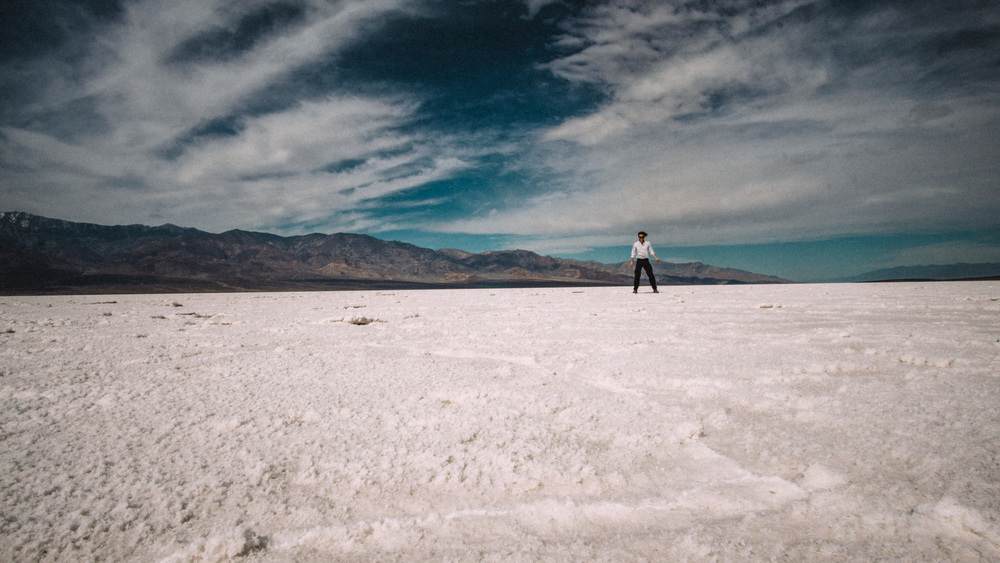
When you get to Badwater Basin, you will probably struggle a bit to find a parking spot (I just parked a bit further down the road), but do get out of your car and walk out onto the salt flats — you will feel as if on a different planet. If you do this trip in summer, do not attempt this without sunscreen, sunglasses, a hat and plenty of water or you’ll be in trouble in no time. Even in early March it was pretty hot out here and blindingly bright as the salt reflects most of the sunlight.
When you have had enough, walk back to your car, and drive back in direction of Furnace Creek. However before you get all the way up there, be sure to take a right turn signposted for Artist’s Palette. It a nice drive through rolling badlands, and mid-way through you get to the namesake badlands with all their splendid colours. You can take a short walk / hike here too if you are still good in time.
After this, drive back up to the junction with route 190 at Furnace Creek. Go left now, driving north past Furnace Creek, then west through Stovepipe Wells. Backcountry permits are optional in Death Valley and you can backpack pretty much anywhere (though no camping on the lower Death Valley floor), but it is a very good idea to get one in case of emergency (the rangers will know where you planned to go). You can get this at either the visitor center at Furnace Creek or the ranger station at Stovepipe Wells.
Continue along route 190, crossing the Panamint range into Panamint Valley. In the valley there will be a road going left / south to Trona and beyond. Before this, a little under 2 miles up the road, is a small dirt road going off to your right. Take this road. If you want a longer hike (what I did), then just park your car on the side of this dirt road and set off for the Dunes at the end of the valley (7-8 miles one-way). If you want a shorter hike, then continue the dirt road until its end, and from there it’s a shorter 3 mile hike to the dunes.
Overnight hike: Panamint Dunes
My original plan had been to drive up to Ubuhebe Crater, then take the long dirt road to the Racetrack and spend the night there. However there were several reasons why I did not do this: i) it is a long drive up there and a longer drive on the dirt road down to the Racetrack, ii) you cannot camp next to the road anywhere and you should camp on a small campground south of the Racetrack (or you need to park you car along the road and hike out for at least a mile), iii) I was on my own in a small economy car, so if I had gotten more than one puncture along the dirt road or stuck in loose sand (a real risk from what I’ve read) I would have been in serious trouble. So if there are a few of you, you have a high-clearance 4×4 car and you have a bit more time at your disposal, then I would still urge you to do this: the sliding rocks of the Racetrack are another key Death Valley sight.
My back up plan was to hike to the Panamint Dunes: an easy hike: flat and impossible to get lost as you see where you need to go all the way. That said, it’s not the most exciting hike, since the scenery never really changes. You are also quite exposed to the elements, so if the sun is fierce or there is a sandstorm in Panamint Valley — don’t do it. Panamint Valley is also a training area for the local airforce bases, so if you are seeking solitude, the noise of jets flying overhead might not be what you are looking for. That said, watching their crazy weaponised ballet in the sky is pretty spectacular in itself.
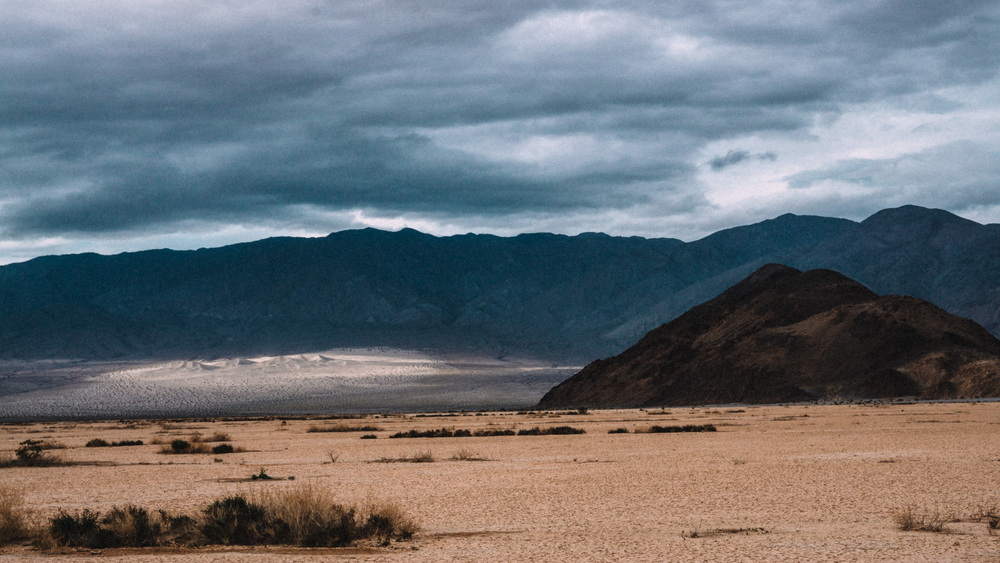
Now I have to admit, camping at the foot of the Panamint Dunes was not the brightest idea I’ve ever had. It was quite windy (I think it is always windy in Panamint Valley), and even though I pitched my tent somewhat sheltered by a big bush, I did not spend a quiet night and feared constantly that my tent would be blown away. Also the sand gets blown up to the norther end of the valley (that’s why the dunes are there in the first place!) and it will get blown under your tent’s raincover and through your mosquito net. In fact the mosquito net will filter the sand so that all your stuff (including yourself) gets covered in very fine sand.
The upshot was, that in the morning I was up early, and had the Panamint Dunes all to myself. There were a few storm clouds from the windy night that were just beginning to disperse and when the sunlight hit the dunes, it was just magical.
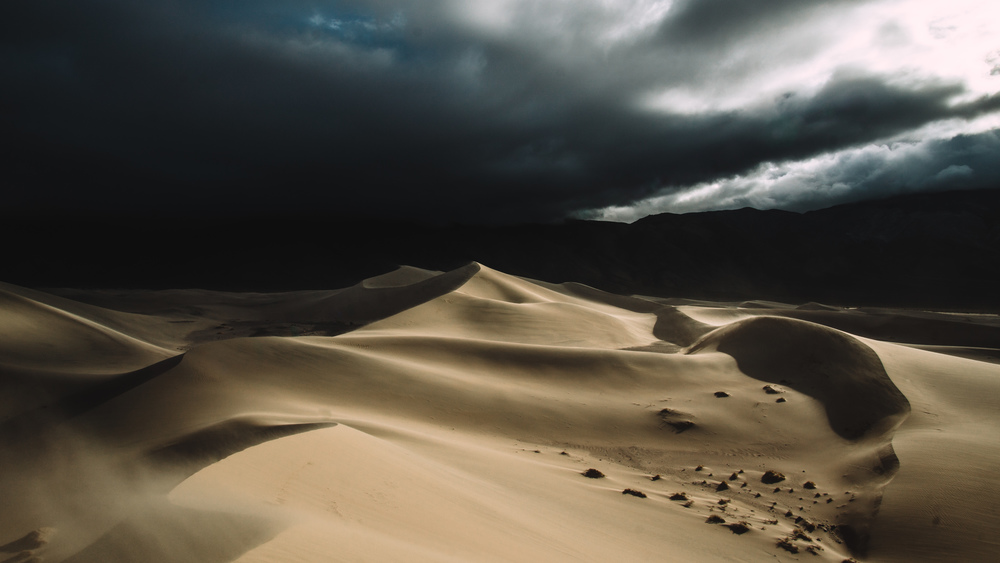
I packed up my tent and stuff before setting out into the dunes and I left my backpack near a bush so that I would not have to carry all that stuff up onto the dunes. If you do this, take good note of your surroundings as finding you backpack later can be much harder than you think.
Once you have had enough running up and down the dunes (they are really high, so be aware of this if you’ve got vertigo), get your backpack and hike back out the way you came.
Leg 2: Panamint Valley -> Father Crowley Point -> Owens Lake -> Rhyolite -> Las Vegas
OK so day 2 in the desert. You will probably spend most of the morning in the dunes and hiking back to the car (unless you did the short option). You will also need to get back to Vegas for your flight back in the evening. So not that much time left, but still plenty enough to see a few things. First off, overlooking the valley you just spent the night in is Father Crawley Point. To get there, simply continue along route 190 which snakes uphill out of the valley. The first exit on your right, sign-posted Father Crowley Point, is the one you want to take. You can either leave your car at the main parking lot, or drive the final mile on the dirt track. I hiked, but it’s up to you. The turn-around point of the dirt road makes for quite a fine view over Panamint Valley with good views over the valley floor and Telescope Peak on the far end.
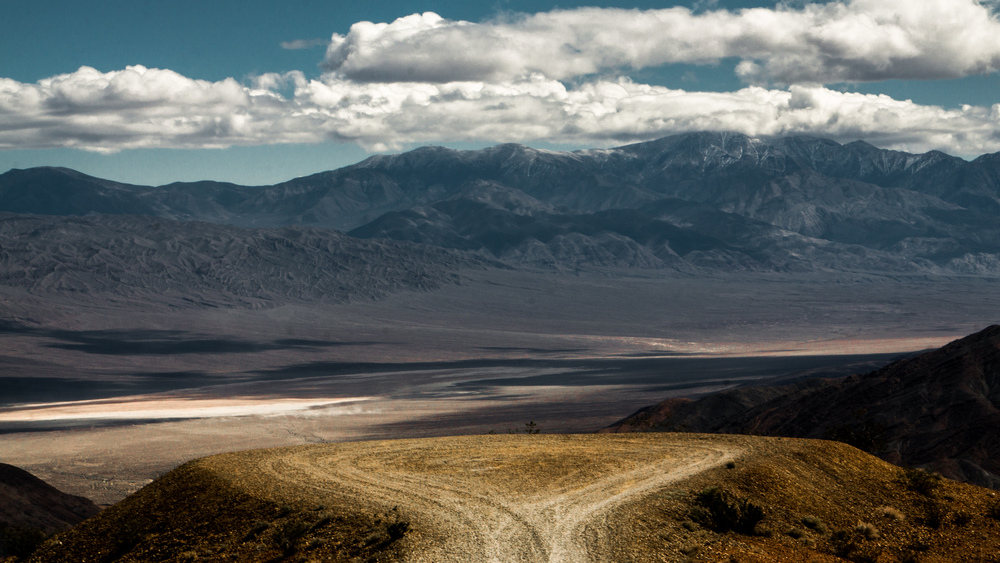
After this, get back into your car and continue along 190. You will reach a plateau and, if you have never seen them before, watch out for the Joshua trees on either side of the road. As you continue along 190, get ready to be blown away by the sight of the eastern Sierra Nevada as the road bends downhill into Owens Valley. If you are like me, you will have to stop several times along the road, get out of the car and just scream in excitement at this sight.
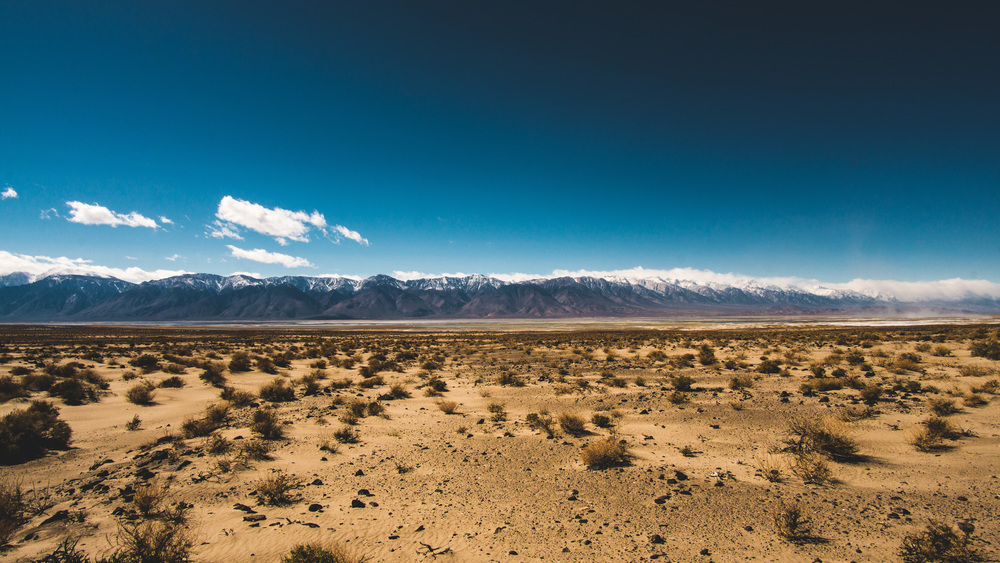
Finally, as the road reaches the valley you will come to a junction: route 190 veers left / southeast to Olancha whereas straight ahead (northeast) starts route 136. At this junction is a handy little parking lot, where you can park your car and walk a bit towards Owens Lake. There is also an informative panel with a bit of history about Owens Lake. Now this is a mostly dry lake, but there is still some water. The reason is simple: you are standing in front of the single biggest source of dust pollution in California and the state decided it was a good idea to divert some water here to keep the worst of it at bay. Owens Lake used to hold much more water in the past but fell victim to the Californians thirst for water and much of the river feeding it was diverted into the Los Angeles Aqueduct. Flanked by the glorious Sierra Nevada mountains, the place does not look that bad, but sure enough when the wind picks up you can see the sand flying around. In fact you can see it being kicked up on the picture above. It’s a lovely spot for a picnic and the road down to Olancha is pure American road trip scenery, so enjoy the view.
Finally get back into your car and head back towards Death Valley: after all you need to get back to Las Vegas. You can take the longer way and after you go past the Mesquite Sand Dunes, take a left, and then immediately a right to get onto the Daylight Pass Road. It is a glorious exit from Death Valley, so do stop at the top for a farewell view over the valley.
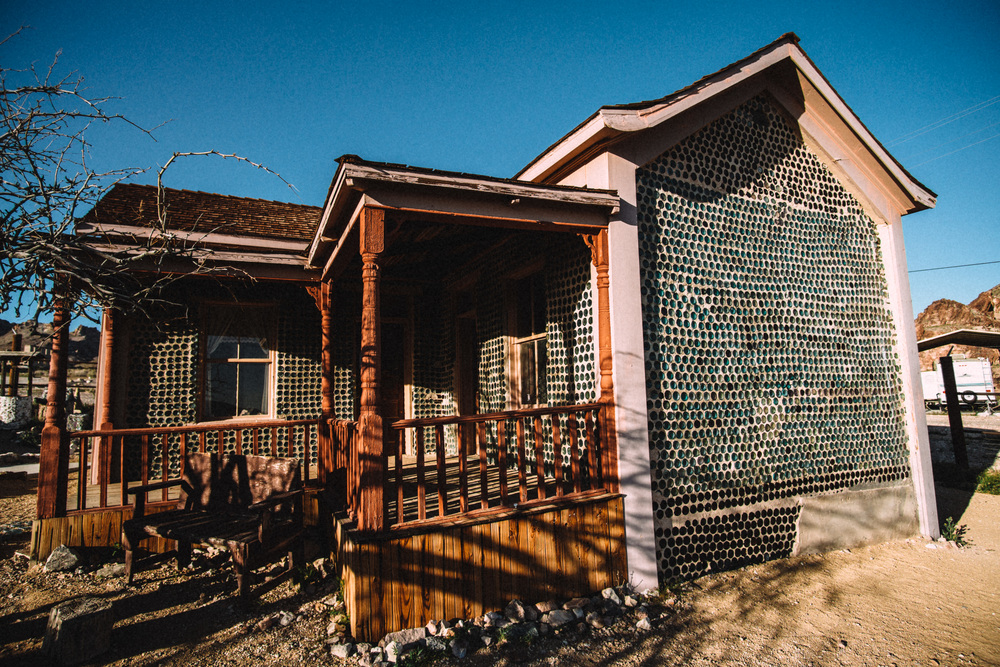
Continue all the way to Rhyolite, Nevada. This is a ghost town now. It was founded as recently as 1905 after a gold rush exploded in the area. The population reached about 5,000 at its peak, but by 1920 the town had been abandoned — the local mine had been hopelessly operating at a loss and in fact closed in 1911. Most of the buildings are in ruins now, but some like the bottle house have been restored. It is a charming little place and it does not take too long to explore it.
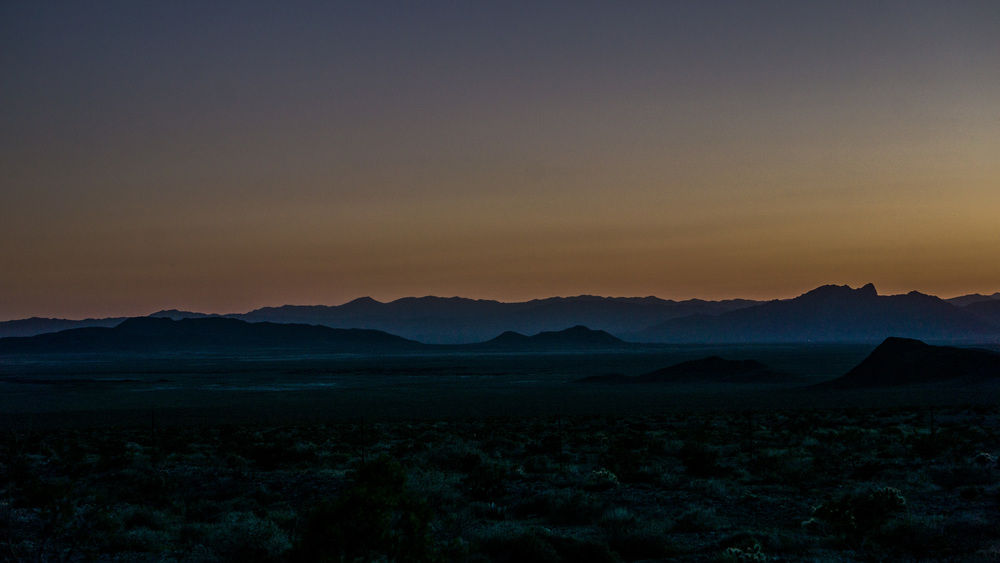
Finally, head back to Vegas. If you need food or gas, Beatty, NV, is nearby so do stop there. Sunset will be in full swing as you drive down Amargosa Valley towards Las Vegas. It is an awesome sight, so enjoy the drive.
All in all this is a great, power-charged trip. Probably best to do it on a long weekend or even over 4 days. This gives you more time to explore other areas of this desert park. For overnight hikes, there are plenty of options. I decided for convenience on the simple hike to Panamint Dunes, but if dunes and sand are not your thing, you can easily plan a more exciting route for that bit.
Data files (click on the links, then download whatever format you prefer from the gpsies site):
Leg 1: http://www.gpsies.com/map.do?fileId=znfeagoqcnradnah
Overnight hike: http://www.gpsies.com/map.do?fileId=yephwbvssvxmlqes
Leg 2: http://www.gpsies.com/map.do?fileId=ctmseslrvqkwvnjh
Complete Trip (road + hiking routes together): http://www.gpsies.com/map.do?fileId=hauyjffkbzirvxnm
]]>