How long?
1 day or 2 days, 1 night
How many miles?
14 miles / 23 km
How?
Run / hike
Maps?
Satnav / phone for driving from Blantyre or Lilongwe or a Malawi road map (Note: the road from Mulanje to Likhubula is unpaved and can be rough in places).
For the route (and alternative hiking routes), consult the excellent hiking guide and maps from the Mountain Club of Malawi: http://www.mcm.org.mw.
Itinerary:
Likhubula -> Skyline Path -> Chambe Plateau -> Lychenya Plateau -> Milk Run Trail -> Likhubula
“60 seconds!”
[5 seconds later]
“24 seconds!”
[8 seconds later]
“10 seconds!”
[2 seconds later]
“5 seconds!”
“6 seconds!”
[5 seconds later]
“6 seconds!”
“5 seconds!”
“4 seconds!”
“4 seconds!”
“3 seconds!”
[5 seconds later]
“3 seconds!”
“1 second!”
“Get ready!”
“Set!”
“Go!”
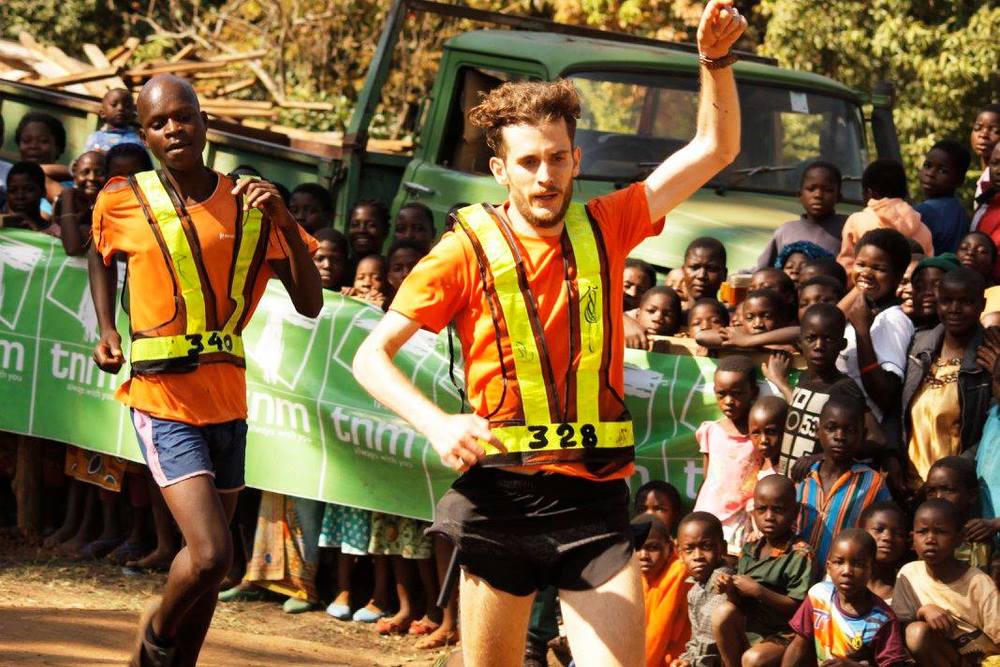
With this weirdly time-warped countdown, the 2017 Mount Mulanje Porters Race got under way – at 7.03am for a scheduled 6am start. Preceding this had been a joke start which most people luckily did not take seriously. Anyway it set the mood for what was to be one hell of a race. Fiendishly and relentlessly tough, yes, but great fun, mercilessly humbling (no matter how good a runner you think you are, you will find yourself getting beaten by barefoot 15 year olds and maybe also the occasional woman running, equally barefoot, in a full dress) and above all, unbelievably scenic.
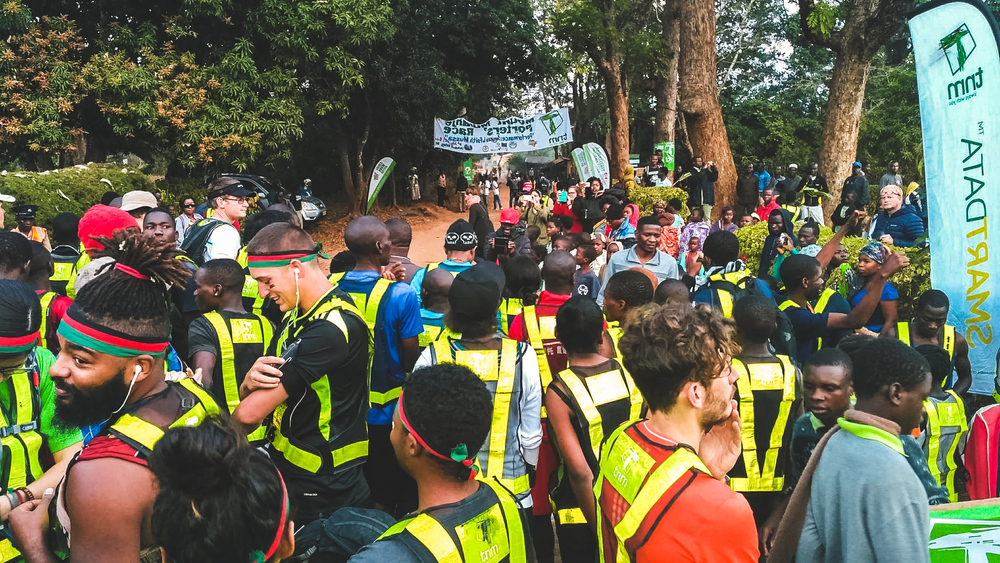
The Mount Mulanje Porters Race is held annually, on the second Saturday in July, since 1996 when it was limited to the porters and guides on Mount Mulanje. Nowadays it is open to local, national and international runners, and attracts about 400 participants. After the race there will be concerts in town as well as food and drink – a big party really, not to be missed. So should you plan to visit Malawi at some point in the future, make sure you plan your trip so as to be in Likhubula in July.
The race takes one of the steepest (none are easy) ascents to the Mulanje, the Skyline Path. So-called because of an old cable runner that was used to haul gear up to the mountain (you can still see it – though if racing, you might have other things on your mind than looking for it), it is mercilessly steep and rocky. Since you will do this early in the morning it is, at least, in the shade. Though it’s less than 5km to the top from Likhubula, you will climb about 1000m in altitude, and consequently this will probably take up to a third of your total race time.
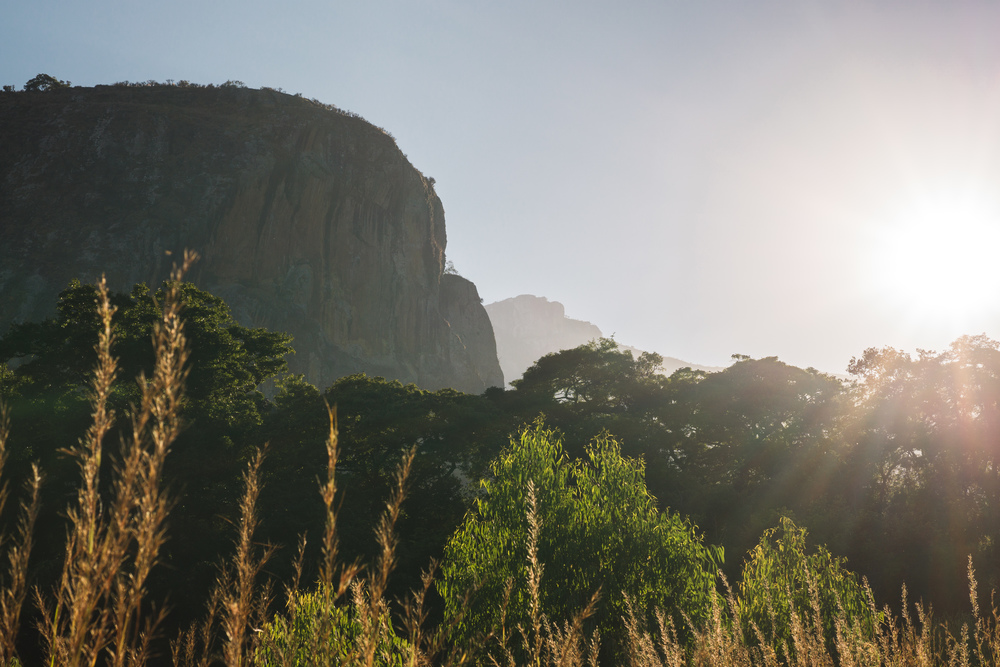
Once you reach Chambe Plateau (there’s a checkpoint here – make sure to get your bib marked), if you paced yourself correctly on the ascent, you can put the hammer down: while still undulating and at altitude, you can run at a decent pace, power-walking the few short inclines on the way to Chambe Hut. You will run along the impressive west face of Chambe Peak – at 1700m the longest vertical rock wall in all of Africa no less.
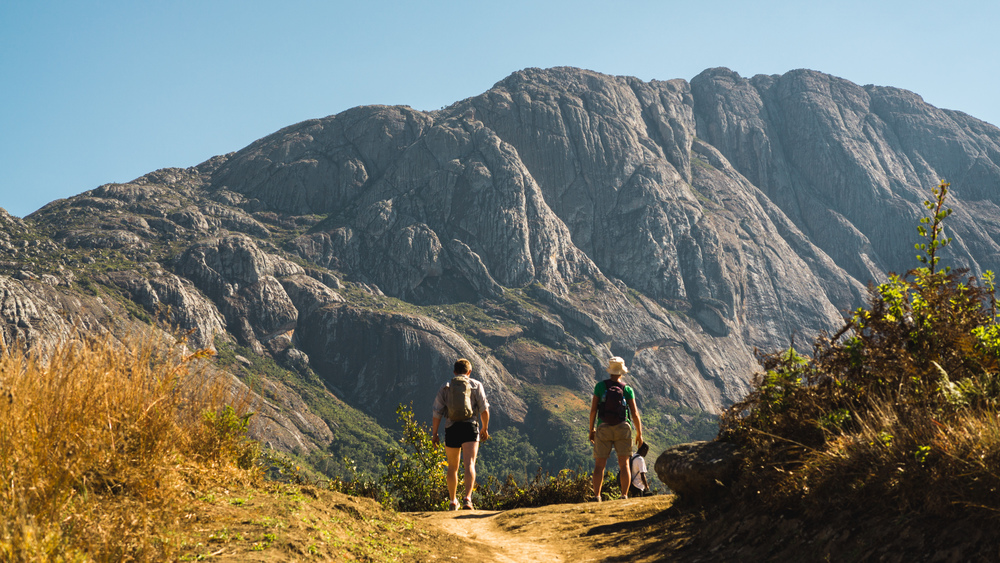
If you are not racing, enjoy the views of Chambe, especially when you get to the picturesque Chambe Hut where you can load up on water, and even sodas. Just as for the other huts on Mulanje, you can spend the night at Chambe Hut. You cannot book the huts in advance and in general no-one showing up at the huts will be turned away. So on good weather weekend nights, some of the more popular huts (Chambe is one of those) can be quite busy with fellow hikers. Be advised that nights in winter can be very cold, so pack accordingly.
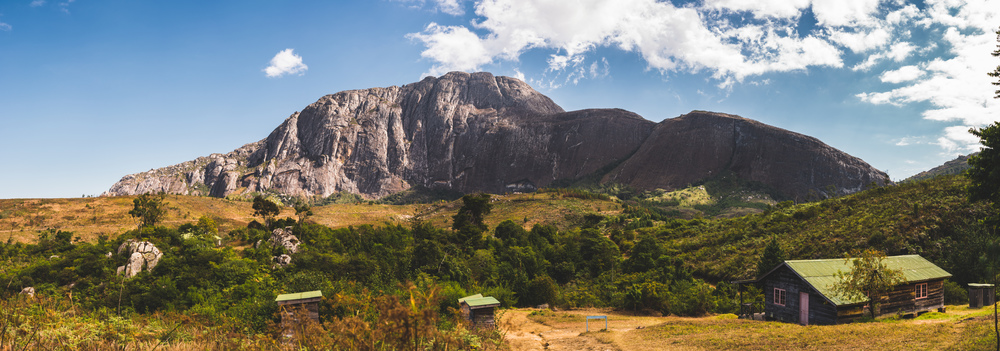
After Chambe Hut, there will be another noticeable incline and from here onwards it’s a lot of up-and-down until you get to the descent. Power-walk the ascents, blast down the less technical descents and be careful on some of the steeper and rockier downhills. On your way over to Lychenya Plateau you will cross the Knife Edge – stunning views over valleys on either side of you. Of course during the race, you won’t really be able to enjoy these fine views. After the Knife Edge will be a second, and, at least in 2017, final checkpoint – again make sure to get your bib marked.
You will reach the highest point of the course just before you set off on the descent. It’s a long steep-ish incline and you will start to feel quite tired by now. Note that if your legs have given by this point, you will be in trouble: the upcoming descent is incredibly technical and will take a toll on your leg muscles, so make sure you hold back earlier in anticipation of this.
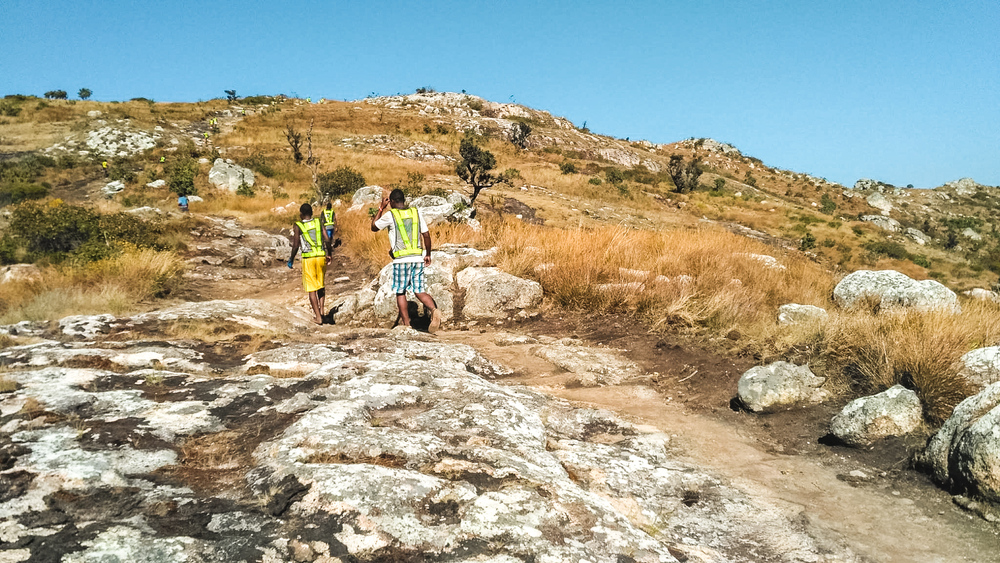
The descent is brutal, steep and seemingly endless. Going down fast here is nothing for the faint-hearted and the slightest misplaced step could spell disaster – so be sure to be careful. If your race is anything like mine, you will get to appreciate the supremely elegant descent racing by Malawian mountain runners.
This part also had one of the funnier moments in the race: on a piece of slickrock marshals hand out bananas much welcomed by tired runners. However for the next mile or so, you will have to dodge the banana peels along the route – as if it was not dangerous enough with all of the sharp rocks. Somehow this felt like being in Super Mario Kart!
You will criss-cross a number of streams that run down the mountain face, and after a long straight patch, you will take a right turn, cross a set of rock pools (big crowds cheering you on here), and from there it is a short dash to the finish line.

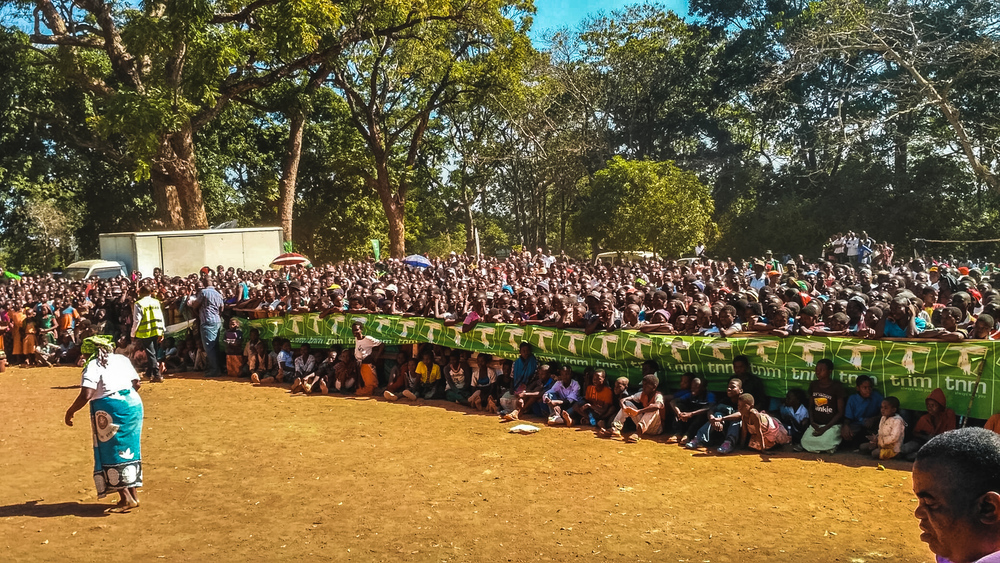
You won’t recognise Likhubula upon your return. There are thousands of people at the Forestry Office now, all eagerly watching the finish of the race and waiting for the party to start. It’s a joyous atmosphere, and really a great finish to a great race.
Whether you ran or hiked, a fantastic idea is to trace back your steps to the pools and take a well-deserved and most welcome dip in them to cool down and help your legs recover (a bit).
Notes:
As a shorter alternative (e.g. for a 5-6 hours day hike), you can backtrack from Chambe Hut, then come down via the Likhubula Falls. This option comes to about 16km and the descent is somewhat less technical and significantly shorter than the Milk Run. Crucially from after Chambe Hut there is no further climbing along this route.
Finally, there’s some pretty cool drone footage from the 2015 edition of the race on youtube:
Data files (click on the links, then download whatever format you prefer from the gpsies site):
Porters Race loop: http://www.gpsies.com/map.do?fileId=ejldbzvrhyamfdmk
Alternative (shorter) loop: http://www.gpsies.com/map.do?fileId=fctcgoeecbcpwhxi
]]>
How long?
3 days, 2 or 3 nights
How many miles?
880 miles / 1415 km
How?
Road trip
Maps?
Satnav / phone for driving or New Mexico road map
Itinerary:
Albuquerque Airport-> Santa Fe (with day trip to Kasha-Katuwe Tent Rocks NM) -> Chimayó -> Taos -> Rio Grande Gorge Bridge -> Roswell -> White Sands NM -> Albuquerque Airport
Leg 1 Albuquerque Airport -> Santa Fe:
Basically you need to start somewhere and most likely it will be Albuquerque Airport, so that’s why I started from here. I took a Friday evening flight from New York City to get here, so arrived quite late (11pm-ish) and therefore the first leg is super short: pick up your car from one of the rental companies at the airport and drive up to Santa Fe where you’ll be based for the first 2 nights. Compared to some of the other weekend trips I’ve done, this is a luxury: you actually get to sleep on this trip.
Leg 2 Santa Fe -> Kasha-Katuwe Tent Rocks National Monument -> Santa Fe:
Next day, get up, have a decent breakfast in Santa Fe, then get into your car and head northwest for about an hour and a half to Kasha-Katuwe Tent Rocks National Monument. Kasha-Katuwe means white cliffs in the Keresan language of the local Native American population and so the park’s name describes the place rather well: the main attraction is a lollipop loop hike (the loop is at the start not the end) through white cliffs whose sides have been shaped into weird conical formations that look a bit like tents (though to be honest some of them are a bit more rounded at the top and look more like penises – but look for yourself below). This national monument is not managed by the National Park Service, but the Bureau of Land Management (BLM) instead. There is a small fee ($5 I believe) to be paid to enter the park, but, should you have one, your usual “America the Beautiful” NPS park access badge will be accepted.
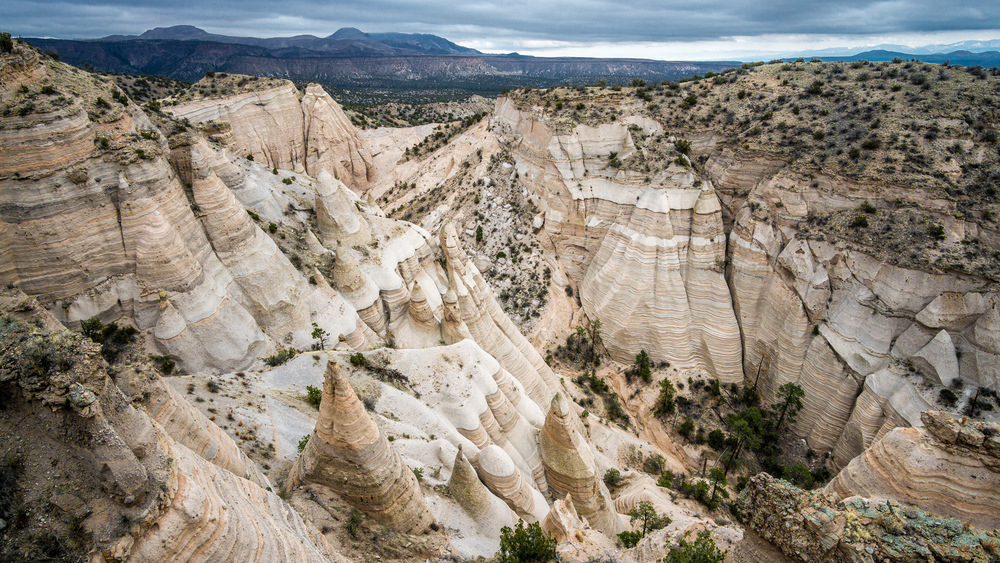
The hike is short, though somewhat strenuous at the far end as it takes you right to the top of the cliffs . The pay-off is an expansive view of the surrounding landscape. As you hike back out to the car, you can take a detour past a small cave. The road also continues from the parking lot to another parking area with further scenic views and another hiking opportunity.
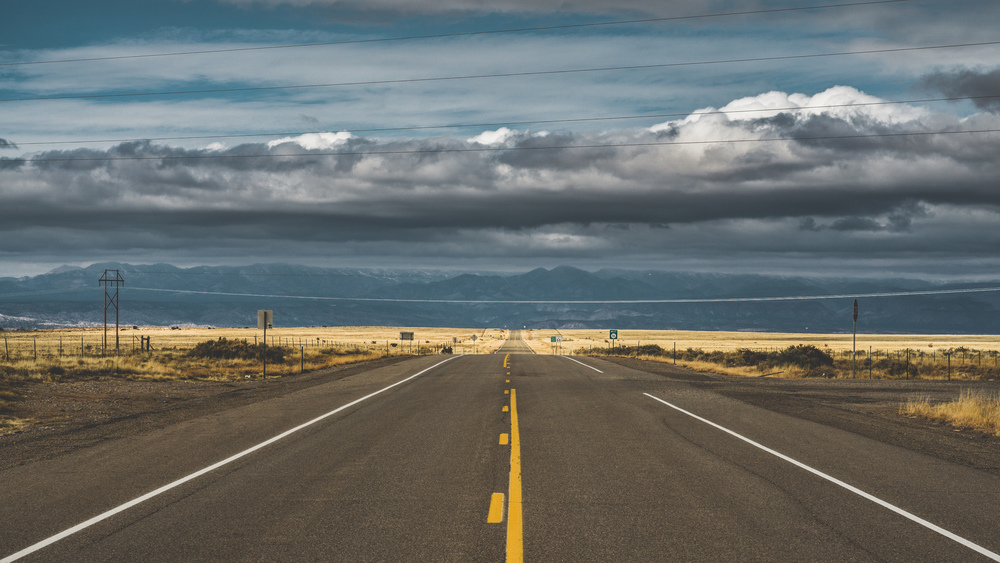
After this we drove back for a late lunch in Santa Fe. The scenery along the road is great, so enjoy it. If you want you can also visit nearby Los Alamos to find out all about the Manhattan Project, but since it is still an active research facility, what you can actually visit is rather limited.
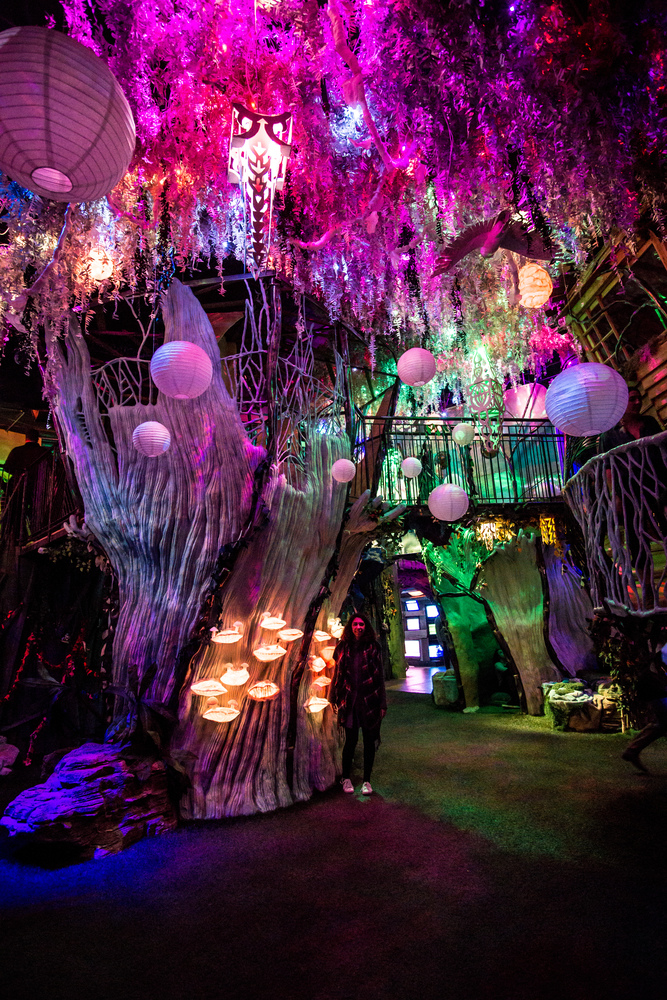
Back in Santa Fe, there’s plenty of things you can do: visit the New Mexico Museum of Art, the Georgia O’Keeffe Museum, walk around the Plaza and the Palace of the Governors, catch a flick at the Jean Cocteau Cinema, shop, eat drink etc. A stand-out to our time in Santa Fe was Meow Wolf. Meow Wolf is an arts complex run by the eponymous art collective. The art complex is a former bowling area and was leased by the author George R. R. Martin (with additonal funding from the city of Santa Fe and from a crowdsourcing campaign) for the Meow wolf collective. The main attraction is the “house of Eternal Returns”. It can be described, I guess, as an immersive, exploratory storytelling art project. Basically you pay, you enter and then have to navigate your way around a strange alternate world full of weirdness. Something has clearly happened here and there are clues left in the various rooms which you can use to piece the mystery together, or not. It’s up to you. If you do want to get the full story, plan to spend a solid 5-6 hours at the place, otherwise just enjoy the weirdness. The place also doubles up as a nightclub with various live acts on some nights.
Leg 3 Santa Fe -> Chimayó -> Taos Pueblo -> Rio Grande Gorge Bridge -> Roswell:
After a second night in Santa Fe, it’s time to leave. The plan for the second full day was to drive up to Chimayó, visit the Sanctuario there, have lunch at the Rancho de Chimayó, then keep driving north to Taos, visit the pueblo there, then head back down south, all the way to Roswell. In the end our plan was slightly altered by the pueblo having been closed on that day, so we visited the nearby Rio Grande Gorge Bridge, which pueblo or not, you should anyway try to visit – it’s an impressive bridge to behold and it spans across a deep, narrow canyon. In any case, you will spend the better part of the day driving – it’s a road trip alright.
The first stop is in Chimayó then. When we visited there were low clouds that day and we actually drove through fog and snow to get there. The place only opens at 9am and we were there early. Due to the weather the church site was pretty much empty and we had the place to ourselves. It’s a pilgrimage site due to there being holy mud / dirt inside the Sanctuario. There is also a chapel next door for expectant mothers. People bring gifts: a lot of crutches inside the church and pairs of baby shoes in the chapel. Inside the church is also a memorial for servicemen and police officers killed in the line of duty. It’s a beautiful place, even in the rain.
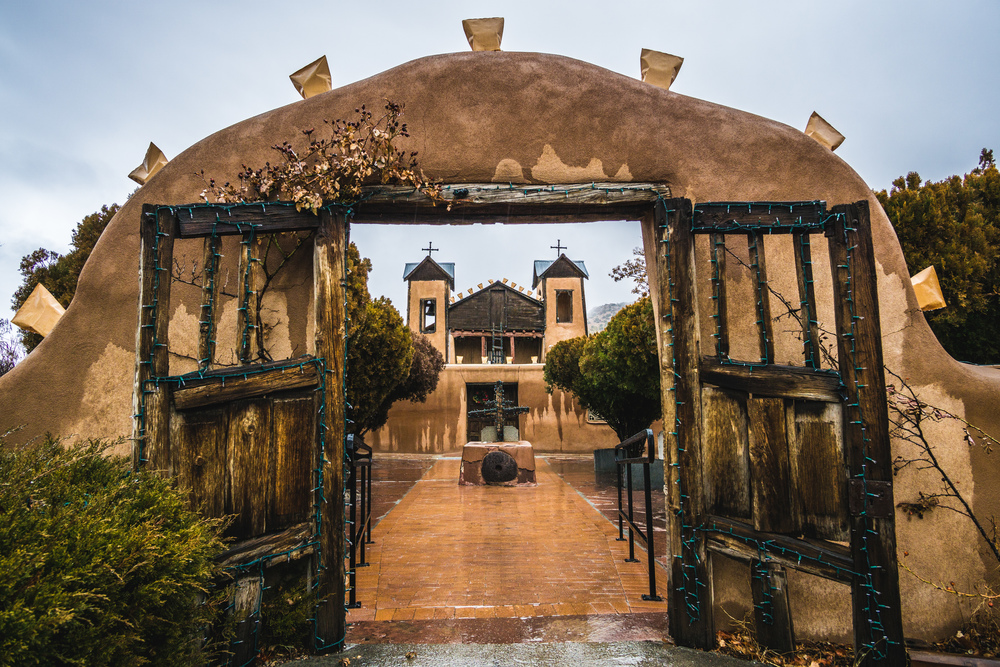
In the town of Chimayó is also one of the best restaurants for traditional New Mexican food in the entire state (according to the tourist guide we had with us): the Rancho de Chimayó. It turned out later that the restaurant is run by the aunt of one of the guys at my NYC running club. The food is positively delicious, so if you stayed in the Sanctuario until lunch time, be sure to visit the restaurant. We actually didn’t stay all that long at the Sanctuario, but on our way back from Taos, we stopped in Chimayó again for a late lunch there.
After Chimayó, continue north and head up to Taos. Taos is a weird little place, effectively three towns strung together along the main road: Ranchos de Taos, Taos and Taos Pueblo. Taos Pueblo is one of the oldest continually inhabited communities in the US and it is also a designated UNESCO World Heritage Site. However, even if you can tour it, the place is primarily a community of a Native American tribe of Puebloan people and very much lived in. This also means that on some religious days or if there is an unexpected death in the community, the pueblo will be closed for visitors. This was the case when we visited, so unfortunately we could not visit Taos Pueblo.
To make up for it we visited the rather small and fairly random Governor Bent House and Museum. Charles Bent was the governor of then New Mexico Territory and suffered a rather horrible death by scalping and arrows. Following the American victory at the end of the Mexican-American war, many inhabitants of New Mexico were dissatisfied with the new American rulers. Tensions boiled over and following a local conspiracy a posse of local Puebloan Native Americans and Mexicans turned up at Charles Bent’s house in Taos. Despite trying to calm down the revolt, Bent was shot by multiple arrows and scalped in front of his family. While he was out front talking to the insurgents, trying to buy time, his family was frantically digging a hole through one of the house’s walls to escape. Bent died of his injuries, but his family remained unharmed and managed to escape (though not through the hole they tried to dig). You can find out all about this horrible murder at the museum and you can see both the hole in the wall and the spoon with which it was dug. All other exhibits at the museum are totally unconnected to Charles Bent and are fairly random in nature (there is a stuffed eight-legged lamb for example).
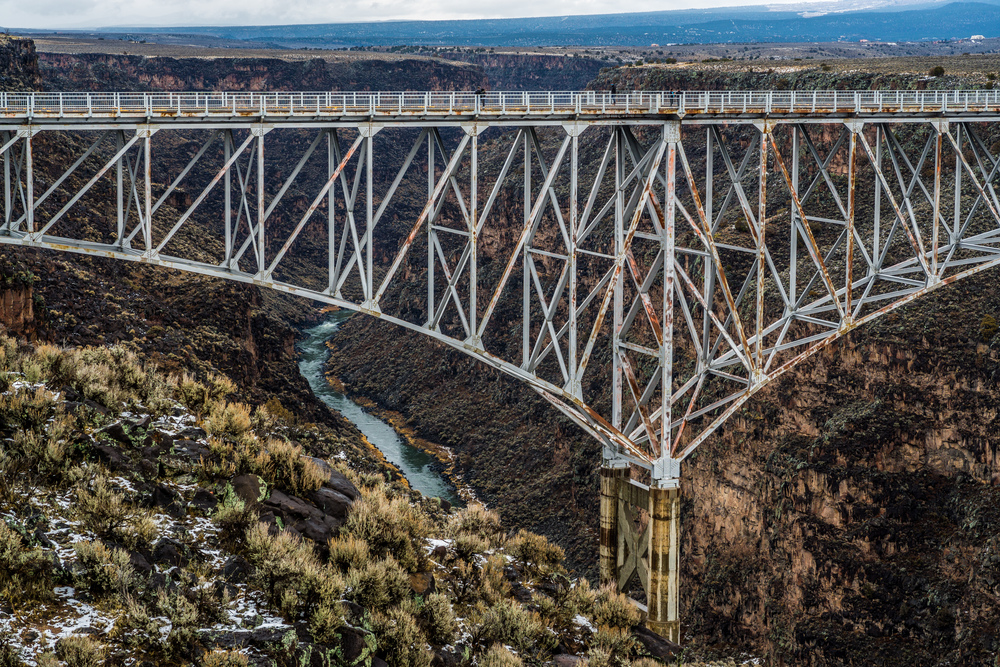
Don’t spend too much time in the museum, but head out of town towards the Rio Grande Gorge Bridge National Monument. It’s a great feat of engineering and with the stunning, narrow canyon (aka the Gorge) that the Rio Grande has carved at this place, it’s an impressive sight to behold. The steel bridge is in bad need of a good paint job, but that just adds to the charm of this bridge. If you are good with time, there is also a hiking trail along the canyon that starts from the parking lot.
Finally it’s time for the long drive to Roswell. It will take you some 4 1/2 to 5 hours to get there, so don’t leave too late. As I mentioned above, we drove via Chimayó to have lunch at the Rancho de Chimayó restaurant, but you can take a slightly more direct route through the mountains to Roswell.
Note that Taos is fairly high up in altitude (there’s ski resorts nearby), so if you are doing this trip in winter as we did, be sure to keep track of the weather as roads may close in heavy snowfall (which was also one reason why we did not drive through the mountains).
Leg 4: Roswell -> White Sands National Monument -> Albuquerque Airport:
Now Roswell is one of those names you have heard countless times, even if you are, like me, not American. It’s a myth of a place and so your expectations are high when you get there. Some advice: manage your expectations. Above all else Roswell is a ranching town. That’s the business most folk in town pursue and the whole alien thing is only a minor side to the city. Yes there are countless little green men in people’s front yards, on car dealers’ signs and even the local Arby’s and Walmart have subscribed to the theme. Aliens are welcomed by almost every business in town. However, if you expect that there is an Alien Restaurant, Alien Hotel, Alien Whatever – you will be sorely disappointed. What is there is the International UFO Museum & Research Center, which is approximately 90% serious about the alien crash landing in Roswell (and other places in the world) and then there are plenty of alien-themed gift shops along the main road. And that’s really all there is. It’s not a pretty town and there are only a limited number of touristy things to do.
However, this does not mean that you cannot have fun. The UFO museum is in fact rather informative, up to a point at least, even though it seemingly accepts some of the conspiracy theories about the alleged alien crash rather uncritically. To be fair though, they ask that you keep an open mind and they also have a few panels about UFO hoaxes and how difficult, if not impossible, it is to separate truth (if there is any) from fiction (there sure is plenty of that). More fun however can be had at one of the souvenir shops next door.
The shop is called Alien Zone and inside there is a small section called Area 51 which basically consists of a series of deliberately bad and quite creative photo sets that you can (ab)use. You do have to pay a small entrance fee ($5 or $6 if I remember well). Anyway: easily the best $5 you will spend in town.

You won’t need more than 1-2 hours at most to do the UFO museum and the Alien Zone Area 51. Have breakfast before these (they only open at 9am and 10am respectively; I can recommend the Cowboy Cafe – good, honest food and plates are large – it will keep you filled for the day), then head out of town and go west towards Alamogordo and White Sands National Monument.
The driving is spectacular at moments, and as you come down the Mescalero Reservation mountains on route 70, you will see White Sands NM in the distance – a stunning sight. However before you get there, you need to go through Alamogordo and this will take you past the world’s largest pistachio nut just outside of town. It’s a sight to behold for sure and at the shop next door you can buy some really good roasted pistachio nuts in all kinds of flavours (go for the green chile and lime). You can even read about the time the world’s largest potato (from Idaho of course) visited the giant pistachio.
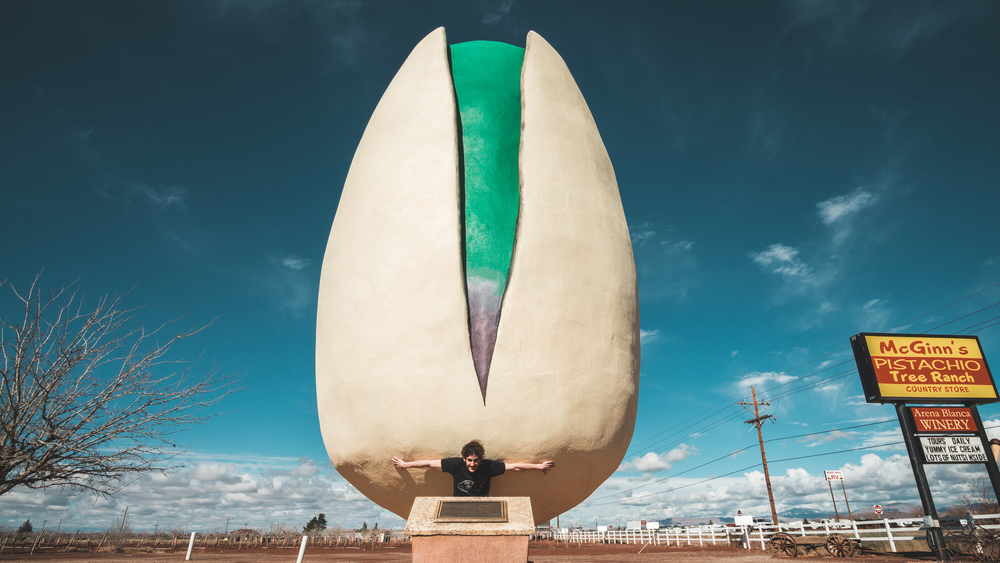
Anyway, head on into Alamogordo and get a quick lunch (we stopped at the White Sands Bistro), then continue to the park – this is the reason you came here. Be aware that there is an active missile range right next to White Sands NM and during firing practice they will close route 70 which can affect your plans, so be sure to check on the park’s website before visiting if any closures are planned.
The name pretty much says it all: it’s a giant pit of white, gypsum sand, with rolling dunes of white sand as far as the eye can see. There’s plenty of wildlife as in any desert if you know where to look and what to look for. The park is fairly small, but if you visit on a hot day, don’t let that fool you: it’s easy to loose yourself in the dunes if you stray off the marked trails and people come to harm here every year because they lost their way and were ill prepared. Anyway, you probably want to head up to the Alkali Flat trailhead and stroll off into the sand dunes. The trail is marked with red posts that stick out of the sand, which you can see fairly well even from a distance. The trail is about 5 miles long and circular. You will probably be tempted (we sure were) to go off trail and head into the interior where there are no tracks and where you will feel all alone – do it, but be sure to carry enough water and some binoculars to help you spot the trail markers if you are unsure how to get back onto the trail.
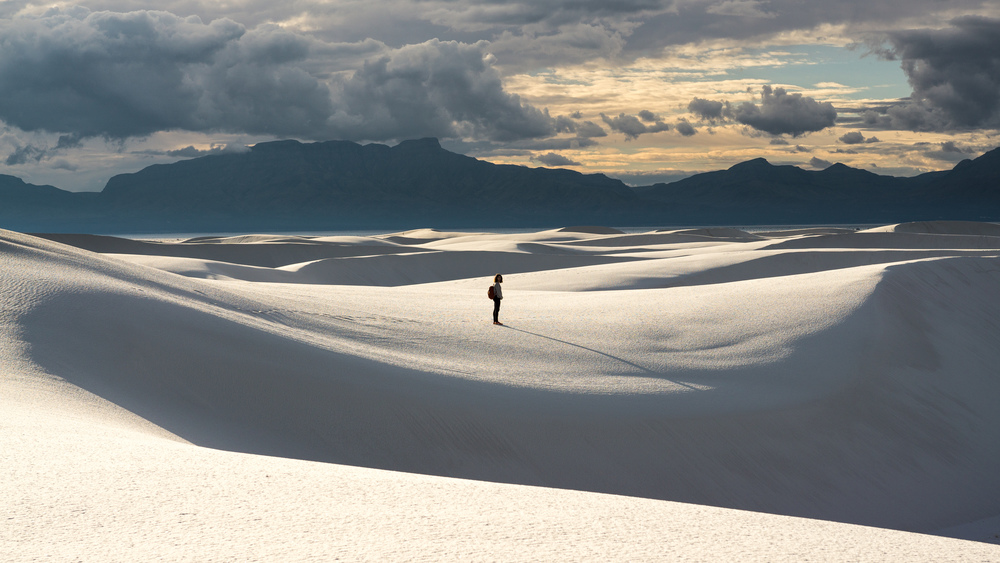
White Sands NM, while small, is a stunning, extremely beautiful park, so take your time and enjoy it. If you’ve got the time, there’s a limited number of camping spots, so feel free to spend a night here. It’s a popular spot for stargazing (the park closes at night, you will be locked in until the next morning, so if you want to watch the stars here, you will have to get a permit to camp).
After White Sands, it’s time to head back up to Albuquerque and catch your overnight flight back (assuming you head back to the East Coast). You can spend a worse weekend for sure!
Notes:
There’s much much more you can do in New Mexico than the above: there are hot springs, there are skying areas, there’s Los Alamos, there’s a bunch of other national monuments and national historic sites and there’s Albuquerque which we didn’t visit at all, except to fly in and out. So you can easily scale this up to a full week. Further, if you have the time, you could even head southeast into Texas and visit Big Bend NP or west into Arizona to Petrified Forest NP and/or Saguaro NP or even Grand Canyon NP. Also if you are into the Atomic Age and/or roadside Americana, you probably want to spend more time along (the former) route 66.
Data files (click on the links, then download whatever format you prefer from the gpsies site):
Leg 1: http://www.gpsies.com/map.do?fileId=nkkuctiktlnchetl
Leg 2: http://www.gpsies.com/map.do?fileId=zkdbjjiyuopzpchb
Leg 3: http://www.gpsies.com/map.do?fileId=xtrsvsppedxxzwzc
Leg 4: http://www.gpsies.com/map.do?fileId=cgcniwjrhvnxmuoy
Complete route: http://www.gpsies.com/map.do?fileId=kfhyxawxqzfhqaji
How long?
1/2 day (running) or 1 day (hiking)
How many miles?
15.5 miles / 25 km
(~13 miles / 21km without any detour)
How?
Trail running or hiking
Map required, compass optional (i.e. well maintained & sign-posted trails & prominent features all around; still I would carry a compass just in case)
Maps?
New York New Jersey Trail Conference Map #119
Itinerary:
Manitou rail station-> Anthony’s Nose -> Bear Mountain Bridge -> Bear Mountain -> Manitou rail station
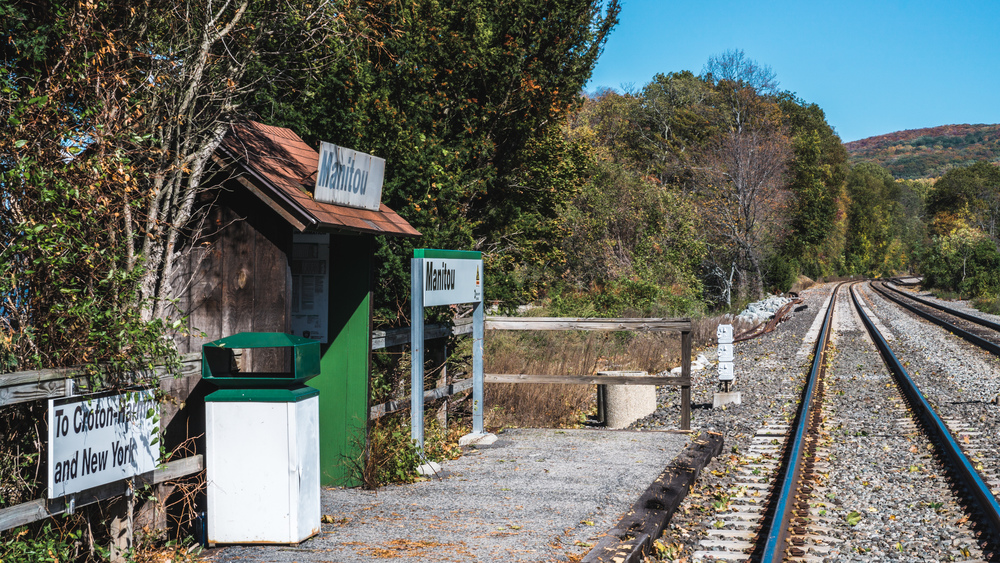
Metro North from Grand Central or 125th Street takes you from NYC to Manitou. Be sure to check that your train does indeed stop at Manitou as it is something of a request stop and you will need to be in the last 2 coaches to get off the train at Manitou (it’s just a level crossing with a shed; not really a proper train station at all).
Manitou -> Bear Mountain
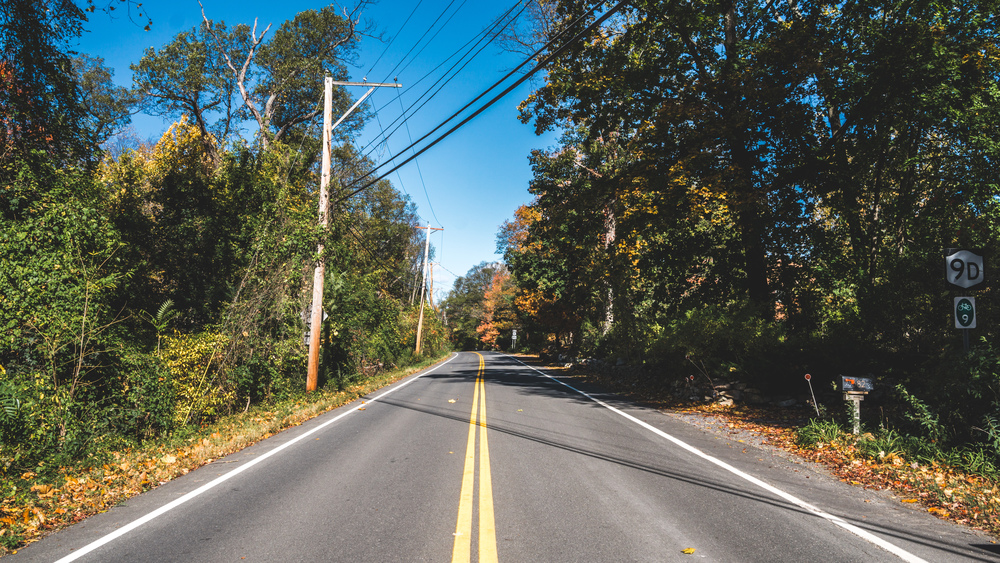
When you get off the train, you just go straight on ahead along the road (Manitou Station Road), leaving the Hudson river behind you. Cross highway 9D and follow the dirt road for 200-300 meters, then take a right onto South Mountain Pass Road and follow this for half a mile until you hit the trailhead on your right (the Appalchian Trail (AT) crosses the road here).
Now that you are on the trail, follow the white blazes of the AT for a bit over a mile. At the beginning the AT will follow a wood road used by the military at Camp Smith, but then will shoot off to the right at some point, very easy to miss. Anyway it’s not too bad if you do miss this turn (if you download the GPX file below, you’ll see that I missed it on my way out and only got that part correct on the way back), as you will be able to get back on the AT before it meets up with the Camp Smith Trail (blue blazes). Here the AT plunges down the mountain on the right, and this is where you will need to go to get to the Bear Mountain Bridge and Bear Mountain. However, you can do an optional out-and-back detour (0.6 miles each way) to Anthony’s Nose. If you arrived on the first train and visibility is good, I urge you do this detour now: Anthony’s Nose will become busy later in the day, and the light is best in the morning here as you are looking due west.
The view here is spectacular and it will give you a good idea of what is to come: you see the bridge you will cross shortly and Bear Mountain looms up before you across the Hudson.
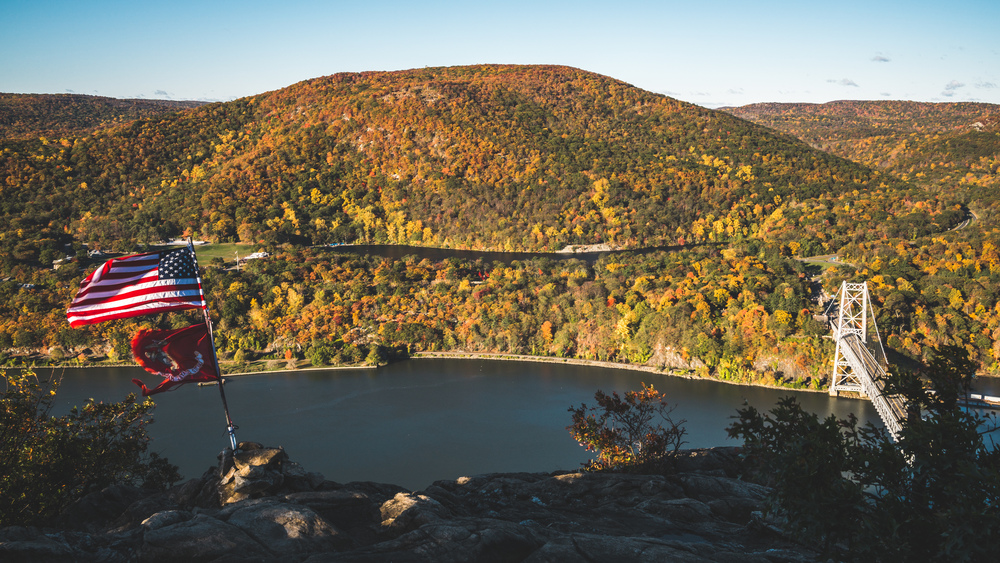
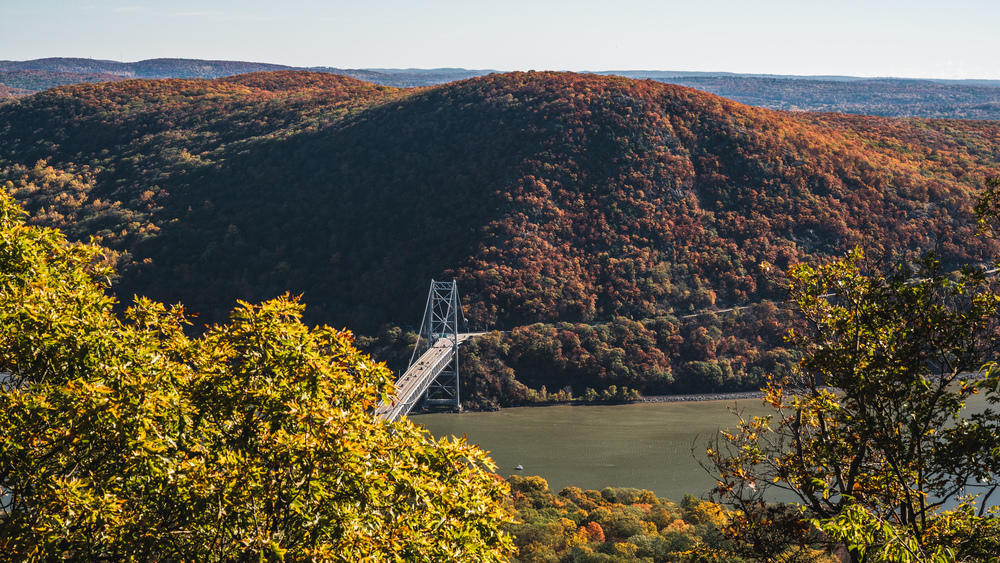
Once you took in the view, head back to the Camp Smith Trail and AT crossing, then head down the mountain to the Bear Mountain Bridge. It’s another gorgeous American bridge, a real pleasure to cross, and the view north is breathtaking.
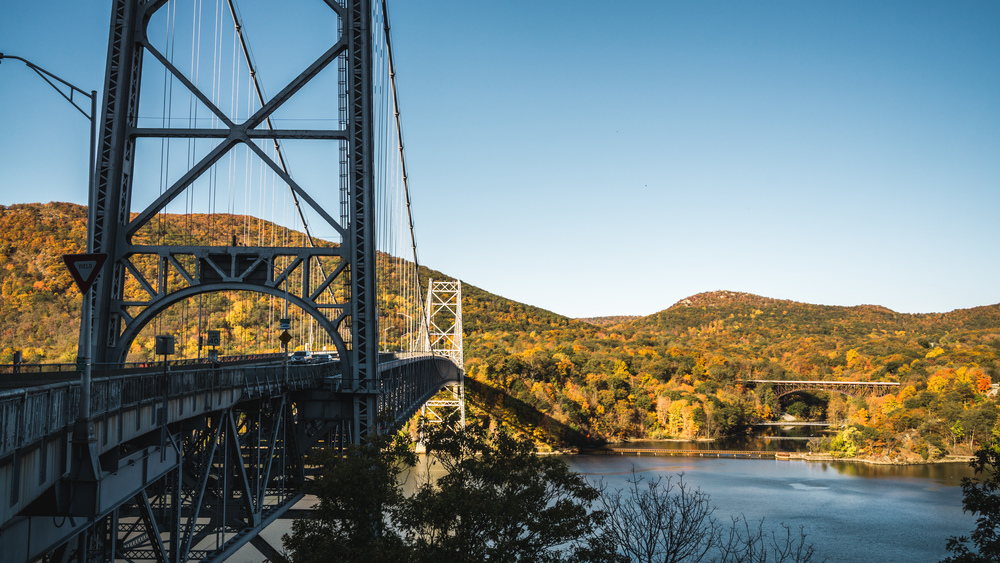
Once on the other side, cross the road and head towards the shore of Hessian Lake. From here you will be on the loop of Bear Mountain. You can go either way: clockwise, heading up Bear Mountain on the AT, then down the Major Welch Trail (MWT), or anti-clockwise with the MWT first, then the AT. The MWT is good fun as you’ll be walking over slick rock to get up (resp. down) the mountain.
Whichever way you ascend (on this particular trip I went up the AT, down the MWT), though it’s not a very long ascent, it will knock the breath out of you and once you manage to get your sorry ass up to Perkins Tower, you will be greeted by fresh looking car drivers who haven’t really earned the gorgeous view that awaits you here.
Bear Mountain
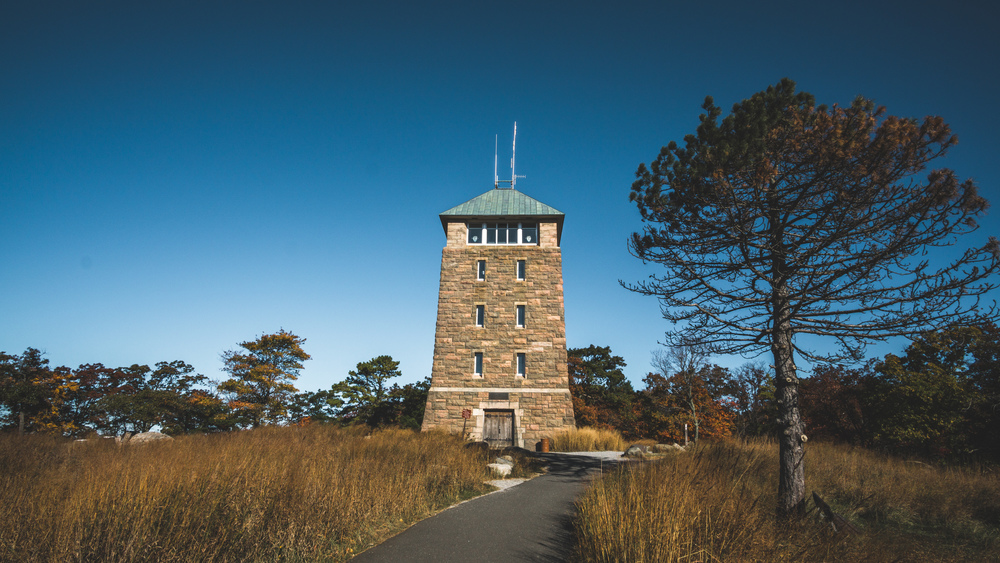
On good visibility days you can see the Manhattan skyline (~40 miles away) in the far distance when you are standing at the main viewpoint, looking south. In fact you can see the NYC skyline on the cover image to this post above. Rapper B.o.B. once took this fact as proof that the Earth was flat, not curved and was promptly corrected by Neil DeGrasse Tyson (which did not stop him to release a song, called Flatline, about his theory and he even mentions Tyson in it).
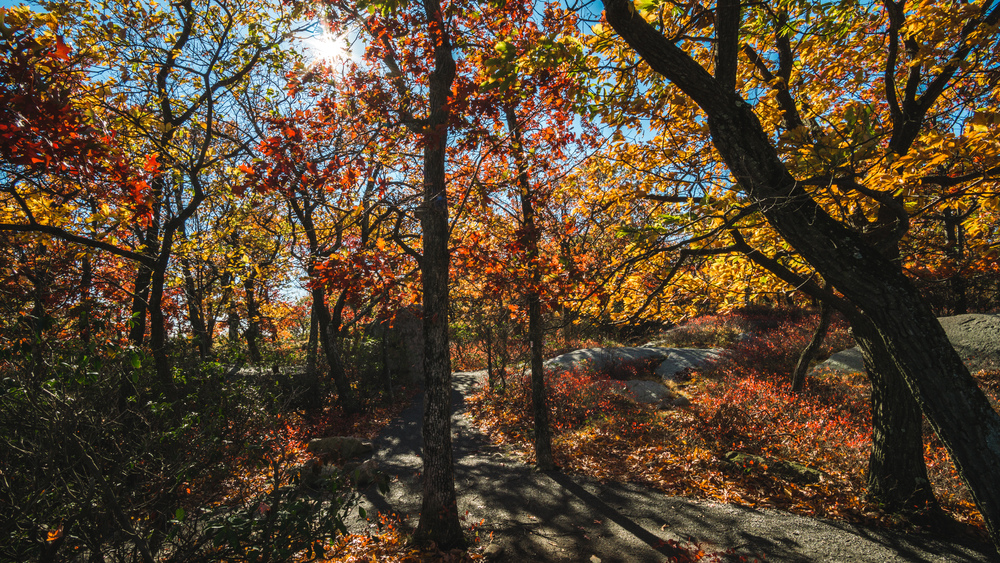
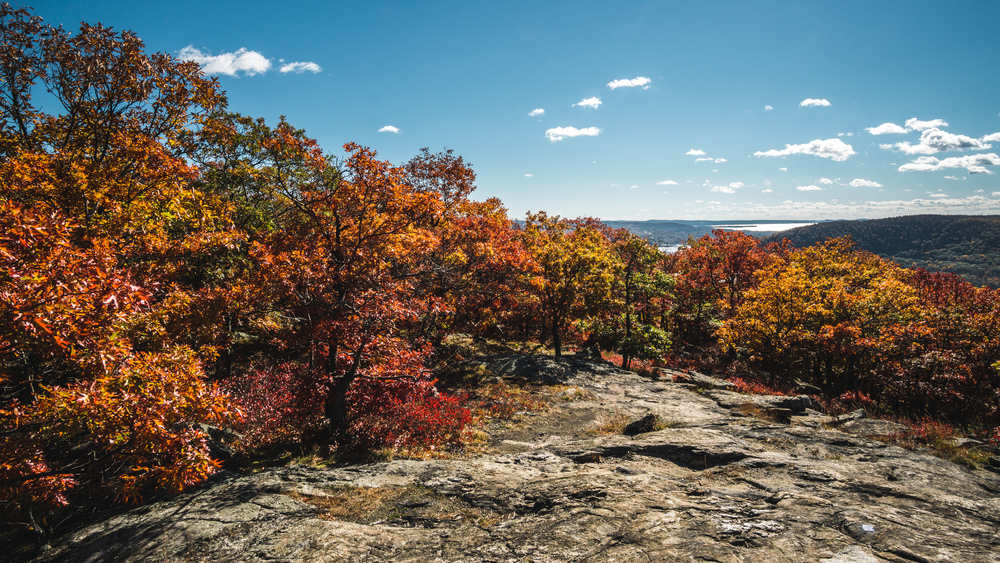
The trees and boulders on top of Bear Mountain are a delight in autumn, and particularly the top end of the MWT makes for a fine picnic spot (it’s also bit removed from all the crowds at Perkins Tower), so go for it – enjoy your lunch in nature.
On the MWT, just below the top of Bear Mountain, you will get a good view across the Hudson, looking over Bear Mountain Bridge the other way as earlier and opposite you will be Anthony’s Nose.
Bear Mountain -> Manitou
Once you completed the loop of Bear Mountain, you need to cross the Hudson again, and make the tough ascent of the AT. If you haven’t gone up to Anthony’s Nose before, you have another chance now. If you do go, there’s also a good view to be had a hundred yards south of Anthony’s Nose, along Camp Smith Trail (another good, quiet picnic spot, just a bit removed from the crowds at Anthony’s Nose). Once you are done here, you have two options: follow the Camp Smith Trail until its end, then continue along the road to Peekskill and take the train back from there. From Anthony’s Nose, this is a tough 6-7 miles. The other option is that you just head back along the Camp Smith Trail to the AT, then head back to the trailhead and then Manitou.
At Manitou, you can either head back to the station the way you came, or, if you’ve got spare time before the next train, loop back to the rail station via Manitou Point Reserve. It’s a nice detour, but not a must.
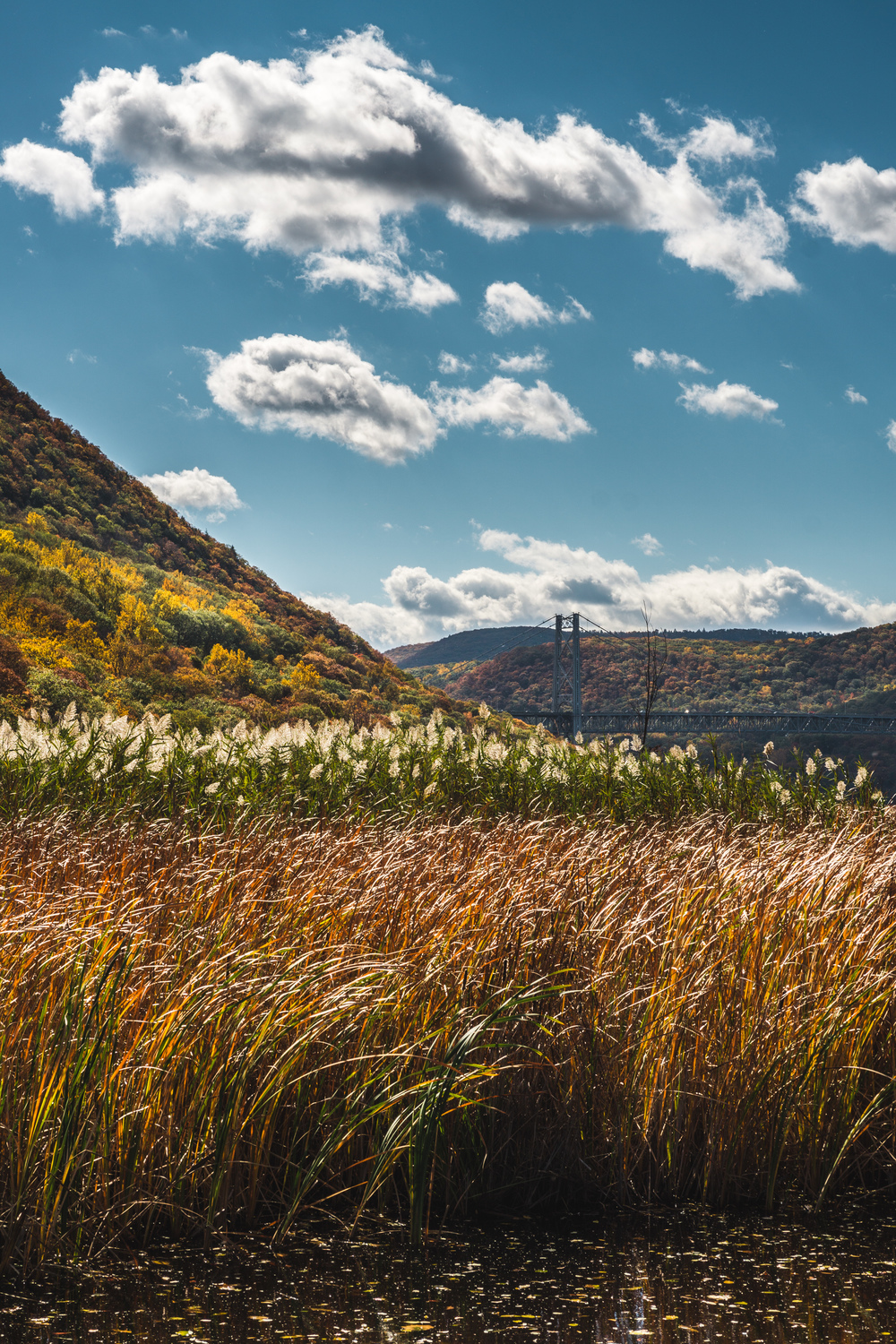
One of the finest views of the entire route is actually right at the Manitou rail station: look south across the little pond/swamp towards Bear Mountain Bridge — if the sun is out, it’s just gorgeous.
However, it’s safer to wait for the train on the other side of the rail crossing. You can actually wait for the train on a little beach on the Hudson, or else in the little shed that serves as the rail station. When the train arrives (again, make sure you checked the times beforehand as not every train stops here), everyone will need to get in through the same door. Relax for an hour on the train, enjoying the find views over the Palisades along the route, and you will be back in NYC.
Data file (click on the link, then download whatever format you prefer from the gpsies site):
Complete route (including detouring twice to Anthony’s Nose and once to Manitou Point Reserve): http://www.gpsies.com/map.do?fileId=zamewyqbxffnnpne
]]>How long?
2days, 1 night
How many miles?
27 miles / 43km
How?
Hiking + wilderness / backcountry camping
Map required, compass optional (i.e. well maintained & sign-posted trails & prominent features all around; still I would carry a compass just in case)
Maps?
National Geographic Trails Illustrated Map #268
Itinerary:
Summit Lake trailhead -> Corral Meadow -> Grassy Swale -> Horseshoe Lake -> Snag Lake -> Cinder Cone -> Twin Lakes -> Echo Lake -> Summit Lake trailhead
On top of paying your park admission fee, you will need a backcountry permit for any overnight stay in the Lassen Volcanic wilderness. These are free and there are no quotas, so you don’t have to get them in advance. Just turn up at a ranger station / visitor center (there is one at either entrance of the park on highway 89) and get yours. There is also a ranger station at Summit Lake, but, to my knowledge, they do not issue permits there. You will also need a bear canister for your food.
Leg 1: Summit Lake -> Horseshoe Lake -> Snag Lake
It’s always embarrassing when you get lost right at the start of a hike, particularly if there are still buildings and campgrounds nearby. But that’s what almost happened to me. You need to start at the Summit Lake trailhead, which is a bit north along route 89 from Summit Lake South and North campgrounds. Then the first two-thirds of a mile takes you around both campgrounds and off on the trail to Corral Meadow. The trail to Echo Lake (where you’ll come back from the next day) is impossible to miss and sign-posted. However at Summit Lake South campground there are so many unofficial tracks (both human and animal I would guess) that go off into the forest, that it is not quite clear which is the track you need to take. Anyway, I did about 200-300 meters on the wrong side of Summit Creek, then quickly noticed my mistake after consulting the map and bushwhacked my way back onto the correct trail. From that point on, route finding is easy and every trail crossing is clearly sign-posted.
The first leg of the loop is mostly through dense forest, which occasionally opens up to reveal a meadow or a lake. There are plenty of water sources along the route, so you do not need to carry much onto the hike with you (do use a filter though).
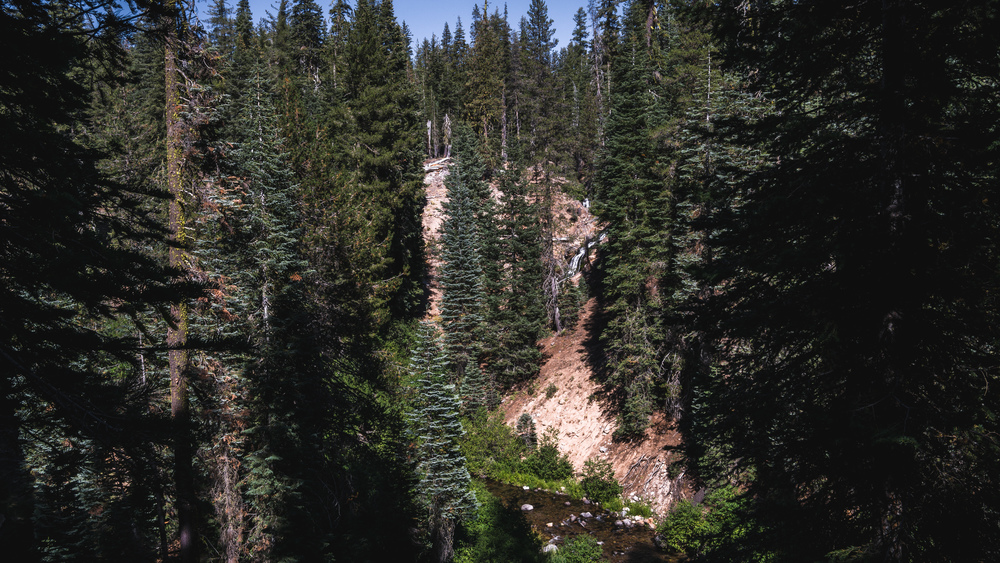
The first few miles are mostly downhill as you follow along Summit Creek. Just before you get onto the Pacific Crest Trail (PCT), look to your left, on the far side of the narrow valley that Summit Creek has carved and there should be a nice waterfall not indicated on the map. Right after the junction with the PCT, you will need to ford Summit Creek (yes you will get your feet wet, but, at least in mid-September, it is not a dangerous crossing: the water is fairly shallow and not too fast flowing) and head north. Near the trail junction should be Corral Meadow, but I did not see it, so I guess it is a bit further south on the PCT. After the creek fording there is a bit of an uphill section before you get to Grassy Swale, which is boardwalked in places. Continue along and watch out for deer, wood peckers and the occasional bird of prey. At the next junction, you need to take the much smaller right fork, sign-posted for Horseshoe Lake. Continue along the trail until you get to the Lake. If you set off in the early afternoon like me you should get here in late afternoon with the sun’s reflections in the water blinding you when you look across the water from the western shore. Here will be another crossing and you need to head north on Grassy creek Trail towards Snag Lake. When I did this trip, there were many deer in the grass along the creek, so watch out for them. There will be two more crossings, and each time you just continue straight, due north. If you don’t want to get water from the standing waters of Snag Lake, then Grassy Creek is your last chance to fill up on water.
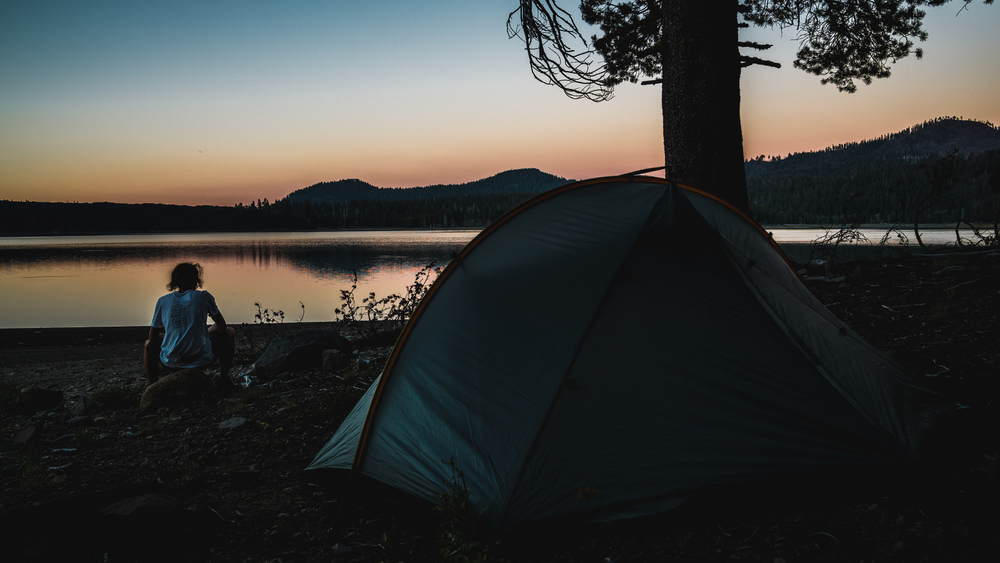
Finally you reach Snag Lake. If you are doing this on a weekend there will be other hikers camping along the lake (when I did the hike, there were 3 groups camped along the eastern edge of the lake, and the next morning I spotted two more tents on the small beach at the northeastern end), so you might have to walk a bit along the lake to find a secluded spot all for yourself. I found a beautiful one on the small peninsula at the southeastern end of the lake.
The lake is quiet and a great place to be camping to watch the stars later in the night. Before the sun sets, be sure to check what animal tracks are near your camp site, just so you don’t get surprised at night. There had been some deer tracks near the water, but not where I had pitched my tent. Still, ten minutes or so after switching off my camping light, there was a dozen deer that surrounded my tent as they walked out of the forest to the water’s edge.
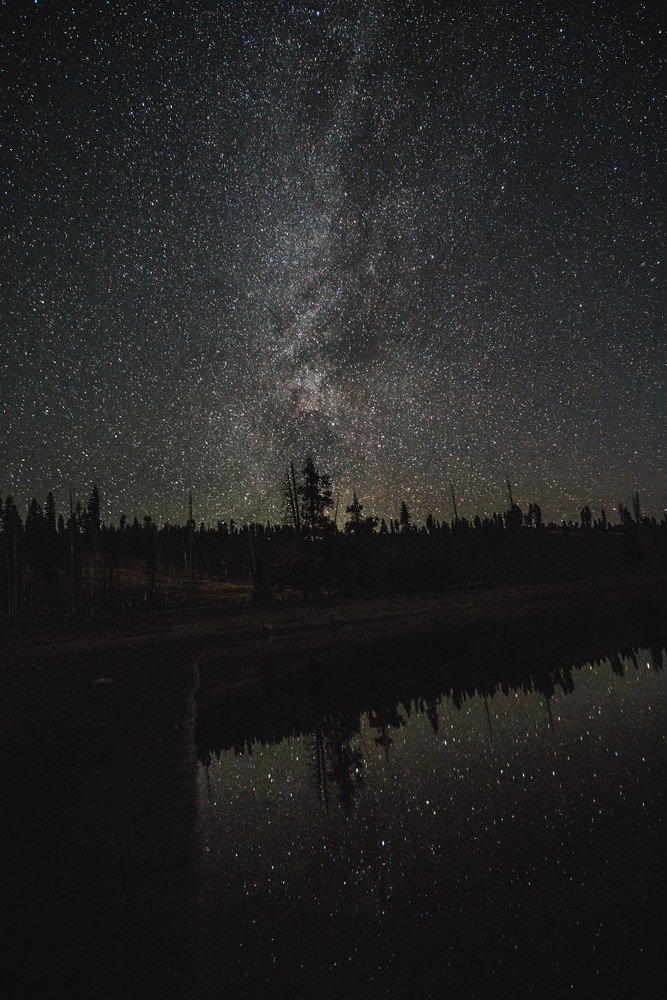
Legs 2: Snag Lake -> Cinder Cone -> Summit Lake
Yesterday’s hike was nice, today’s hike will be spectacular, take my word. There will be, however, far fewer water sources, with no water between Snag Lake and Rainbow Lake, so be sure to fill your bottle at Snag Lake before setting off.
Depending where you set up camp along Snag Lake, you’ll have a 2-3 mile hike to Cinder Cone and you want to be there shortly after sunrise (the light will be best and there won’t be many, if any, people that hiked from Butte Lake campground yet), so get up early, have a quick breakfast, pack your tent and set off.
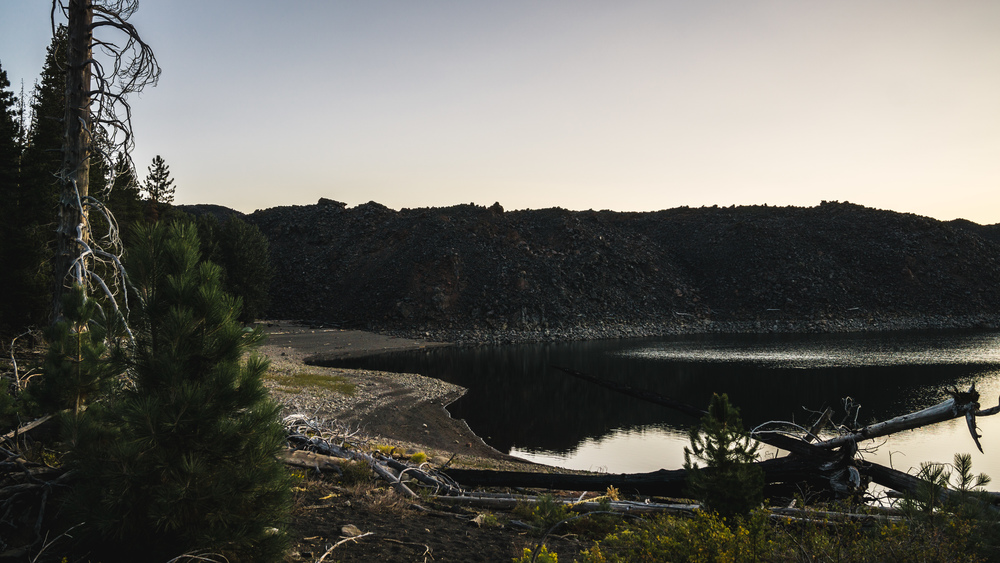
As you reach the north end of Snag Lake you get a first taste of the spectacular geological features that are to come: there is a sheer wall of black rocks, a good ten to twenty meters high, that forms the northern boundary of the lake. This is the southern end of the Fantastic Lava Beds. In fact it is a natural dam wall and the reason why Snag Lake exists. Cinder Cone, which is a, wait for it …, cinder volcano, erupted twice in the mid 17th century (hence quite recently by geological standards) and spew out ash and lava which then cooled to form what is now called the Fantastic Lava Beds. Those lava flows dammed various creeks, thereby creating Snag Lake to the south and Butte Lake to the north. In fact Snag Lake still feeds Butte Lake by water that seeps through the lava rocks. The lava beds are a truly stunning sight, and you will get a good view of them from the top of Cinder Cone (see the cover image for this post, which shows Butte Lake and the northern end of the lava beds). In fact the striking appearance of the lava beds meant that people in the 1870s initially thought that they were formed only a few decades ago. You can also clearly see the lava beds from aerial and satellite images on Google Maps / Earth or Bing Maps etc.
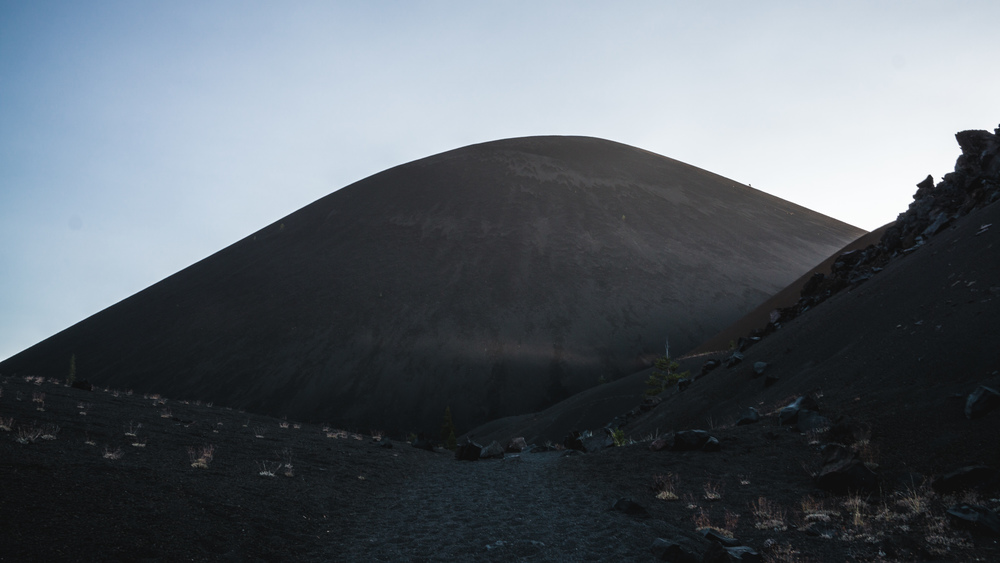
Anyway, after Snag Lake, the trail continues pretty much all along the edge of the lava beds until you get to Cinder Cone. It’s an epic sight, and with all those black and red cinders you might as well be on Mars were it not for the surrounding vegetation.
The ascent, especially with your hiking backpack, is tough. It is very steep and the ground is quite loose, so it is difficult going. The good point about going up from the southern side is that you can just stop now and again, turn around and enjoy a marvelous, incredible view: Lassen Peak in the distance and the Painted Dunes nearby.
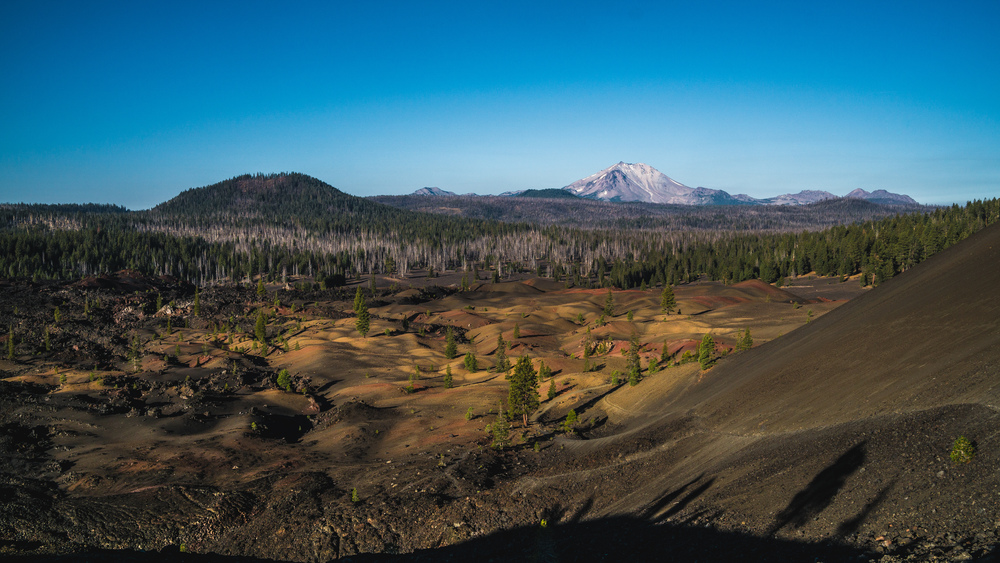
The eccentric colours of the Painted Dunes are caused by volcanic ash that oxidated as it fell on the still hot lava flows. Also if you look carefully, you can see red rocks in between the Painted Dunes and the lava flows to the south of Cinder Cone: these are the remnants of an earlier cinder cone, or scoria cone, that was destroyed by the later lava flows. In fact the Painted Dunes are sitting on lava flows from this earlier cone, with the ash of more recent flows sitting on top. The Fantastic Lava Beds, as well as the Painted Dunes, are all deposits from several eruptions of the two scoria volcanoes.
Anyway, as you struggle your way up Cinder Cone, you slowly get to appreciate the full scale of the Fantastic Lava Beds — it’s a huge area, stretching completely from Cinder Cone to Snag Lake and from the to Butte Lake and then back to Cinder Cone. Lassen Peak in the background adds even more drama to this incredible natural scenery.
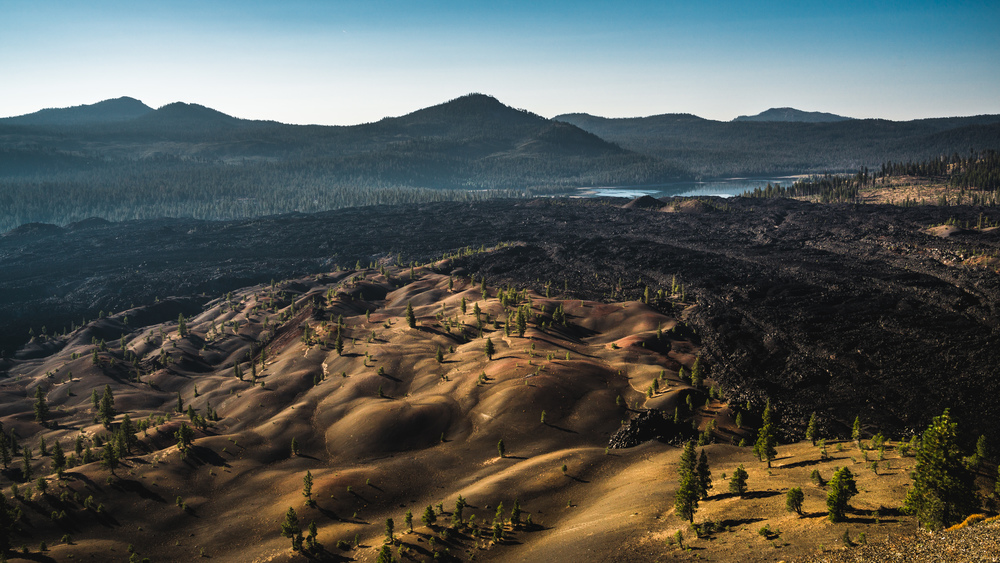
Once you are on top, you can actually walk right down into the crater (though, mind you, you have to hike back up out of there), you can walk around the inner rim, or along the outer rim from where you get dramatic views in every direction. The landscape here is so gorgeous, you just want to run around in excitement like a child, stop, take in the view, scream out in joy or awe, run around some more, stop again, scream again etc. Thankfully the air is thin here and you spent so much effort to get up here, that you don’t actually do this, and instead just walk around, murmuring ‘wow’ now and again. If the ascent hasn’t done it, the view here will take your breath away (see again the cover image for this post).
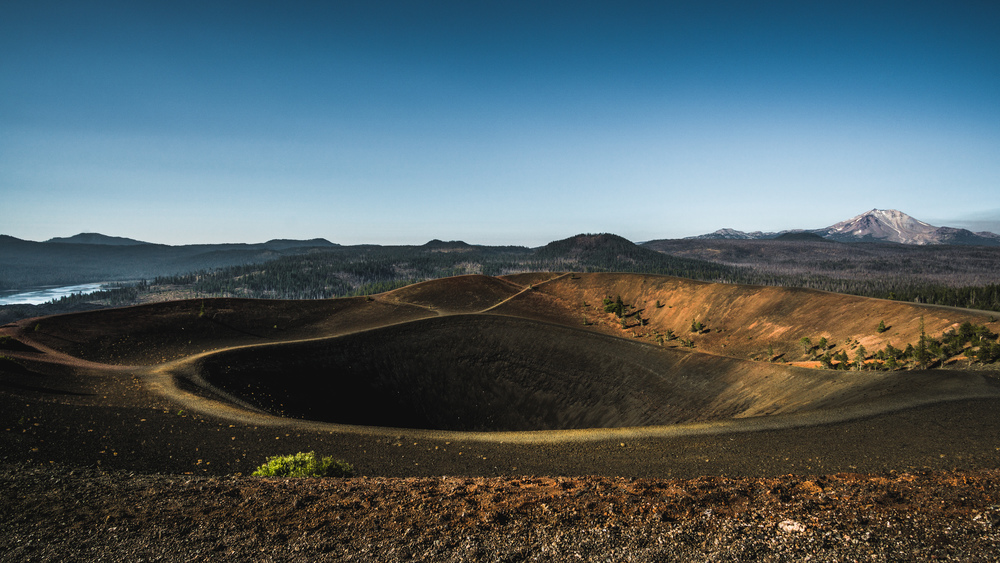
Needless to say, with such beautiful surroundings, it is a great idea to take that apple out of your bag and have a bit of a snack. Stay as long as you want at Cinder Cone — it is by far the highlight of the hike. But then, when you are done, go down the north side, then take veer almost 180 degrees back onto the bypass trail and head back down along Cinder Cone and the lava beds. Originally I had planned to fork off right onto the Nobles Emigrant Trail at the first crossing you get to, then take the PCT or the Cluster Lake Trail to get back to Summit Lake. However the ranger at the wilderness office had advised me that this area has been much ravaged by the 2012 Cluster Fire and so would not be that great to hike through. Hence I opted to only fork off to the right at the junction with the trail leading to Rainbow Lake. The trail will take you uphill for a bit and there won’t be much shade here (most trees around here are dead too), so since it is now getting to be late morning, you will get hot and it will feel to be a tougher uphill hike as it really is. Anyway, soon enough the trail goes back down again to Rainbow Lake.
From here, you just string up the lakes to get back to the trailhead: Lower Twin Lake, Upper Twin Lake, Echo Lake and finally Summit Lake. All of these lakes have clear, blue, refreshing waters, so really do take the chance and go for a quick swim in one of them (I took a dip in Lower Twin Lake) — this will cool you down (even in late summer, early autumn the water will be cold, though you will get used to it quickly) and nicely breaks up the hike for a bit. Do watch out for bears though, certainly leave no food outside, as bears tend to be active around these lakes.
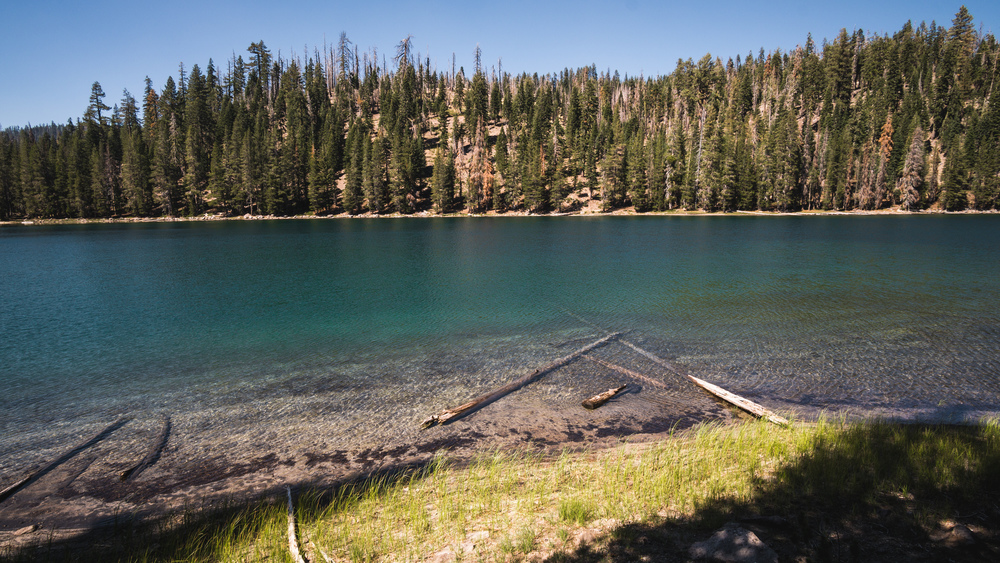
After Echo Lake, you will have to do a last ascent to a pleasant plateau with good views towards Lassen Peak before you head back down to Summit Lake. If you enjoyed this hike as much, you will pretty much be the happy, smiling hiker stepping off the trail onto the parking lot at the trailhead.
Data files (click on the links, then download whatever format you prefer from the gpsies site):
Leg 1: http://www.gpsies.com/map.do?fileId=xpbkcrwutijpxeae
Leg 2: http://www.gpsies.com/map.do?fileId=qnlebscbljhfenlu
Complete route: http://www.gpsies.com/map.do?fileId=waepujmeqbshyzcc
How long?
1 day or 2 days, 1 night
How many miles?
25 miles / 40 km
How?
Run / hike as a day trip
Hike + wilderness or campground camping
Map required, compass optional (i.e. well maintained & sign-posted trail — just follow the red tags)
Maps?
New York New Jersey Trail Conference Trail Map 141 (Northeastern Catskill Trails)
(You can probably also get a National Geographic topo map to do this route — certainly I saw 2 hikers with such a map on the trail — but whenever you can, get one of the NYNJ Conference maps — they are really high-quality, made by and for hikers, and the profits from the sale go straight back to maintaining the trails.)
Itinerary:
Prediger Road trailhead -> Stony Clove Notch -> Spruceton Road trailhead
Pretty much since I moved to NYC, I wanted to do the Devil’s Path. It is reputedly the toughest hike on the entire eastern seaboard and one of the first things I read about it was that it is one of the deadliest hikes in the US. The latter is also a consequence of the trail being very popular with hikers — the more people on a trail in a year, the more people that can die while on the trail (so it’s partly just a numbers game; rest assured: almost everyone doing the Devil’s Path will make it out alive). So given this almost mythical reputation of the trail, it is a bit of a surprise it took me well over a year and a half to get out and do it. No doubt the fact that you need to rent a car to get up there contributed to why it took me so long to get it done.
The most annoying thing about this hike is that it is one-way and not a loop. So unless you plan to make it a grueling 50 miles out-and-back hike, you need to either drive up with some friend(s) in 2 cars and leave one car at either end of the trail or arrange for a taxi company to drive you from the end to the start, resp. pick you up at the end (the former is obviously much easier as phone signal is not great in the region and you’d anyway would have to wait for the taxi to make it to the trailhead). I organised this trip on a whim on a Friday lunch time, so booked a rental car in NYC to be picked up at 4am on Saturday, and arranged to meet Smiley’s taxi in Tannersville at 7am. I found Smiley’s through hiking forums and sure enough they know all about the trail, will be able and happy to give you plenty of advice and they will also make sure that you’ve got everything you need before you set off (e.g. they tell you that there aren’t really any reliable water sources on the eastern half etc). For a simple hike, the taxi fare ($70 to drive with the taxi from Tannersville to the Spruceton road trailhead, leave my car there, then be driven to the Prediger Road trailhead — all of which took about 1 hour) obviously makes this hike more expensive than most hikes around NYC, but well, if it’s the only way to do it, so be it.
With this set-up it meant I was going to do the Devil’s Path from the East to the West. The eastern half is really what gives the route its name and reputation, so you front-load the toughest bits. If you do it the other way, you get to the hard stuff by the time you are already tired. The route itself is dead easy: just follow the red trail blazes from start to finish. When I did the Devil’s Path the trail was in good condition, except for occasional patches where the summer vegetation had grown over the trail.; but at no time was I at a loss where the trail was headed.
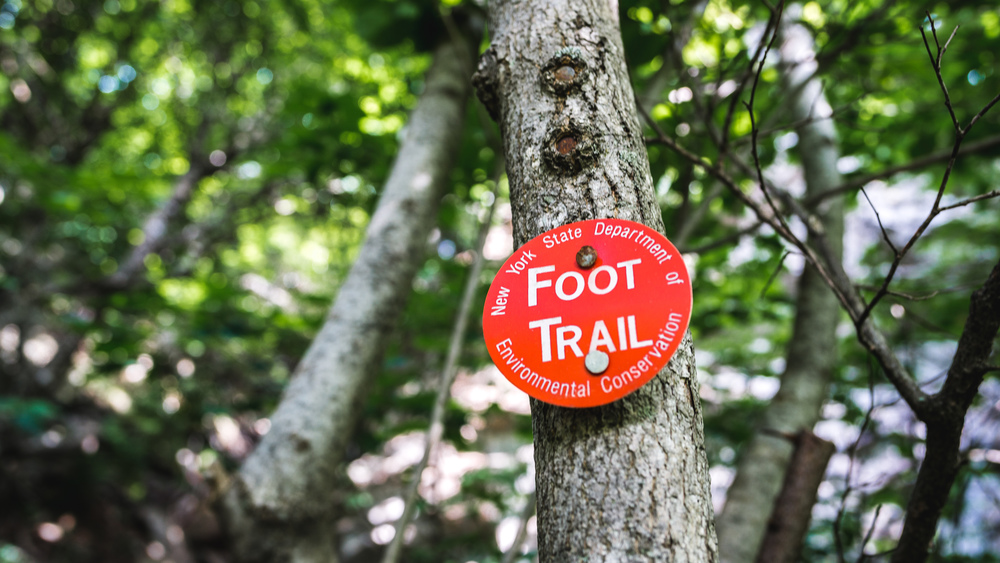
Starting from Prediger Road, the first few miles are quite easy: flat or with just a modest incline. For the first hour I did almost 5 miles (NB I did this as a run/hike, meaning anywhere it was not too steep or dangerous, I would jog/run). But soon enough, the climb proper to Indian Head will come up and it will be steep, no doubt about it.
In fact over the next 25 miles you will occasionally have to navigate near vertical inclines, using tree roots and rock features to haul your sorry ass up. But it’s all good fun.
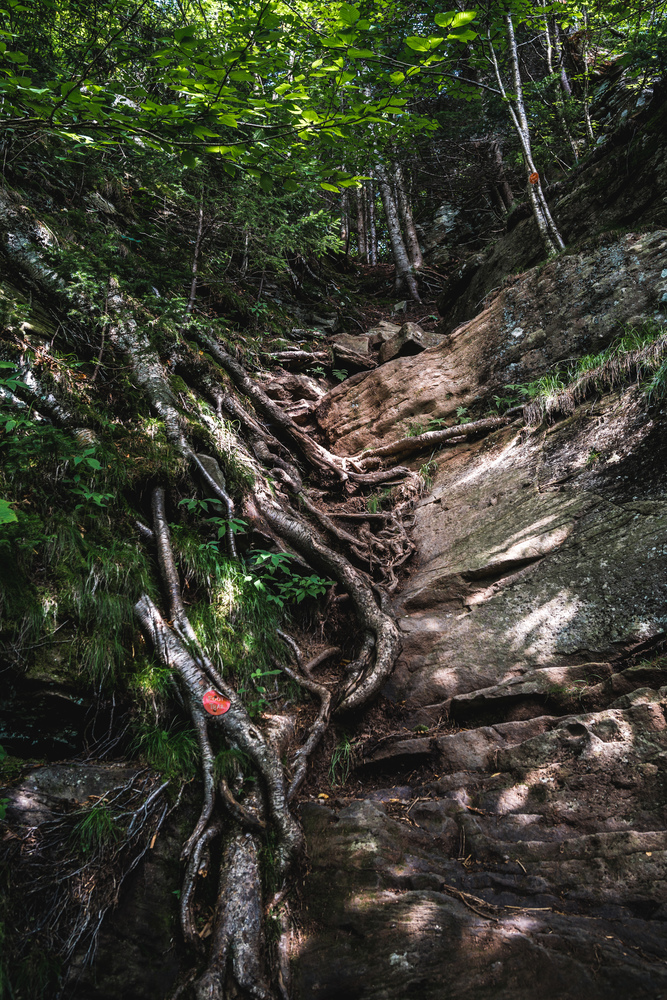
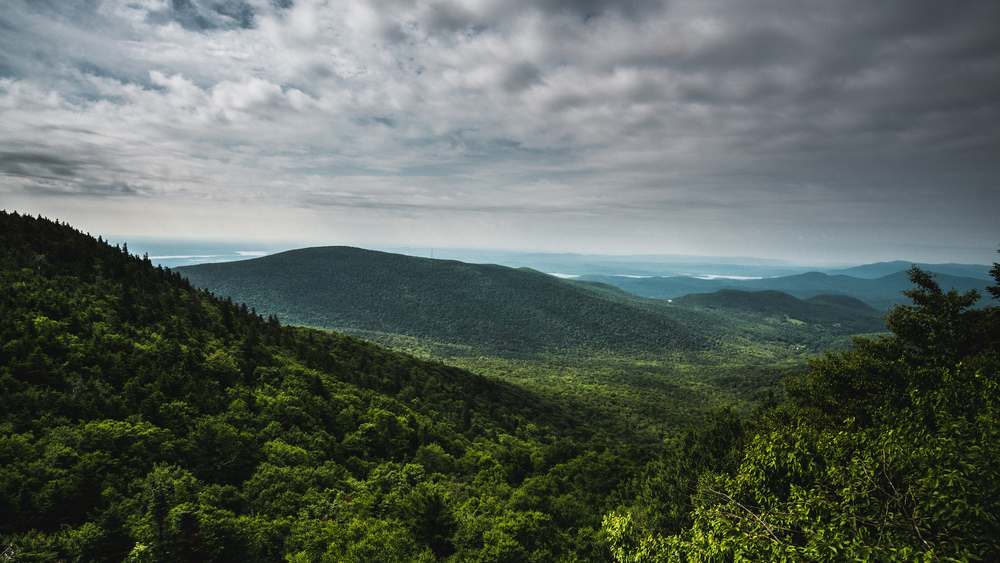
The Catskills have quite dense forest growing throughout and for almost all of the trail you will be hiking / running under a dense canopy, fairly oblivious to anything more than 100 yards off the trail. However, there will be occasional clearings, often rocky ledges, from which you get quite amazing, far-reaching vistas over the Catskills and even the Hudson river. There are really 3 main reasons why people do the Devil’s Path: i) the challenge, ii) the vistas, iii) the fact that you will bag 5 of the 35 Catskill High Peaks (defined as those over 3,500ft height). The 5 peaks you will get are: Indian Head, Twin, Sugarloaf, Plateau (all on the eastern half) and West Kill (on the western half). If you are OK to do 2 short-ish detours, you can claim 2 more: Hunter and Southwest Hunter.
The Devil’s Path is so tough because you go up and down and up and down and up and down. It’s no easy ridge hike. Each and every mountain along the route will need to be climbed from the bottom up. Also, do not underestimate the descents as these can be quite technical. Especially when you come down Twin Mountain, you have to navigate quite a few steep sections and sharp rocks. This slowed my progress quite a bit — you simply cannot run downhill on that stuff.
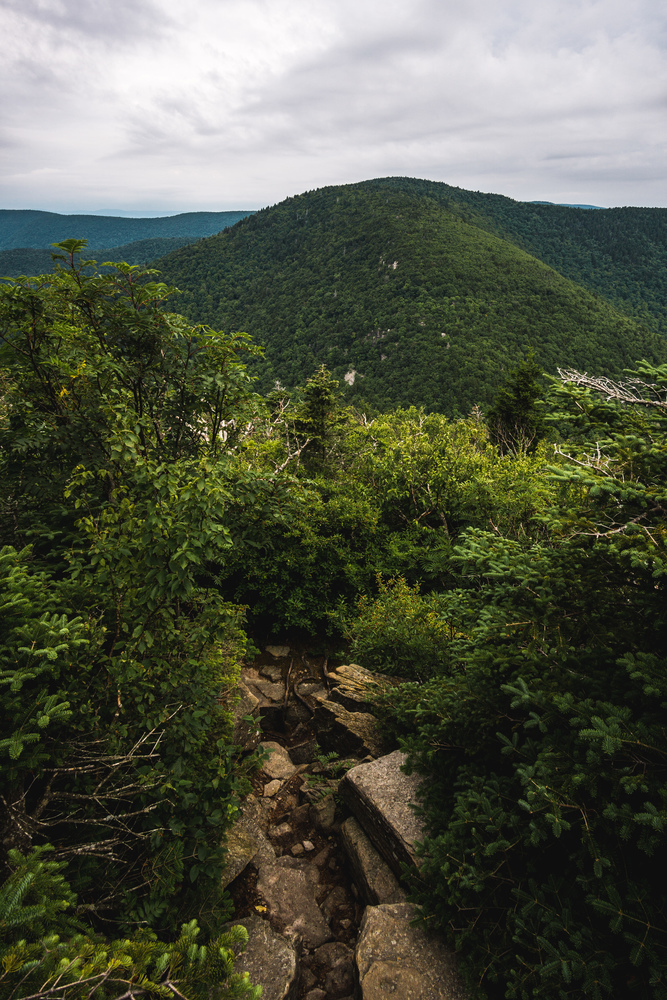
After Twin Mountsin, the trail takes you up the next Catkills Peak: Sugarloaf Mountain. If you have not felt the effort until now, you will certainly feel fatigue set in by the time you reach the summit of Sugarloaf. It’s another long, tough climb up and the descent from Sugarloaf is quite technical too with several sections of loose rocks and parts where you have to squeeze through in-between rocks. There was a solid rain shower as I made my way up Sugarloaf and this slowed my progress, since for the descents now, the rocks had become wet and slippery, so running was not always possible, even on the flatter sections.
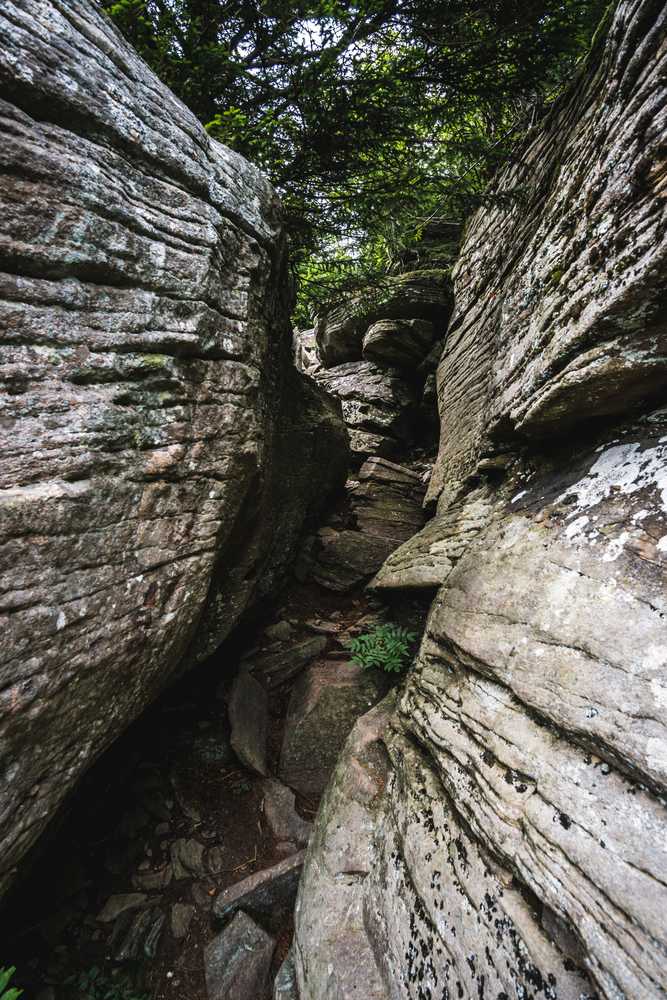
After Sugarloaf you still have to get over Plateau Mountain and once you come down this, you will cross a road: route 214 at Stony Clove Notch. Though you technically have done a bit over half of the distance by now (certainly the toughest bits are done and dusted now), mentally it feels as half-way since the road divides the Devil’s Path into its eastern and western halves. At Stony Clove Notch there is a small artificial lake, Notch Lake, and if you walk a bit down the road there would be a ranger station and Devil’s Tombstone campground. If you plan to make it a 2-day hike and not camp in the wilderness or a lean-to, then this would be your base. Some people also leave their car at the trailhead parking in Stony Clove Notch (note though that parking fees apply at this trailhead), since that gives them the option to pull out half-way.
Anyway, there is a water fountain, so be sure to fill up your water bottle, and, if you did not already have lunch at one of the overviews, here would be a nice enough spot too.
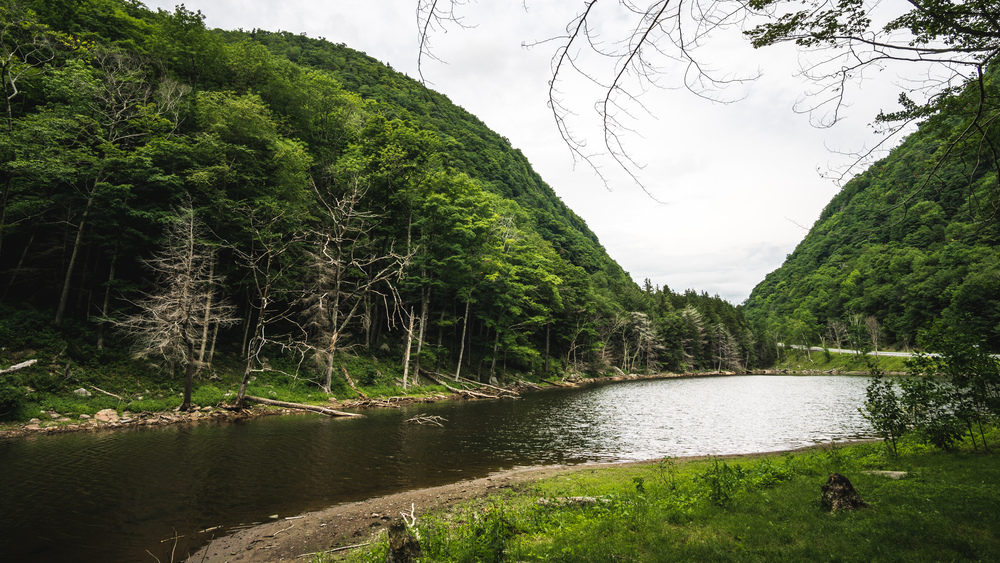
After this, you only have two more significant ascents to make: up the side of Hunter Mountain (you don’t go to the top, you cross the saddle between Hunter and Southwest Hunter; going to the top of Hunter mountain is a 1.6 mile one-way detour, so would add ~3.2 miles / 5km to your route; going to SW Hunter is a ~1 mile one-way detour) and up West Kill. There is a little side-peak to West Kill that you ascend after West Kill which barely looks noticeable on the map, but that last steep ascent comes a bit as a surprise, and you really are tired by then, so be aware it is there waiting for you at the end.
When I started going up Hunter Mountain, it started raining again and except for a short break in the downpour on top of West Kill, it kept raining for the rest of the day. Thankfully, this being July, it was fairly warm and so I did not suffer from hypothermia after becoming thoroughly soaked. Anyway, well prepared, I had spare dry clothes in my day pack, so could have changed if needed. The break in the rain was well-timed as it coincided with my arrival at one of the few viewpoints on the western half. The view from West Kill over the fog- and rain-swept Catskills was quite a sight to behold. I only encountered 3 other groups of hikers on the entire western part — the rain had kept people away (and 2 of those 3 groups were on their way down, after changing their plans due to the rain).
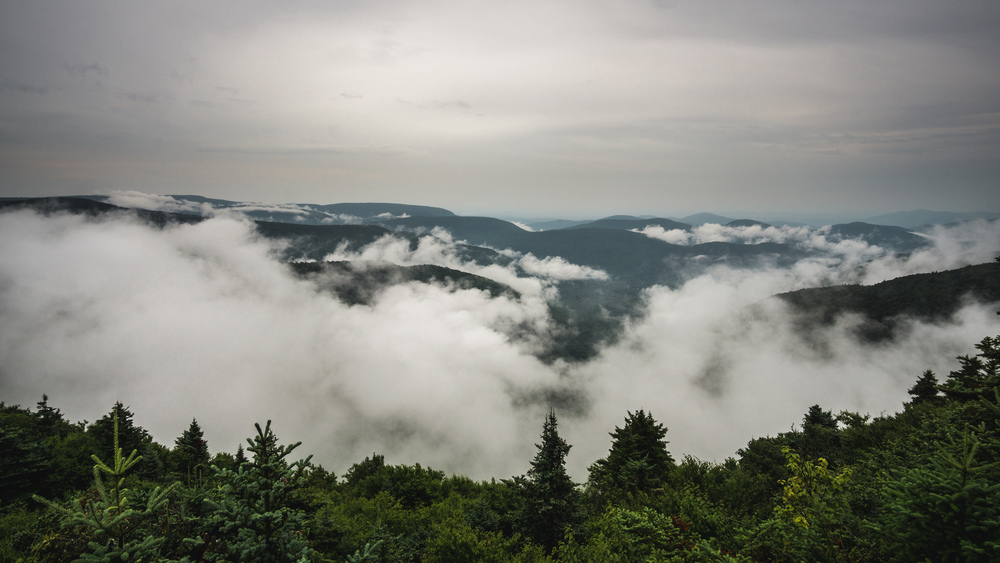
The descent from West Kills is fairly straightforward, though quite long. By this time I just wanted to get it over with: there were no more viewpoints, the forest is quite dense in this part and it was raining hard. The ground had become a wet mess and I slipped a few times — I still ran from time to time, but quite sparingly so; it was just too risky.
When I reached the car, I had been out on the trail for exactly 9 hours. I was a bit disappointed, as I thought I could have managed about 3 hours less, but it is a really tough route and the rain had prevented me from letting rip on the descents.
Final thoughts?
While super tough, I was a bit disappointed by the trail in the end. This is supposed to be the toughest, deadliest and generally most kick-ass trail in the eastern US; yet while some of the ascents are super steep and tough, there was less scrambling involved than I thought and I never once felt in real danger. I have done routes that involved scrambling on loose rock with a 600ft sheer drop to one side (e.g. the Snowdon Horseshoe loop), hence this slight anti-climax. Also, while a nice and rewarding hike, there are fewer viewpoints than you might expect — most of the time you are surrounded by dense bush. Don’t get me wrong: considering you cover 25 miles and numerous peaks, you will get your fair share of absolutely stunning vistas to behold, but you would have thought there would be more of those welcome breaks along the long, grueling hike. Most of the time you are “just” looking at trees, plants, rocks and the trail ahead of you. I am glad I have done it now finally, and as a day hike / run too, but I am not sure I will do it again any time soon (certainly not in its entirety).
Data files (click on the link, then download whatever format you prefer from the gpsies website):
One-way (drop you car at the final trailhead or arrange a pick-up for the end): http://www.gpsies.com/map.do?fileId=grixwiueoyzlljsg
]]>How long?
2 days, 1 night
How many miles?
540 miles / 870 km (without the overnight hike; that one is ~15 miles one-way)
How?
Road trip + wilderness / backcountry camping
Map required, compass optional (i.e. well maintained & sign-posted trail — anyway you just have to follow the river)
Maps?
Satnav / phone for driving or Washington / Seattle / Olympic Peninsula road map
National Geographic Trails Illustrated Map #216 (for hiking and driving on the Olympic Peninsula)
Itinerary:
Seattle Airport-> Seattle (optional) -> Hurricane Ridge -> Ruby Beach -> Graves Creek trailhead -> Kalaloch -> Seattle Airport
Leg 1 (Seattle Airport-> Seattle (optional) -> Hurricane Ridge -> Ruby Beach -> Graves Creek trailhead):
My flight was scheduled to land at SEA at midnight, but we came in about an hour late. My plan had been to take a short drive north from the airport and cruise through Seattle at night. The drive from the airport to Hurricane Ridge takes about 3 hours and I wanted to be there in time for sunrise, which was at around 5.30am (late July). The drive up to Seattle is about 20-30min. So while there was still plenty of time to drive up, there was not much time / point to actually drive leisurely through Seattle, so I just drove to Harbor Avenue in West Seattle and enjoyed the skyline, with the iconic Space Needle (built for the 1962 World Fair), from there. Now if you’ve already been to Seattle or don’t care much about cities, then skip this detour and head straight fir the Olympic Peninsula — you will be able to catch one or two hours’ sleep in your car after you arrive. I had slept on the flight over from NYC and while my body clock complained just a bit, this was enough to keep me going and so I happily went for the detour to Seattle.
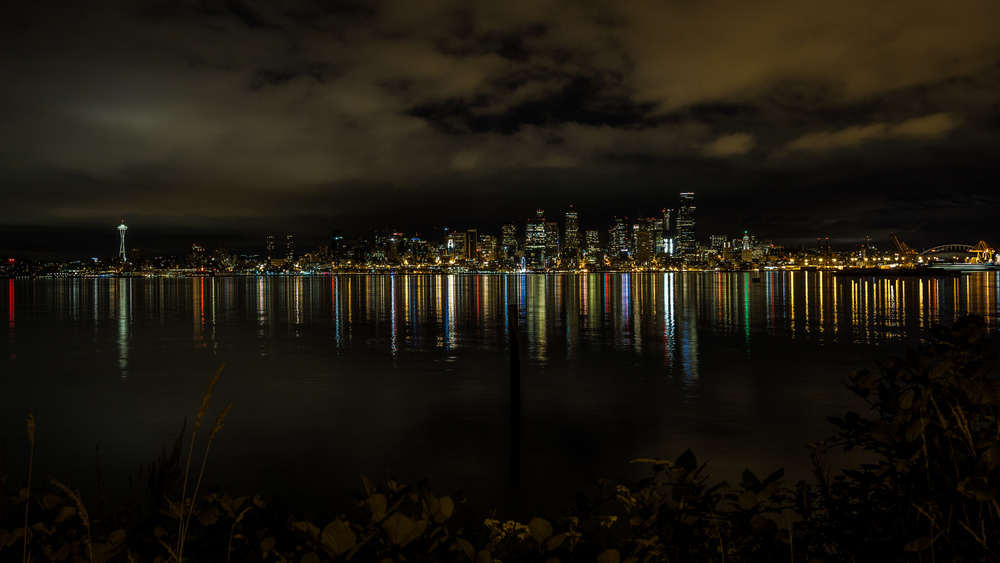
After that it is an easy drive over to Hurricane Ridge (take the interstate 5 south, then follow routes 16, 3, 104 and finally 101). There were occasional rain showers and plenty of fog as I drove to the national park, so you should really be able to be super alert in the car. I was a bit concerned that there was not going to be much of a sunrise in this sorry weather, but as I drove up Hurricane Ridge road (N.B.: if you do not have an interagency park pass, don’t forget to pay your fee at the machine at the park entrance) with twilight in full swing, the clouds started to break (or rather, I was driving up out of the low clouds) and I started to get a glimpse now and again of the mountains looming before me, with extra mood provided by the moon.
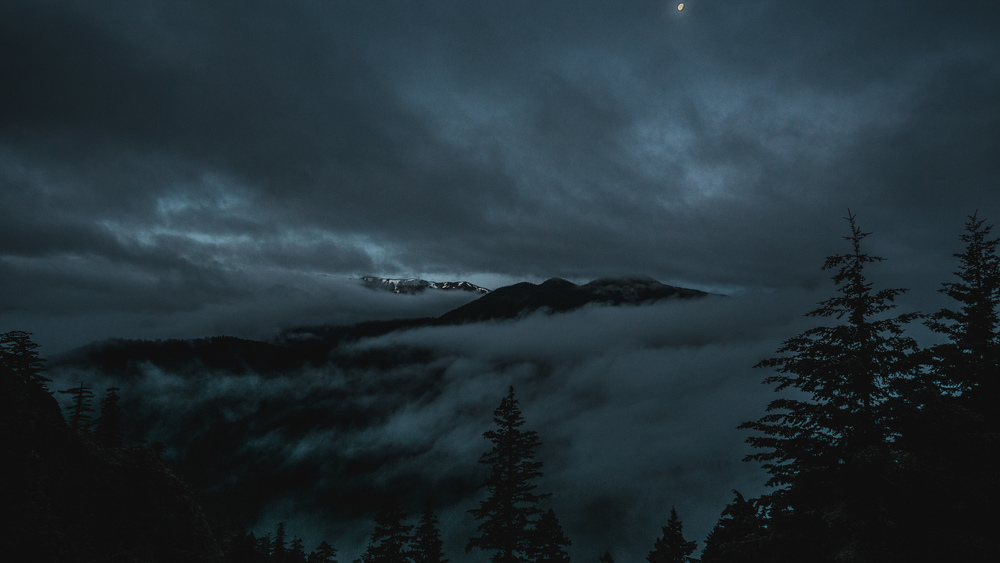
Finally up on Hurricane Ridge, there was fog initially, but it lifted and there were stunning views to be had. The clouds were all lying in the surrounding valleys and you really got the impression of towering over a sea of clouds, with only the high mountains piercing through. There is a short trail you can do from the parking lot (half a mile or so in total length) which takes you to an aptly named Sunrise Point, but with great views all along the trail (see the magical fog-shrouded landscape that presented itself to me on this trail as captured by the feature image for this post).
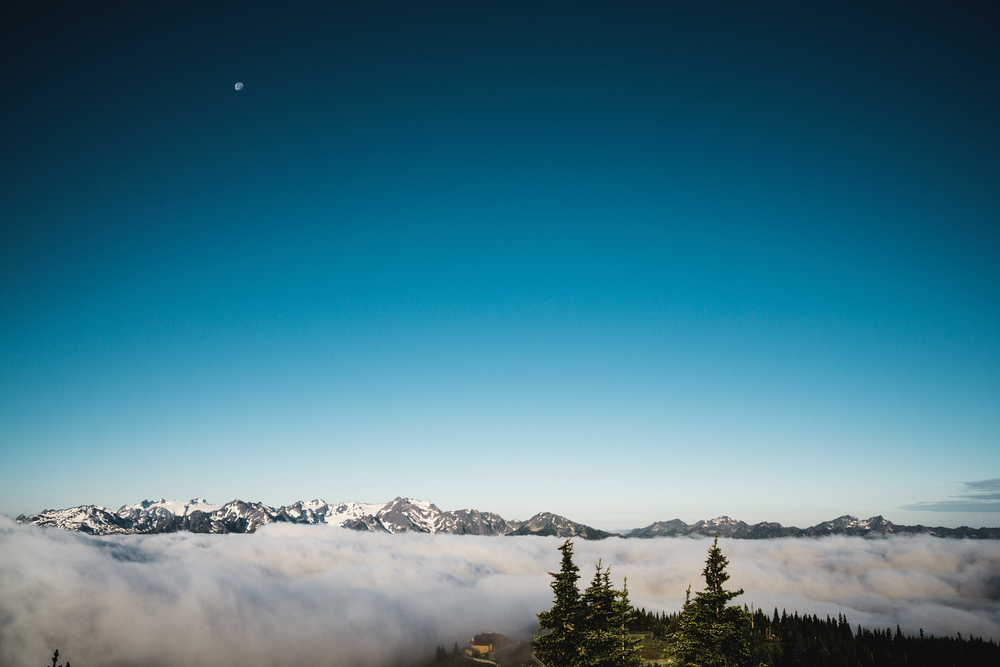
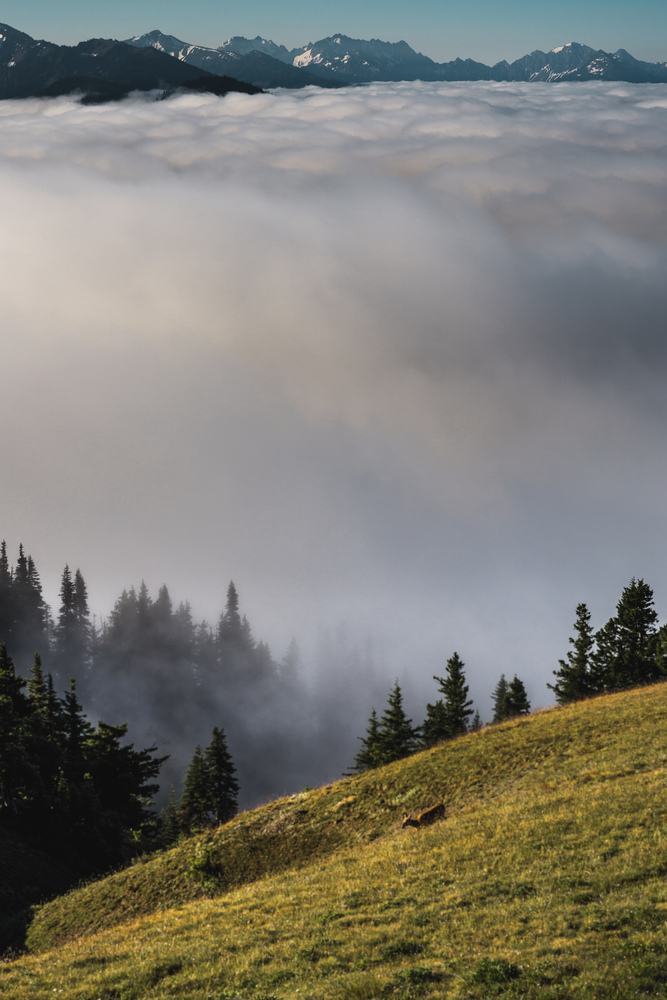
I regretted not taking my tripod with me as there would have been excellent material for capturing time-lapses of the slow moving clouds in the valley. Anyway there were great pictures to be taken. On the meadows next to the visitor center, a couple of deer came up from the valley and out into the sun, munching happily on the grass.
If you brought picnic, this would make for a great picnic spot. I had not (or rather had eaten my sandwich on the flight) and so was getting a bit hungry. The visitor center would have been convenient but it only opens at 9am, so after having had my fill of the views, I drove down to Port Angeles and had a good heart breakfast at a place called Cafe Garden.
After this, I headed back up to the visitor center in Port Angeles to get my backcountry permit for the night. If you want to do one of the quota limited hikes (e.g. Upper Royal Basin), then it might be best to first get the permit as soon as they open, as there will be a queue of people. I had decided to hike into the Enchanted Valley where there are no limits, so satisfied my hunger first, then went to the backcountry office, after the early queue had cleared.
From Port Angeles I headed for Ruby Beach – a solid 1h45min / 2h drive. Shi Shi Beach might be more impressive (I don’t know as I did not go), but is is a detour and requires you to hike a few miles for none of which I had time, as the hike to Enchanted Valley is a whopping 15 miles long… But if you plan to stay in a guest house somewhere, or do your overnight hike to Shi Shi Beach (my original plan, but reports of serious mosquito trouble and ~100-200 people camping out there on a summer weekend, I decided against this), then by all means do this.
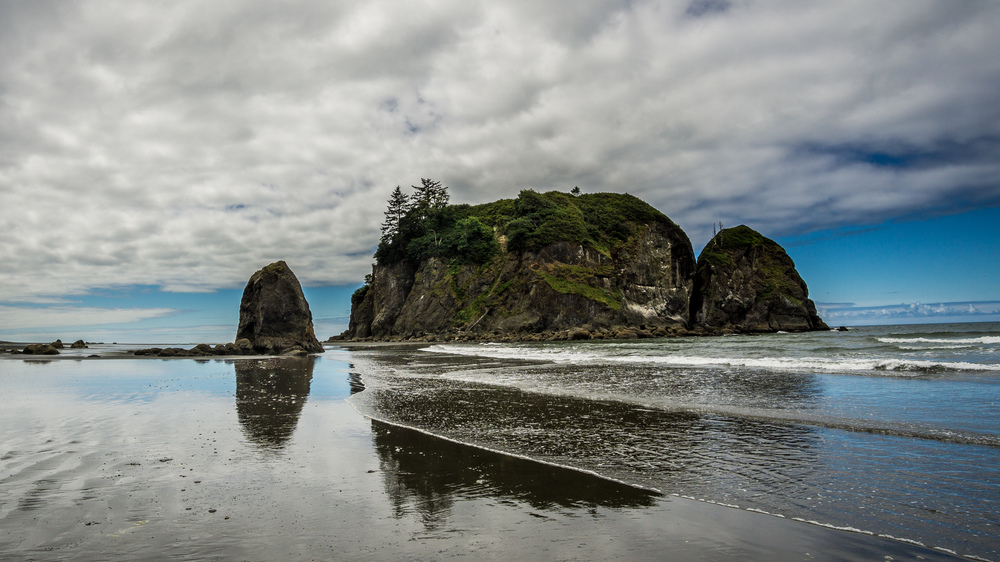
Ruby Beach is conveniently situated along the route from Port Angeles to the Quinault rain forest area, and you only have to hike a quarter mile from the parking lot to the beach. While popular, you will still be awestruck by how wild this beach looks, with Abbey Island towering over it. Ideally the tide is low when you get there (I had of course planned this to perfection…) and you can hike a mile or so up north along the beach. If you’re more flexible with time, hike up the full 3 miles or so to the mouth of the Hoh river and then back down (but really only do this if you have studied the tide chart before setting off as you otherwise risk having your way back getting cut off!). Also, apart from the barnacles, clams, snails, crabs etc that will abound in the tide pools and rock face, keep a look out to the ocean for sea otters and whales. I saw one sea otter hunting just south of Abbey Island. For this it is a good idea to bring a solid pair of binoculars with you as the otters will be quite a bit out at sea.
I still had good 5-6h hike before me, so only went up for a mile or so, then headed back, got into my car and drove to Lake Quinault and the Graves Creek trailhead.
Hike (Enchanted Valley):
See my detailed post on this hike here. It’s a nice, but long hike. You will be walking mostly through old growth forest, going up the east fork of the river Quinault. The namesake valley is truly deserving of its name and in spring you should be almost guaranteed to see bears here (good to know if you want to avoid bear encounters!). However if you just want to get a maximum of scenery in, then consider trying to get a permit for the Upper Royal Basin, which I hear should be nothing less than spectacular. If you do this, then you might have to adjust the route for this road trip, as your trailhead would be in a quite different part of the park.
Leg 2 (Graves Creek trailhead -> Kalaloch -> Seattle Airport):
If you follow my route, then your day starts with another 5-6h hike: back the way from Enchanted Valley to Graves Creek trailhead. By the time you are back at the car it is lunch time, and there is only so much you can still hope to do, given that you have to catch a flight from the Seattle-Tacoma airport in the evening (if you only got the weekend as I did).
Now the sea otters had quite gotten to me the previous day, so I decided to head back up to a beach to see if I could spot some more. I stopped at Kalaloch, as there was a gazebo up above the beach from which it as much easier to have a good view then down from sea level. Sure enough there were 2 groups of a dozen otters each hunting near the Kalaloch rocks.
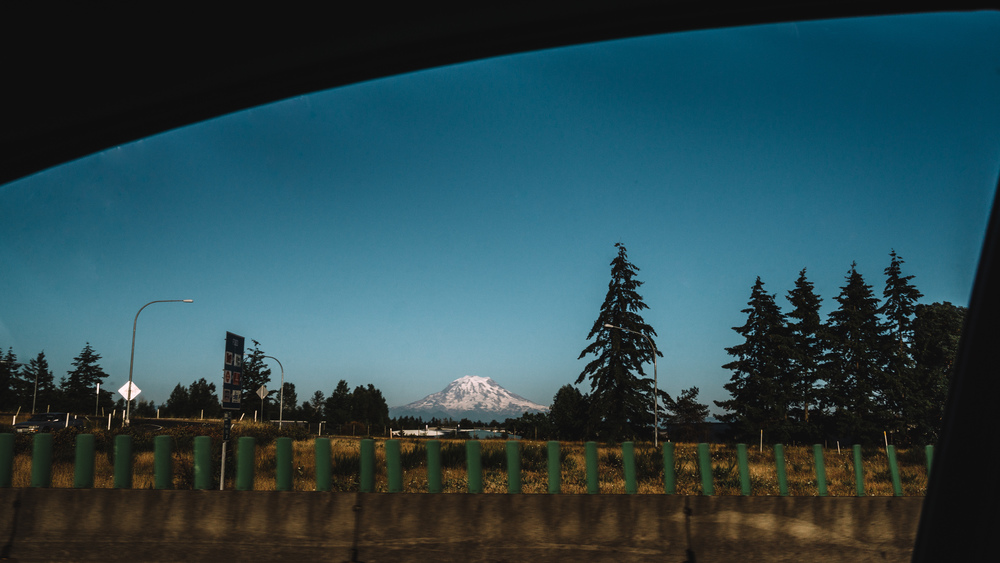
After also getting some late lunch here, I got back to my car and set off for the long drive back to the airport. If the weather is clear then Mount Rainier will loom up spectacularly along the highway at times, so enjoy the drive even if the traffic on a Sunday late afternoon / evening might be bad at times (as it was in my case).
Final notes:
A great little trip, but really a weekend does the park no justice. I did not get to see Shi Shi Beach or hike up in the mountains proper. So I will be back for sure and stay longer than just 2 days, 1 night. But still, considering how charged my weekend was and how much I got to see, it’s difficult to see how to cram in more into such a short time.
Data files (click on the link, then download whatever format you prefer from the gpsies website):
Leg 1 (Seattle, Hurrican Ridge, Ruby Beach, Quinault area): http://www.gpsies.com/map.do?fileId=wotoposopswojapn
Leg 2 (Quinault area, Kalaloch, Seattle): http://www.gpsies.com/map.do?fileId=lwkreedupfxfbyjw
Complete Route: http://www.gpsies.com/map.do?fileId=nzhdhjrbuhayitcq
How long?
2 days, 1 night
How many miles?
32 miles / 52 km
How?
Hiking + wilderness / backcountry camping
Map required, compass optional (i.e. well maintained & sign-posted trail — anyway you just have to follow the river)
Maps?
National Geographic Trails Illustrated Map #216
Itinerary:
Graves Creek trailhead -> Enchanted Valley -> Graves Creek trailhead
The route couldn’t be easier: from Lake Quinault, follow the South Shore Road until it becomes a dirt road and changes name to Graves Creek Road, then follow this to the end. Park your car, and follow the east fork of the Quinault river for ~15-16 miles until you get to a large-ish valley: you’ve arrived in Enchanted Valley. There is only one trail crossing, 200 yards beyond the official trailhead, where you need to take the trail to the right and that’s it — you just follow the main trail for the rest of it. You hardly need a map for this hike. You will need a backcountry permit from a ranger station, but you can get that in Quinault on your way to the trailhead. Permits are not limited for Enchanted Valley, so you will be guaranteed to get one.
Graves Creek road has been washed out for some time now it seems and is likely to remain so for some time more. The river bed moved and claimed a short section of the road and is perilously close to the road in other parts. This now means that the trail head is essentially 2.5 miles earlier down the road, with an improvised side-of-the-road parking area and makeshift turn-around point. Graves Creek campground is now essentially a backcountry / wilderness campground and the ranger station at Graves Creek looked unmanned at the time of my visit. That said, it’s a flat 2.5 miles and pleasant enough: you have good views over the Quinault river and there are beautiful patches of moss-covered old-growth forest along the trail / dirt road.
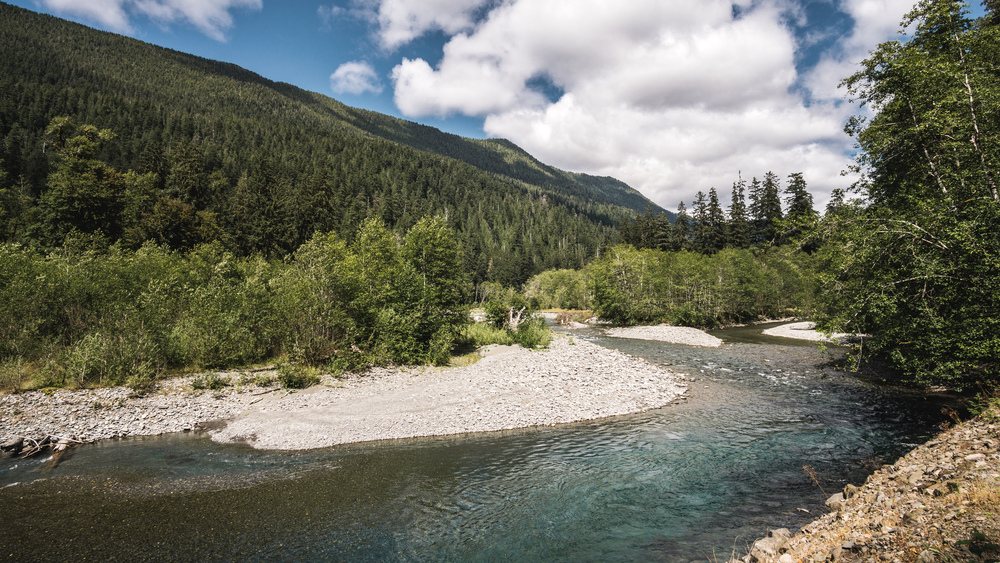
After 2 miles you will come past the Graves Creek campground and then the ranger station. The official trailhead is another half mile (maybe a little less) up the road. You cross a bridge and you are off for a 13.5 miles hike through prime Olympic rain forest.
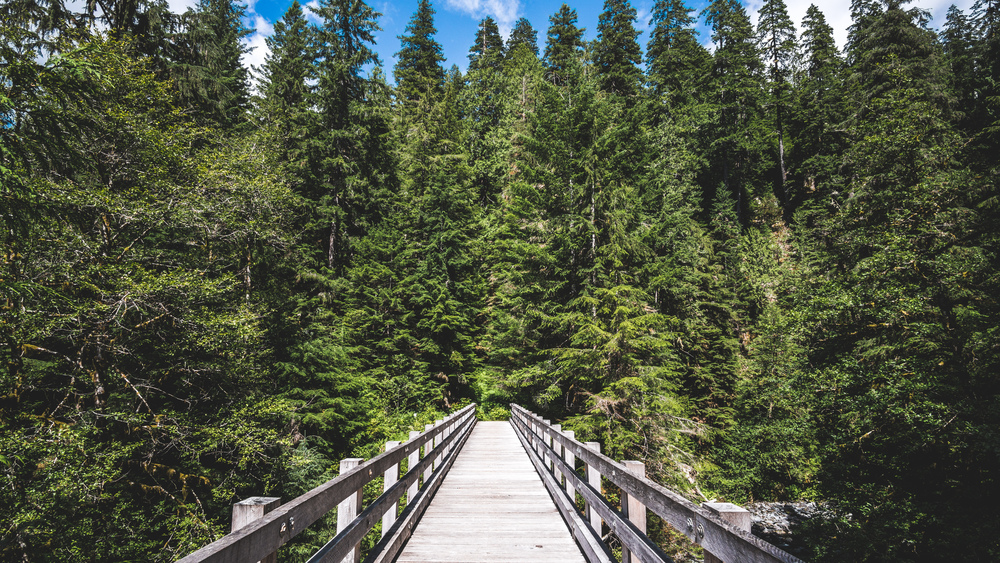
There is not so much to say about the hike itself. It’s a straightforward affair, and to be fair, a bit repetitive after a while. You pretty much stay in the dense woodwork except for a few clearings as you get close to the river bank. When I did the hike (July 2016), ranger crews had cleared the trail up to the O’Neil camp site. For the second half of the trail to Enchanted Valley you then had to climb over fallen trees now and again, the longest bit involving crossing the Quinault river twice over fallen tree trunks. That said, I quite liked that as it added a bit of fun to the hike (the ranger at Port Angeles where I got my permit told me I would have to ford the river, but thanks to the tree trunks this was not necessary). You will hike past 3 other wilderness camp sites: Pony Bridge, Pyrites Creek and O’Neil Creek — so if you do not wish to push all the way to valley, you can set up camp there too (or split the trip into 2-3 nights…).
In spring this trail, and Enchanted Valley in particular, are great for bear spotting (so the ranger said) but less so in Summer. And sure enough, I did not come across any bear. There was however an osprey very actively hunting in the valley when I got there and it was quite a sight to see it soaring across the valley floor.
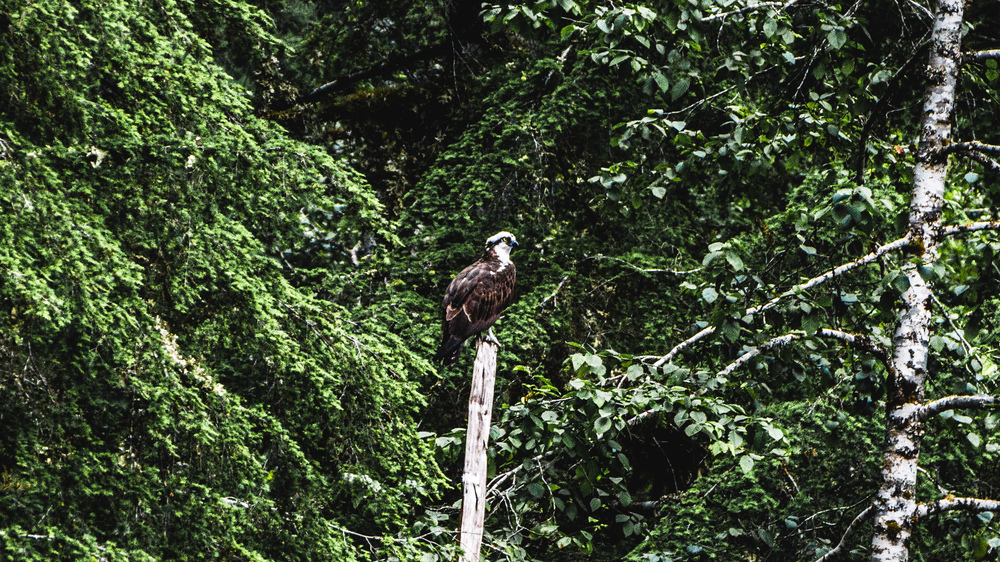
Once you are in the valley, you can pretty much pitch your tent where you want, though you really should pitch it on a previously disturbed / used camp site. I was actually surprised by how many people there were in the valley (it is a long-ish hike after all, with much less spectacular scenery than the beach or mountain hikes in Olympic NP, and the weather, overcast & grey, wasn’t so great either). Most seem to stick fairly close to the old ranger chalet, but the valley is spacious and you should be able to find a nice secluded spot out of the way of the other hikers. There are 2 pit toilets in the valley, which is nice as you do not have to do any digging and don’t have to carry out your used toilet paper. The ranger chalet is quite picturesque, and when I arrived in the evening the clouds were hugging the mountain ride opposite.
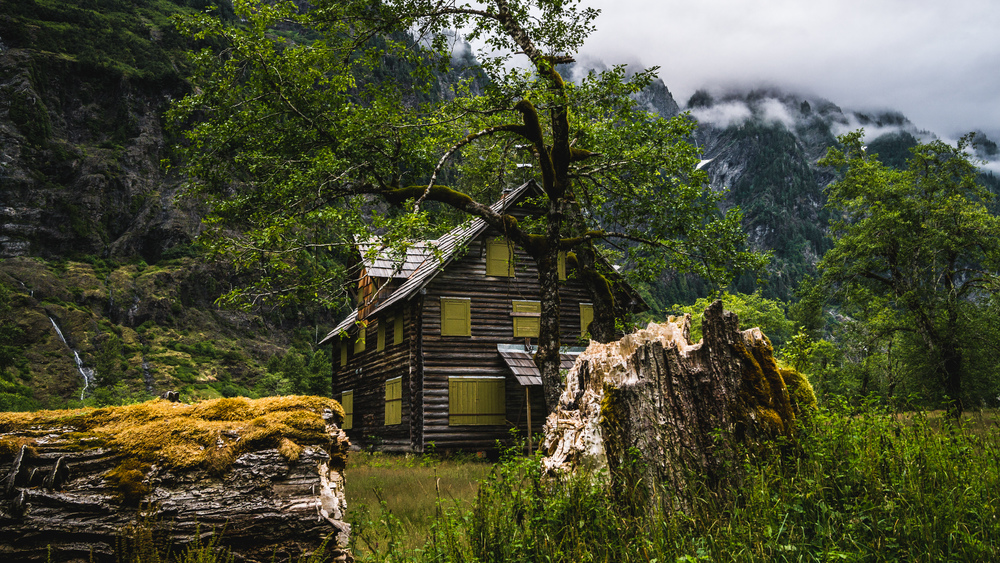
The skies cleared over night and sunrise in the valley was beautiful and spectacular. There was quite a lot of morning dew, so I had to pack up my tent wet and then dry it in the car / at home.
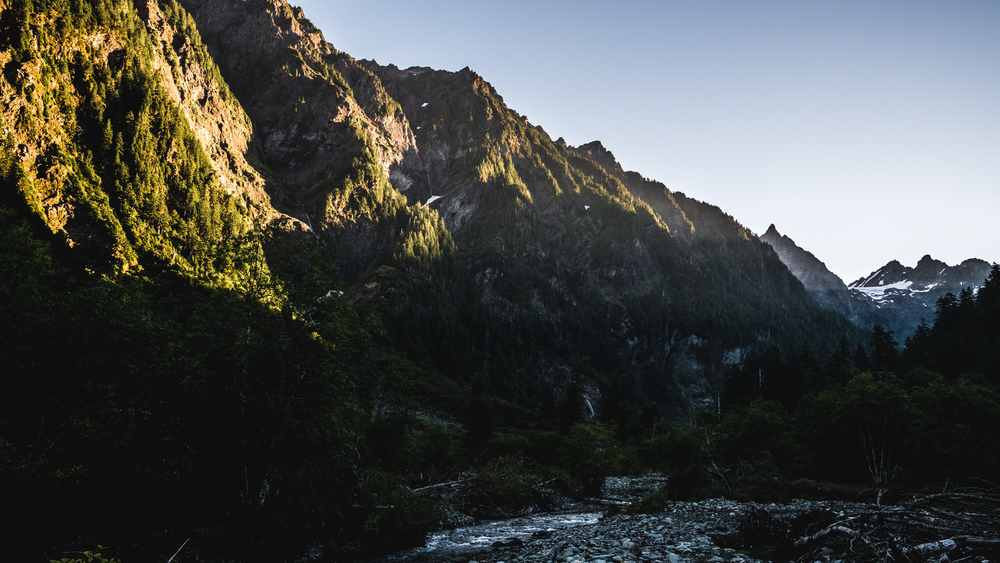
After a good hearty breakfast, pack you stuff and then just hike back to Graves Creek road the way you came in. Not so exciting, but if you want to make a looping hike here, it will be quite a bit longer and you’d have to plan spending 2-3 nights out in the wilderness. But it can definitely be done, but since I was only here for a weekend, it was not an option for me.
What would I do differently now that I’ve done this
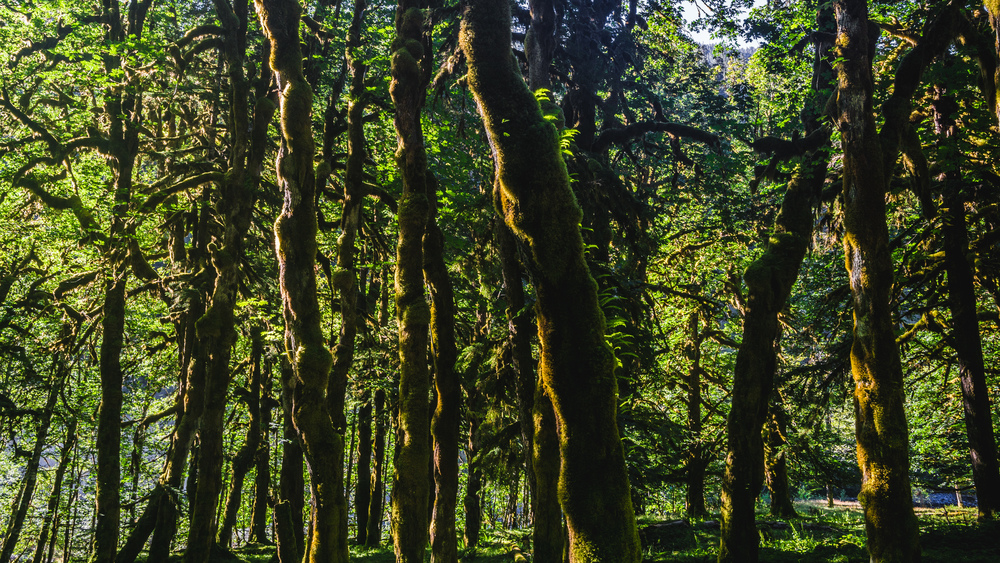
I had decided against camping out on one of the beaches since I read that in summer the bugs will be fierce there at dusk and dawn and also since I read that Shi-Shi beach on a summer weekend can see as much as 100-150 people camping out there. I also decided against one of the hikes in the mountains (e.g. the hike up to the Upper Royal Basin is supposed to be amazing) as I had been out to Yosemite NP not so long ago and figured it would be similar to that, so wanted a bit of a changed of scenery. That left only the third of Olympic’s 3 ecosystems: the rain forest. Enchanted Valley seemed perfect: much of the rain forest and probably much fewer crowds than you’d get at Hoh Forest. That said this is probably not the best one-night backpacking trip you can do. The rain forest is really, really nice (just look at the cover image for this post!) but 15 miles is a lot of it, so you have enough of it after a while. The Enchanted Valley is also really, really beautiful, but still not sure if it is worth hiking several hours for (one-way took me 5h, and I was going at a decent pace!). One big reason for me to do this hike was the chance to see bears, but alas this was not meant to be. If all of this sounds quite negative, then that’s only relative. It is a really great hike with great scenery, but compared to the scenery you can get in other parts of Olympic NP it’s probably not the most scenic and spectacular.
Data files (click on the link, then download whatever format you prefer from the gpsies website):
One-way (just hike the same route back the next day): http://www.gpsies.com/map.do?fileId=ptjxwfotlnmqsaql
]]>How long?
3 days, 2 nights (really just 2 half days, 1 full day and 2 nights)
How many miles?
26 miles / 42km
How?
Hiking + wilderness / backcountry camping
Map required, compass optional (i.e. well maintained & sign-posted trails & prominent features all around; still I would carry a compass just in case)
Maps?
National Geographic Trails Illustrated Map #206 or #306 (I’d recommend #306 over #206 though)
Itinerary:
Glacier Point -> Little Yosemite Valley campground -> valley between Illilouette Ridge and Mount Starr King -> Glacier Point
Leg 1: Glacier Point -> Little Yosemite Valley
The route for this leg is incredibly simple: starting from Glacier Point follow the Panorama trail until it merges with the John Muir trail and follow this one until Little Yosemite Valley. This first leg is just over 7 miles of hiking, and mostly downhill. So you can set off in the afternoon if you want to arrive at the campground in the early evening.
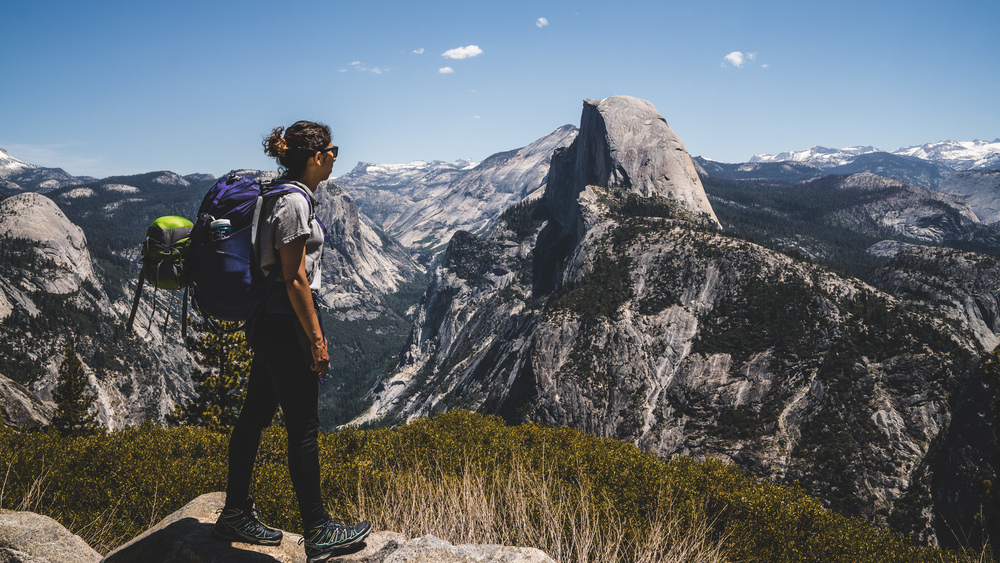
This leg is incredibly scenic. Stepping out of the parking lot, it’s just BOOM! and already you will be overwhelmed with a jaw-dropping view over Yosemite Valley and Half Dome. But it will continue: the Panorama trail has well deserved its name. You will also walk by two very beautiful water falls: Illilouette Falls, and then later, the much bigger (and popular) Nevada Falls.
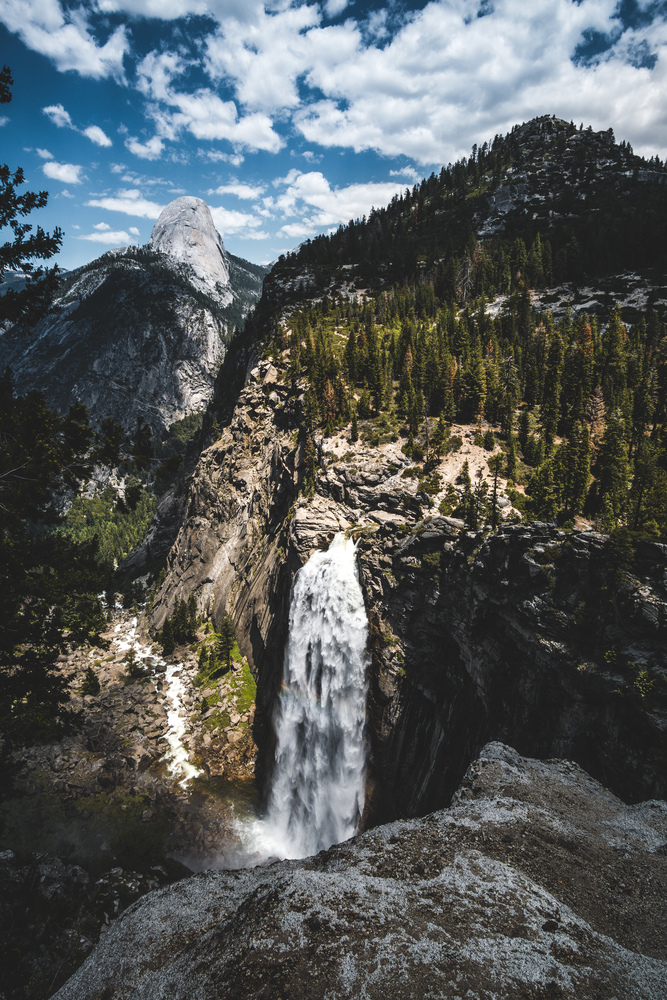
Since it’s so scenic, enjoy the views and take your time. Have a snack or, why not, a late lunch at either Illilouette Falls or Nevada Falls. Or just sit down and gaze over the valley below.
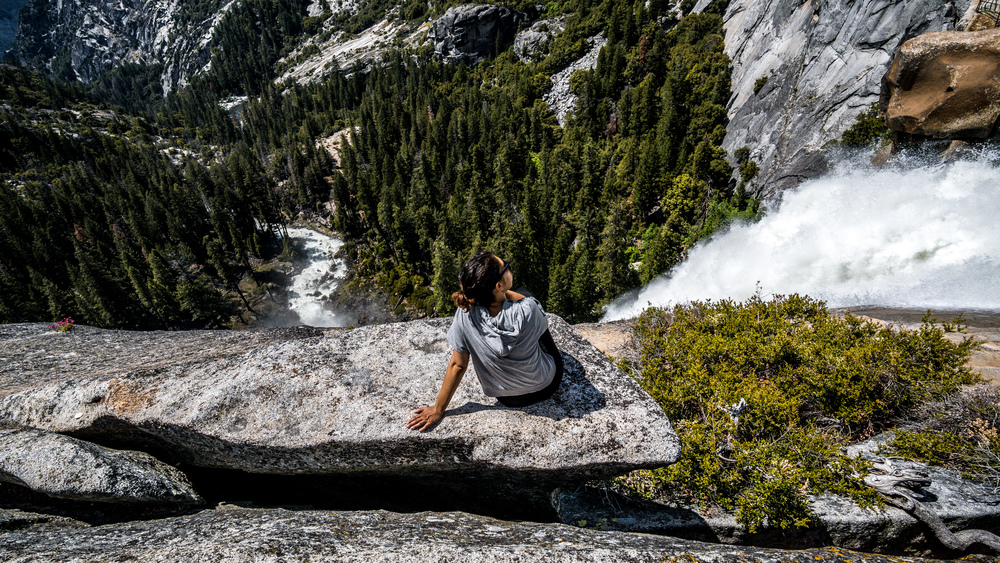
Pitch your tent at the Little Yosemite Valley campground. The whole point of pitching your tent here is so that you can leave your tent and all your heavy stuff here and only carry water and some snacks for the Half Dome ascent (that part is the real butt-kicker of this trip, so you want travel as lightly as possible on that bit) in the morning of the next day.
Half Dome ascent:
For the Half Dome ascent, simply follow the John Muir trail some more until the Half Dome ascent trail branches off. The trail will go uphill modestly at first and you will walk across a pleasant forest. Just before you get to the famous Half Dome cables, right after the sign telling you that you now really, really need a permit to continue on this trail, you will have to deal with a first, very steep section that will take you right above the tree line. The views will be worth the effort. You will be quite exposed to the elements here. In our case this was just the sun, but even at 8am it was already burning fiercely — remember you are at altitude here.
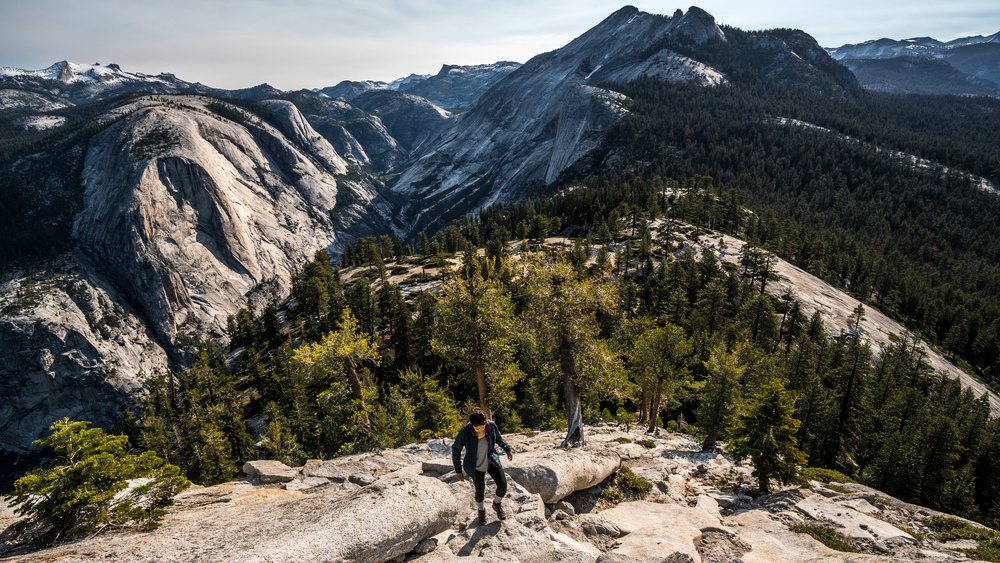
After that first serious uphill bit, you get a short respite and then you will reach the much dreaded cables. Be sure to bring gloves (though there is a good stockpile of old gloves at the foot of the cables) and shoes with solid grip. You don’t need any climbing skills to manage the cables, but it’s still not for the faint-hearted or those with serious vertigo issues. It’s quite steep and since you are at altitude you will find that you will need to catch your breath from time to time. You are also extremely exposed here (and will stay so at the top), so don’t attempt the ascent if you see a storm heading your way.
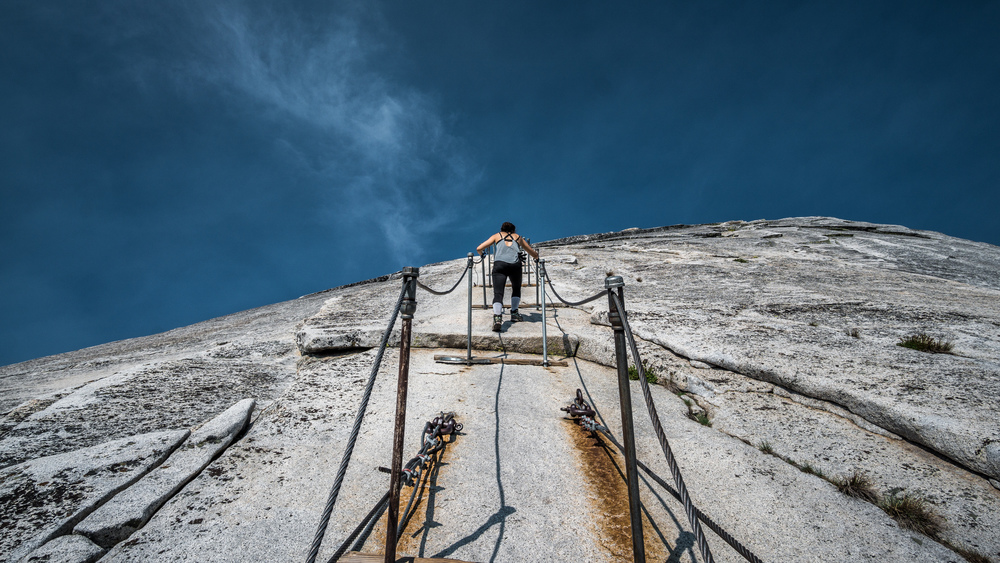
The view from the top will be well worth the effort though and just simply knock you off your feet. Enjoy it!
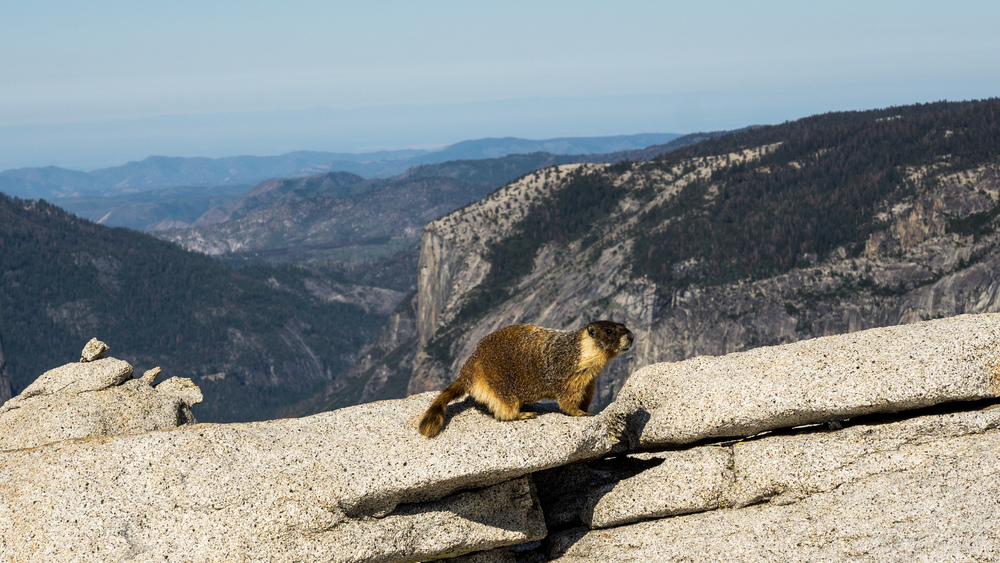
Once you have caught your breath and got your senses back from the stupendously amazing views, just retrace your steps back to Little Yosemite Valley. It’s all a walk in the park (well OK literally this whole trip is…) from here.
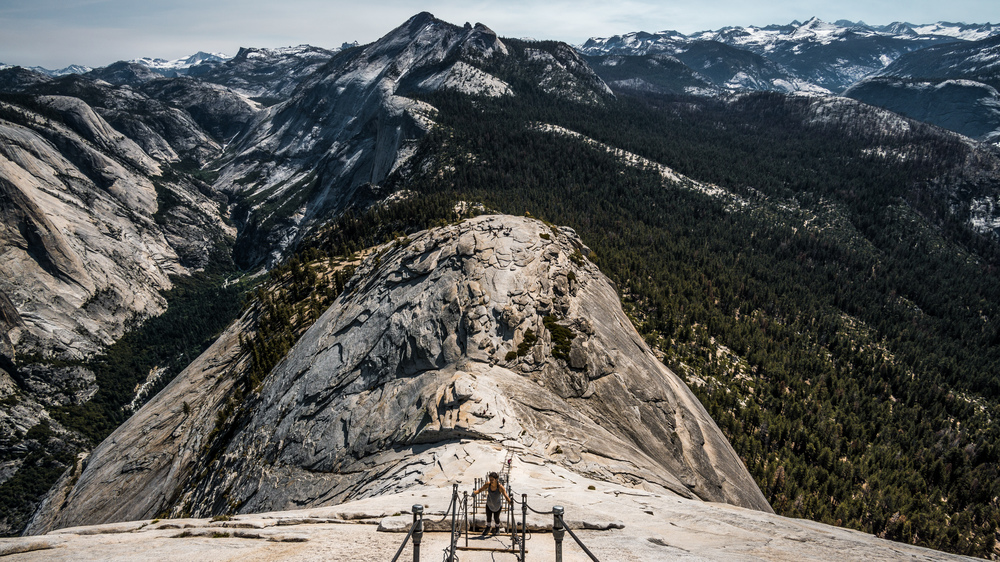
Leg 2: Little Yosemite Valley -> valley between Illilouette Ridge and Mt. Starr King
Follow the Jon Muir trail until the Panorama trail branches off, follow this one for just a short, but steep ascent through a wooded area, then take stop following the Panorama trail and instead take the trail that branches off to the left. Follow this one for one km or so, until you reach a fork in the trail, follow the left one for about 3 miles, then when you reach the next crossing at the foot of a big rock, follow the trail to the right and cross the little stream.
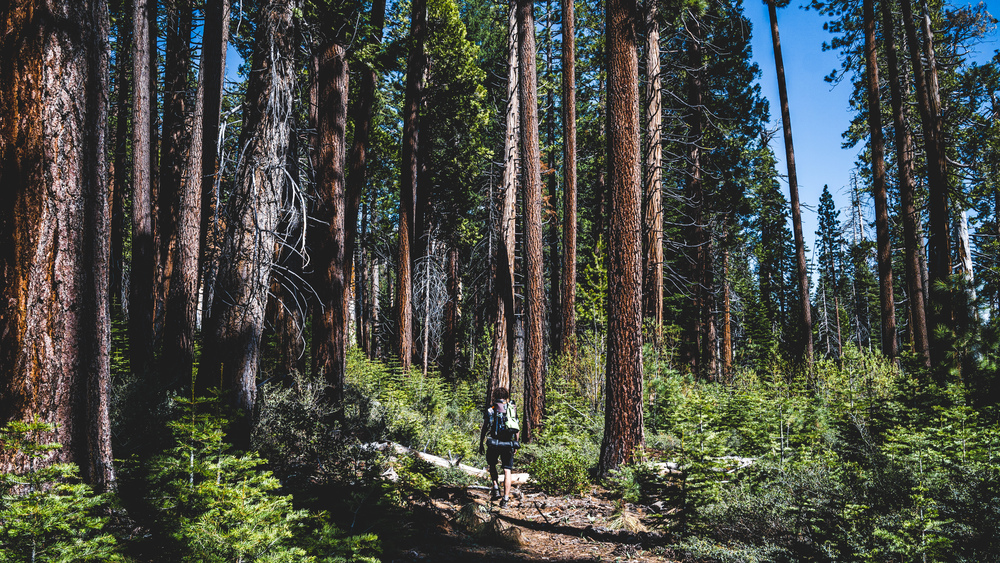
Follow this trail for about a mile until you reach a clearing with good views of the Illilouette Ridge to the West and Mount Starr King to the NE. The ground is quite sandy here.
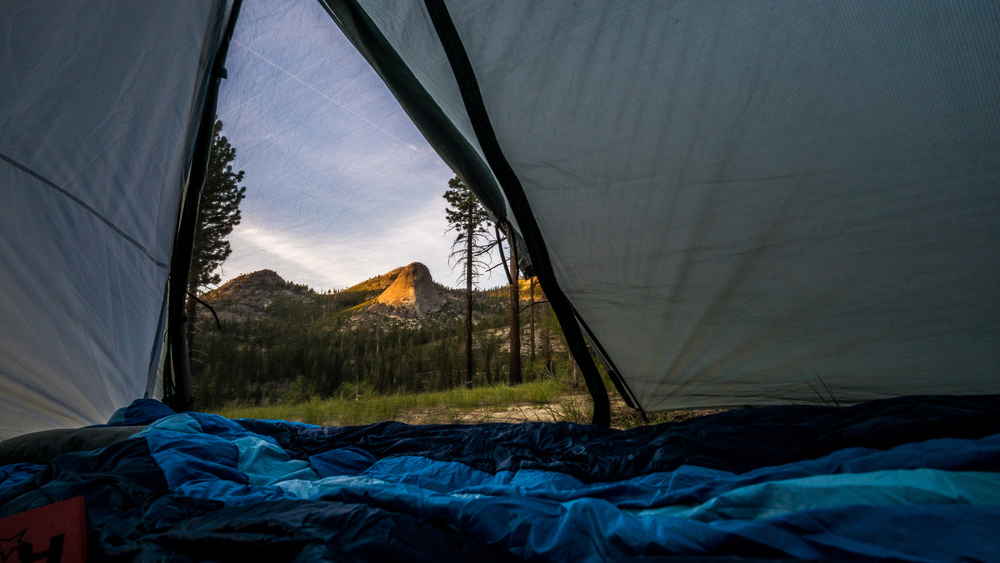
Walk a bit off the trail to the left (what we did) or the right (closer to the river) and pitch your tent here. Not too many people venture to this part of the park (I think), so you should be all by yourself at this spot. If the skies are clear you will be treated to quite a show in the night sky, as evidenced by this AMAZING time-lapse I was able to record when we did this trip (being quite the humblebrag here, I know).
Leg 3: valley between Illilouette Ridge and Mt. Starr King -> Glacier Point
Get back on the trail, at the first crossing take the trail to the left, ford the river and at the next crossing take the trail to the right. Follow this one to the end. It will merge with the Panorama trail and take you right back to Glacier Point.
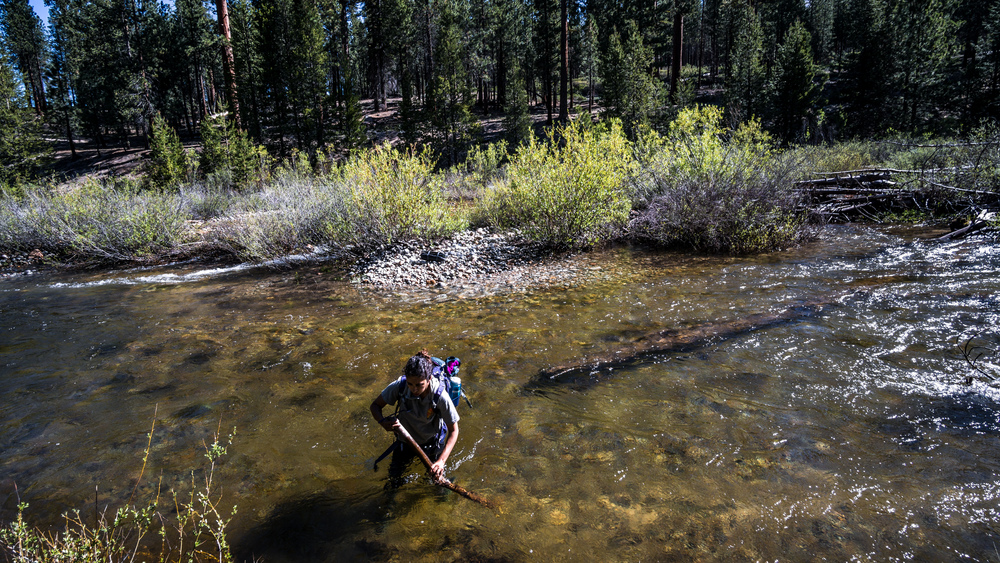
When we did this trip, in early June, the water was flowing fast and deep at the official fording point of the trail. We did not think this was safe, so headed 1/3 or 1/2 mile upstream where the river was broader and forded it there. Still the water was waist deep (and COLD) and moving swiftly, but we managed to safely cross it. If you do it in late summer or autumn, you should be fine to ford it at the designated spot.
The hike after the crossing is uphill to the finish and it will become steeper as it goes on. IF you do this in summer, expect it to be brutally hot by the time you reach Glacier Point. We went straight to the little shop they got there and got ourselves some well deserved ice creams.
Notes:
Half dome cables are only installed from Memorial Day (late May) to Columbus Day (early-mid October), so if you do this trip in winter or spring, then you can only ascend half dome with proper climbing equipment (and probably need a separate permit for that).
The data tracks below are approximate. I did not record them on my gpx watch, so retraced them using a map creation tool. They should be pretty accurate, but use with care. Since it all follows established trails, use a map and only use the location files when in doubt.
Data files (click on the links, then download whatever format you prefer from the gpsies site):
Leg 1: http://www.gpsies.com/map.do?fileId=ipfiybcwfuakamii
Half Dome ascent: http://www.gpsies.com/map.do?fileId=uneghphwfbsoluim
Leg 2: http://www.gpsies.com/map.do?fileId=kjaohyusnkcsjmad
Leg 3: http://www.gpsies.com/map.do?fileId=pxyachmcvhnyzixf
Complete route: http://www.gpsies.com/map.do?fileId=sgxgmbsfzueftato
How long?
6 days, 5 nights
(longer if you plan to stay a few days in San Francisco at the start or end of the trip — we’ve spent 3 nights there)
How many miles?
~845 miles / 1,360 km
How?
Driving (+ hiking in Yosemite)
Phone / GPS or road map recommended
Maps?
National Geographic Trails Illustrated Map #206 or #306 (for the hiking part)
Itinerary:
San Francisco -> Yosemite Valley -> Mono Lake / Lee Vining -> Glacier Point (Yosemite NP) -> Sebastopol / Sonoma Valley -> Bodega Bay -> Point Reyes -> Bolinas -> San Francisco
San Francisco:
We flew to San Francisco from NYC and spent the first 3 days and nights exploring this great city. Now like all great metropoles, a few days is hardly enough to scratch at the surface. Still, you can cover the most popular attractions.

Coit Tower is probably a good place to start your exploration as you get a pretty good idea of the city’s layout. After that is is really up to you. There are the obvious tourist attractions: Golden Gate Bridge, Alcatraz, the cable cars, the Painted Ladies, the Transamerica Pyramid, the Ferry Terminal, the sea lions at Pier 39, Twitter headquarters (really?)… If you are a fan of the beat writers, there’s a museum for it, and you can follow their steps through the city. If you are a fan of Francis Ford Coppola, be sure to stop at the Cafe Zoetrope. If you are interested in LGBTQ history and/or scene, pay a visit to the Castro District. Eat some shell fish on Fisherman’s Wharf, play antique arcade games at the Musée Mécanique, stroll through Golden Gate Park and visit some of the great museums in town — your options are endless.

While quite touristy, it is a really great idea to rent a bike to explore the city, especially if you plan to cross the Golden Gate Bridge to visit the Marin Headlands. There are so many shops in town that rent bikes, so it is quite cheap and convenient. Best of all, as this road trip will see you backpacking in Yosemite National Park in a few days’ time, you can rent bikes from a place called “Essentially Free Bike Rentals”. The deal here is that you pay for the bike rental, but then get the fee as store credit in an outfitter store called “Sports Basement”. Since you probably need some camping food, gas canister for the camping stove etc, you will definitely get that money back. And it couldn’t be easier too, since the outfitter store is bang on the route you will have to cycle if you plan to ride from downtown to Golden Gate Bridge and the Marin Headlands. If you do plan on crossing the bridge, pack a pullover or jacket as there will be wind and quite likely some fog too, so you will get cold if you are only wearing shorts and a t-shirt (I speak from experience here!).
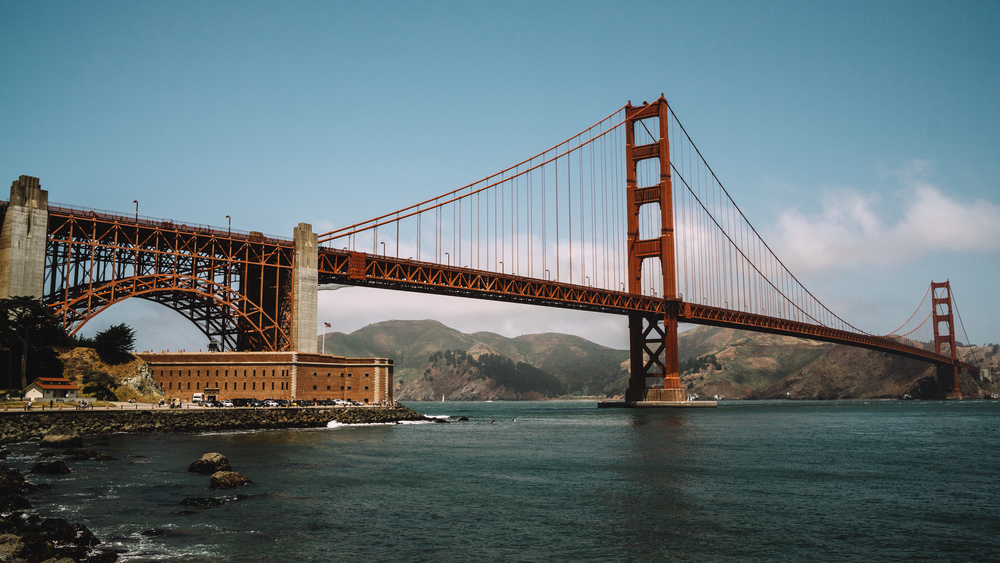
After a few days in town: escape!
Leg 1 (San Francisco -> Yosemite Valley -> Tioga Road -> Mono Lake -> Lee Vining):
When we were in town (Memorial Day weekend 2016), car rentals in town were much more expensive than at the airport, so we just took the BART train early in the morning to the airport car rental center and got our car from there. Once you got your wheels sorted, it’s time to hit the road and set course for the awesome place that are the Sierra Nevada mountains in general and Yosemite National Park in particular.
The plan for the day is easy: visit Yosemite Valley, then cross famous Tioga Road (if you are doing this trip in late May / early June: check the NPS website to make sure it has indeed opened for the season — it depends yearly on the snowfall how early the road opens) and spend sunset on the shores of otherworldly Mono Lake.
It’s a solid 4 hours of driving to get to Yosemite from San Francisco airport, but it’s a reasonably nice drive along gently rolling Californian hills. As you drive down route 120 after entering the park, you will get your first glimpse of Yosemite Valley with Half Dome at the very far end. It’s a nice view, but merely OK compared to the other views you can have in the park, so don’t go crazy yet, jumping out of your car and getting run over — be sensible!
If you are going to go for an overnight hike, don’t forget to pick up your wilderness permit from the ranger station at the park entrance. You will always be able to get permits for the night or the next few days, but if you plan to start off from some of the more popular trail heads (e.g. Happy Isles or Glacier Point) you better reserve them online in advance or they will have sold out. If you plan to include an ascent of Half Dome in your trip, then you absolutely will have to get them online, as it will be a lottery to get one at the park. The good thing about going for an overnight hike is that you can reserve the Half Dome permits to go with your wilderness permit and the reservation window for wilderness permits opens well before the day permits for Half Dome are allocated, so you will have very good chances of getting one of these coveted permits — the only condition for getting one is that your hiking route takes you reasonably close to Half Dome in the first place. Note that the cables for ascending Half Dome are only in place from late May to mid-October each year.
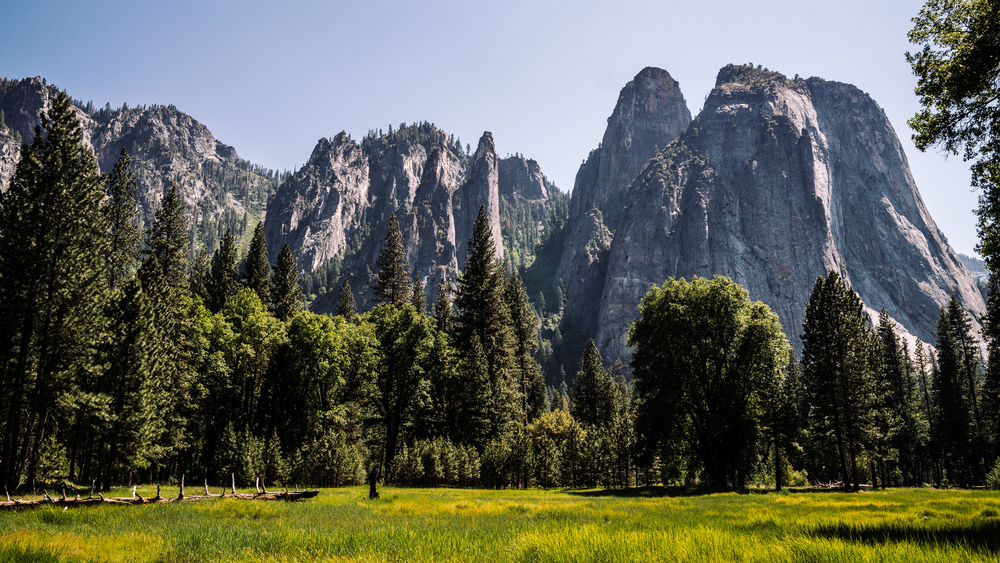
Soon enough you will come to a crossing with Big Oak Flat Road. Actually the road branching off to the left at this crossing is route 120 (also known as Tioga Road) whereas the straight road ahead of you is Big Oak Flat Road. Go straight and follow this road down to the valley floor. Here traffic is one-way and counter-clockwise. There will be two lanes for the car and camper van traffic and it is dearly needed as each year between May and October the place is flooded with people (75% of all visitors to the park come between these two months according to the NPS website). Be careful for other cars coming to abrupt stops when a turn gives way to an epic view of some mountain or waterfall and people jumping out of cars, their camera phones at the ready.
When you are in the valley, you would not believe it, but the park is huge and 95% of it is wilderness (the valley is less than 1% of total surface area). However the vast majority of its 4+ million visitors a year visit the valley only, hence why it is so crowded. That said, no matter how crowded it is, the valley is really nice and it is perfectly possible to find secluded and solitary spots on the valley floor for a nice quiet picnic with gorgeous scenery all around you.
Spend a couple of hours in the valley, have a picnic in a shady corner of the valley, have lunch at one of the park concessionaires or simply go for a short hike. If the weather and visibility are good, and you think it may be worse the next day, then before heading back to the crossing with Tioga Road, head up to Tunnel View for the classic view of Yosemite Valley that every OSX user will know quite well from their Desktop wallpaper. Otherwise, after passing Valley View, just head straight back to the Big Oak Flat Road and when you get to the crossing with route 120, take a right turn and drive up on Tioga Road. Frankly, of all the drives I have done in the US so far, Tioga Road is one of the best and most scenic drives, right up there with Beartooth Highway in the larger Yellowstone area.
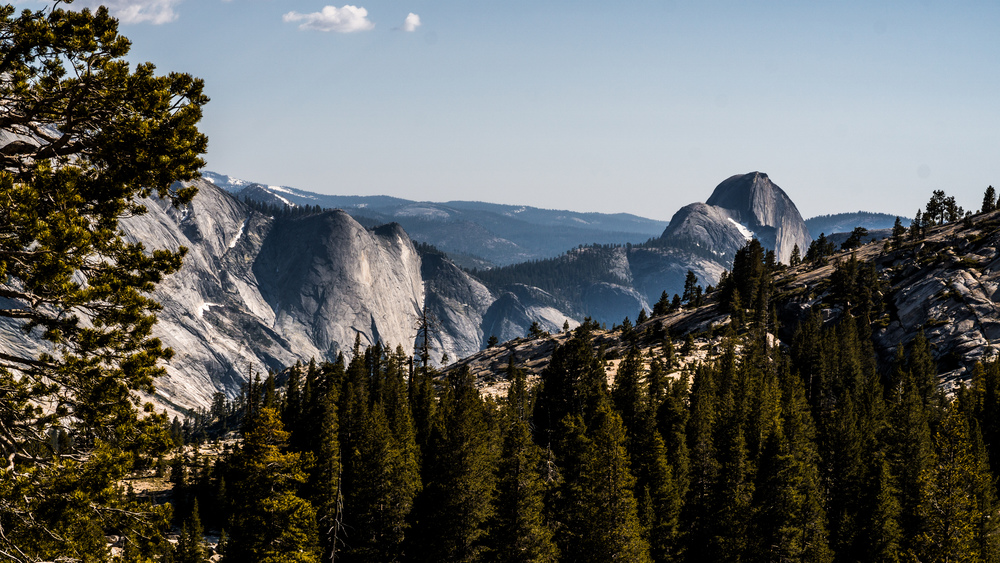
This is because Tioga road takes you up into High Sierra landscapes and over to the Eastern Sierra Nevada. The Eastern Sierra is so spectacular because the mountains rise much more dramatically on this side than they do on the western side; it’s simply one of the most beautiful sights I have every seen. The High Sierra landscape with its spectacular geology is just unbelievable. Hard to believe that these granite rocks were once just molten rock in the inner crust of the Earth, then pushed upwards by fault lines and exposed and shaped by erosion (rain, snow and glaciers) over millennia. The area around Olmsted Point, Tenaya Lake and Tuolomne Meadows is just wonderful.
Be sure to stop at Olmsted Point for some of the best views in the park and, if you have time, have a picnic here or go for a short hike. Winter lingers longer up here, so if you are visiting early in the season, be aware that there may still be snow or a lot of flooding from freshly melted snow.
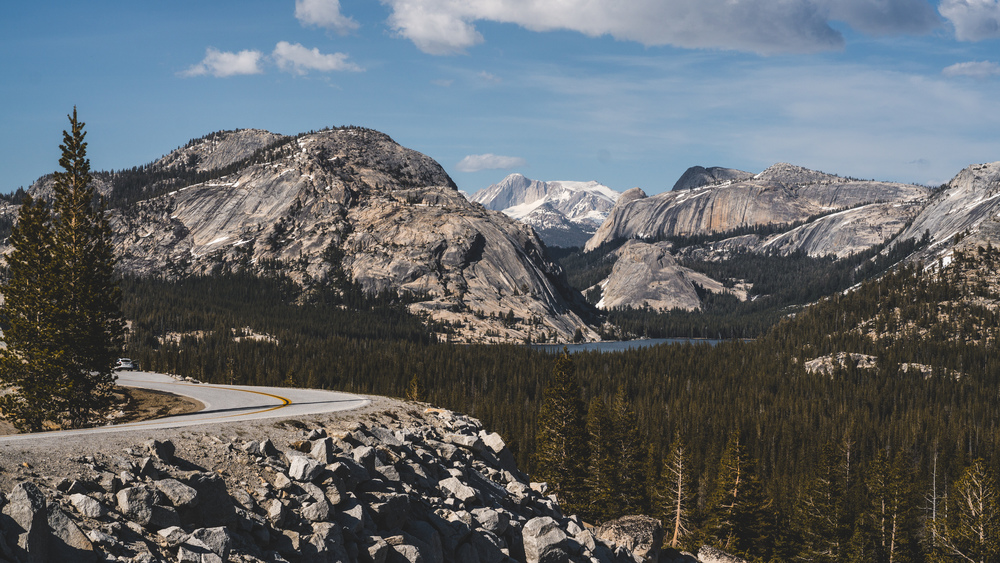
Finally, continue your drive along Tioga Road until you exit the park. As you drive down from the Sierra Nevada you will see a large lake stretching out in front of you: this is Mono Lake – your final destination for the day. You want to head straight for a place called the South Tufa Area. To get there take a right turn when you get off Tioga Road / route 120 and onto route 395. Continue for some 4-5 miles, then take a left turn back onto route 120, which now is called Mono Lake Basin Road. Follow this road for another 4-5 miles, then make another left turn onto a dirt road (Test Station Road) and this will take you to a small visitor parking lot. You will need to pay for day use permit at the ticket machine, but if you’ve got the America-The-Beautiful interagency pass, this will be accepted here — just display it in your car.
Mono Lake is a saline soda lake, which simply means that it is highly alkaline (i.e. pH > 7). Soda lakes are characterised by the relative absence of soluble magnesium or calcium (otherwise the pH would be neutral). This means that when underground, calcium-rich springs seep into Mono Lake, the calcium reacts with the carbonates of the alkaline lake water and forms limestone, which builds up as weird and beautiful columns, so-called tufas, along the water’s edge.
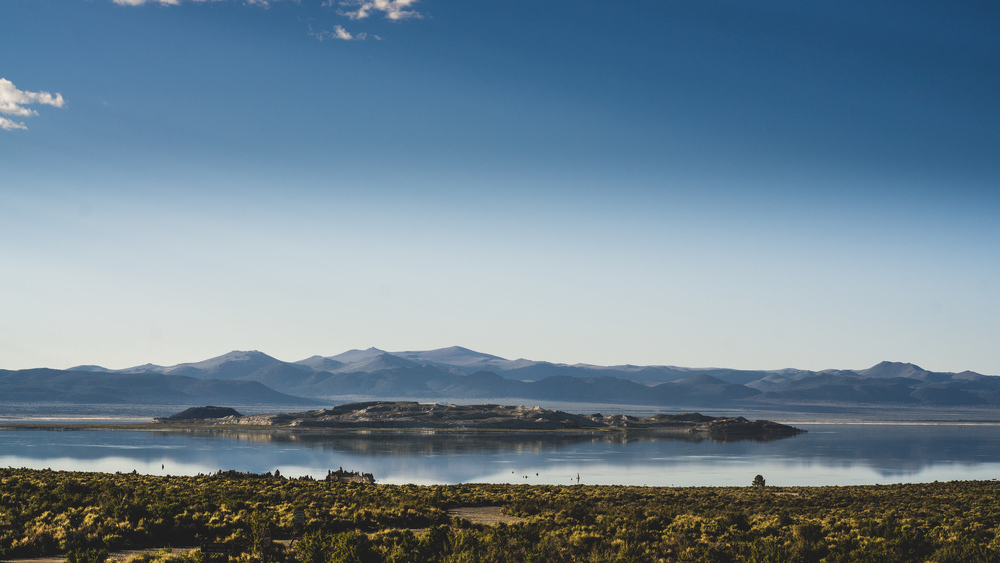
The incredible beauty of the surrounding natural scenery, together with the tufas and the calm, reflective waters account for Mono Lake’s otherworldly charm. It’s such a weird and surreal place, you really need to see it to believe it. Sunsets are spectacular here (just look at the feature image for this post!) so if you time this first part of the road trip right, you’ll be here just in time for magic hour. There are no fish in Mono Lake (the water is too salty), but there are brine shrimp here and these attract quite a lot of birds that feed on them, so if you are into birdwatching, you’ll have a good time at Mono Lake.
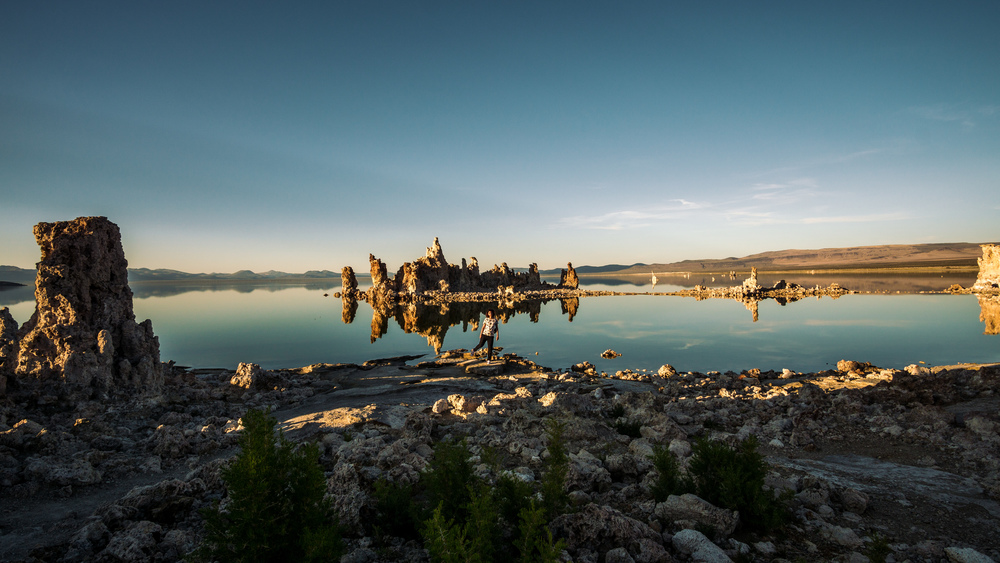
After the sun has set behind the mountains, head back to your car and drive to Lee Vining, just a few miles north along route 395. Its a small town, but there are a few good hotels here and you can get decent, low-key dinner here too.
Leg 2 (Lee Vining -> Tioga Road -> Tunnel View -> Glacier Point):
Get up early (or not — the schedule for the day is less packed, so if you are decently fast hiker, you can have a bit of a lie-in), get a good breakfast (again there are several decent places for this in town, e.g. El Mono Motel’s Latte Da Coffee Café) and get back in your car. Drive back up Tioga Road (and marvel again at the natural beauty along this road) and cross the park from east to west, then take a left turn onto Big Oak Flat Road and head back into Yosemite Valley. However, instead of driving all the way to the end of the valley, take a right turn now onto Wawona Road and head up to Glacier Point.
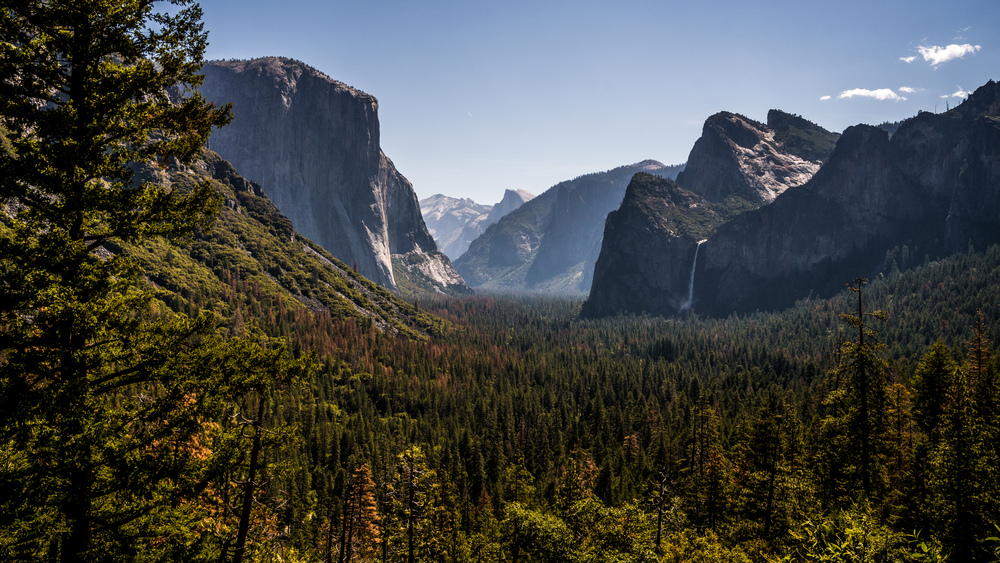
There will be several great viewpoints along the road, first of all Tunnel View, so be sure to stop and let your gaze wander. Tunnel View will be packed with people, so be patient if there is a bit of a traffic jam or if it is tricky to find a parking spot — the view is well worth it. Also watch out for people crossing the road in excitement.
Finally continue along Wawona Road, and take a left turn onto Glacier Point Road. Just before you reach Glacier Point, there will be Washburn Point to give you a little taste of the views that are to come during your backpacking trip.
Once at Glacier Point, get your backpack ready, be sure to leave all food and other smelly articles in a dated bag inside one of the bear storage boxes in the parking lot (or risk finding your car’s door torn open by a hungry bear on a midnight food binge) and set off hiking for a couple of days!
Backpacking trip in Yosemite NP (Glacier Point -> Little Yosemite Valley -> Half Dome -> Illilouette Ridge / Mount Starr King -> Glacier Point):
This is a fact: there are about 4 million (tendency rising) visitors to Yosemite National Park each year, but only some 56,000 (or about 1.4% of visitors) will actually go on an overnight hike. Considering how large the park is, unless you venture only to Little Yosemite Valley (which has a backpackers campground) you are guaranteed to find solitude, even at the peak of the summer season. So don’t miss this opportunity to get away from it all and pack your tent and hike out!
I have written up our 3-day, 2-night backpacking trip as a post of its own, so please refer to that post for this section of the road trip. I have also posted my best effort yet of capturing timelapse footage of the Milky Way rising in the night sky — just so you know what you can hope to see in the Yosemite wilderness.
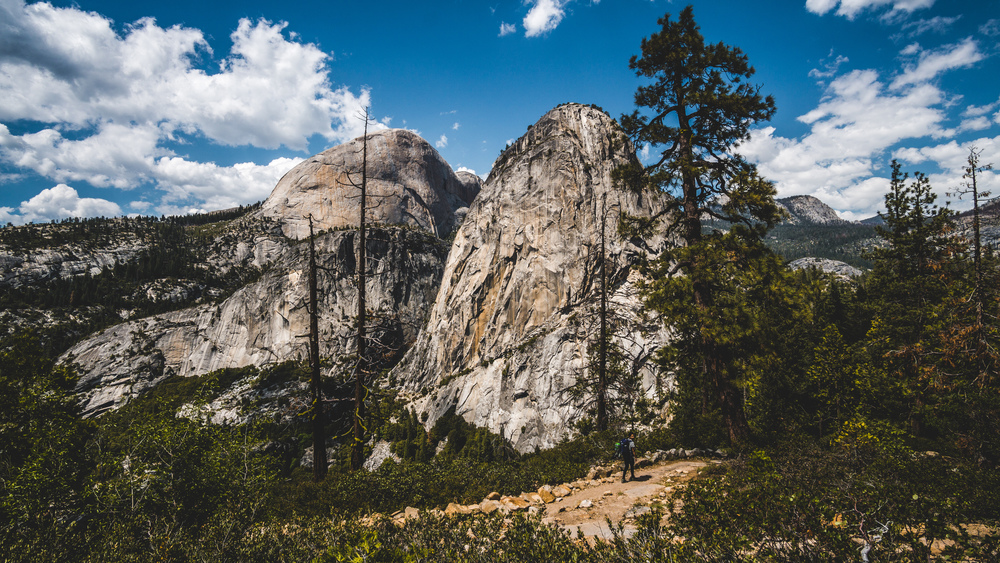
Leg 3 (Glacier Point -> Sebastopol):
Three days after setting off, you will probably get back to your car for lunch time at the earliest and you will be exhausted (it’s a mercilessly uphill and exposed hike back up to Glacier Point). So take the time to freshen up a bit, changing into a new set of clothes and having a good cool drink or ice cream from the concessionaire store at Glacier Point.
This leg of the road trip will be the longest drive of the entire trip, and since you will probably be fairly tired from the 3 day backpacking trip that preceded, whoever is driving will find it the toughest too. Anybody else who has joined you for this trip will probably just happily doze off in the car.
Once you get to Sebastopol (or some other town in the Sonoma or Napa valleys), relax, take a shower and go out for a well earned dinner and go to bed early (or hit a bar and have a beer).
Leg 4 (Sonoma Valley exploration):
So after a couple of days of hiking and plenty of driving, take it easy the next day, get up late, then head to either Sonoma Valley or Napa Valley, rent a bike (or not, if you plan on getting stopped for a DUI) and go wine tasting! We rented bikes in Healdsburg, then cycled up West Dry Creek Road and stopped at several wineries that the bike shop had recommended to us (I don’t think they got kickbacks for this advice). If you are really serious about your wine, then you probably want to have researched this part of the trip as not all wine estates accept visitors without reservations (though in most cases all you need to do is phone the number on the sign, then come back half an hour later or so…).
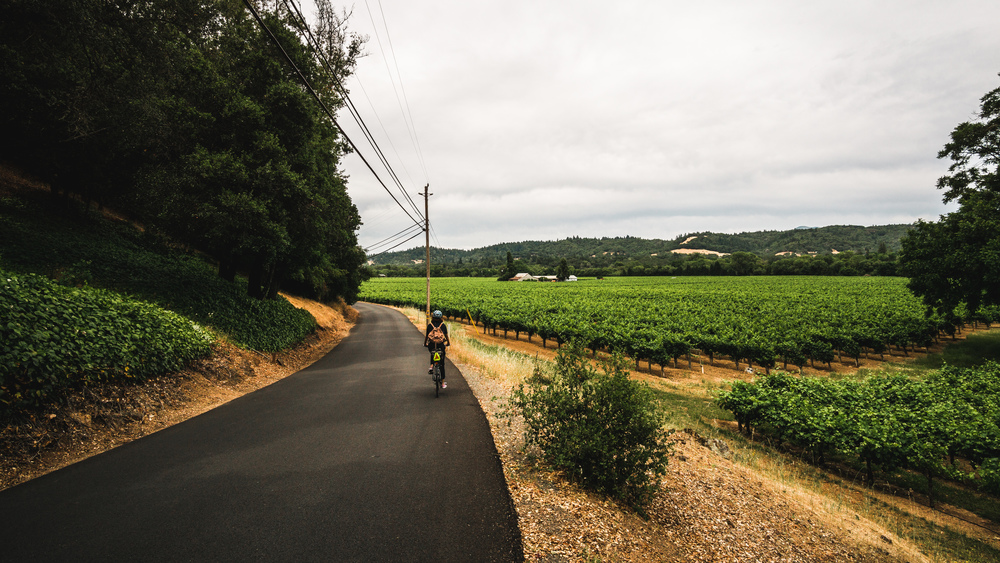
The roads were pretty quiet, with much fewer drunk drivers than I thought there would be (it was a Saturday when we did this trip). The cycling is easy, along gently rolling hills with the wine plantations right along the road.
You can have a decent lunch sandwich from the deli at the Cry Creek General Store (busy!) and enjoy a very relaxed day out on the bike here.

Now, if the first thing you did in San Francisco was to visit the Zoetrope building, then you probably definitely want to reserve a table for dinner at Francis Ford Coppola’s wine estate (just north of Healdsburg). It’s quite a good business he’s got here: a winery with an hotel, a pool, several bars, a restaurant and a museum. It is a pleasant corner of the world, the weather is good, you can play a game of Bocce (if you know how) and visit the museum. There is the original desk that Marlon Brando’s godfather sat at, there is the cavalry Stetson hat (or at least one of the several that were used during filming) that Robert Duvall’s napalm sniffing Kilgore wore in Apocalypse Now and plenty of other props and artifacts from Coppola’s films. There also seems to be a gift shop every five meters, but don’t let that distract you and the museum is free anyway.
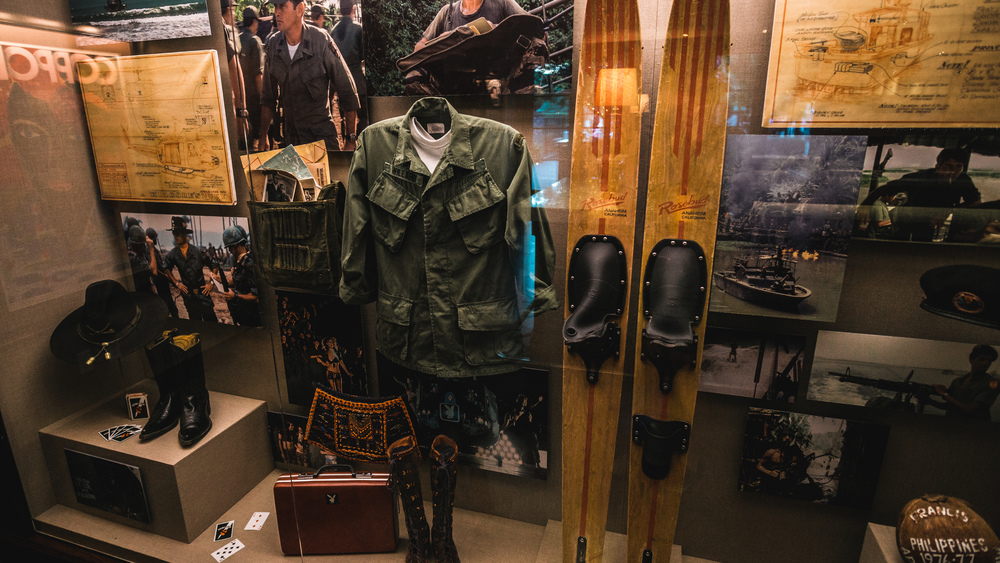
The restaurant, though a bit posh and on the expensive side, is very good and I definitely recommend the roasted rack of lamb. Have a nice, relaxed evening.
Leg 5 (Sebastopol -> Bodega Bay -> Point Reyes -> Bolinas -> San Francisco):
For the final leg of the trip, get up early again: there is plenty to do. From Sebastopol (or wherever you sat up shop in the wine country) head west to the Pacific coast. Drive to Bodega Bay (again if you are a film buff, this will be right up your alley: much of Hitchcock’s The Birds was shot here and on locations nearby). If you have not yet had breakfast, have some in town and then head up to Bodega Head for a nice short walk along the cliffs and, if you are lucky (we were not), some whale sightings.
After Bodega Bay get onto Highway 1 (yes this is the famous Pacific coastal highway, but really it is the Big Sur section between San Francisco and Los Angeles that is the most spectacular) and drive south the Point Reyes National Seashore. Along the road there will be several very good seafood shacks, so be sure to stop and have a bite. If it is weekend and lunch time when you get through here, be aware that it will be quite busy.
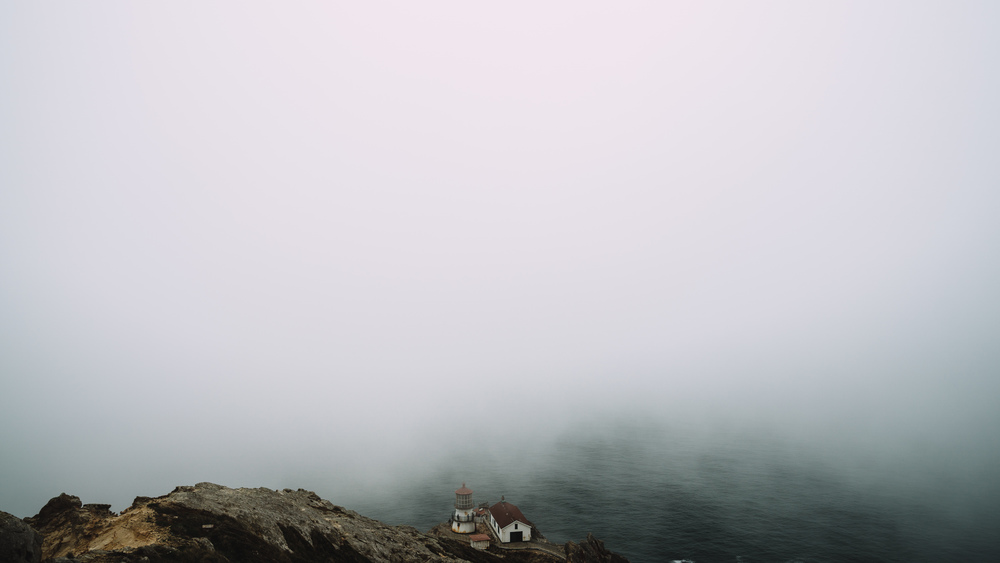
Point Reyes National Seashore has good hiking and spectacular wild, hike-in beaches to offer and there is nice lighthouse at the tip of the peninsula. This happens to be the foggiest spot in the US, so even if the sky looks clear when you are down near Tomales Bay, it may be quite a different story up at the lighthouse. There are also good spots to see sea lions and elephant seals on Point Reyes, so bring your binoculars.
Finally continue south towards San Francisco. There is a nice little seaside village that you can have an early dinner at: Bolinas. It’s a short detour off Highway 1 at the southern end of the Point Reyes peninsula, but there is no posted sign as the villagers kept stealing it. The local authorities no longer bother to put another one up and so the town has acquired a bit of a reputation as a reclusive community. However when we visited, the local folk were very friendly and there is even a small town museum, which presumably is still catering to tourists.
After your visit to Bolinas, keep going south. If you are still good in time, you can stop to visit Mt. Tamalpais (aka Mt. Tam). Otherwise continue south and cross the Golden Gate Bridge (you will have to pay for the tolls, but you get the bill in the mail as it is totally automated), then continue to San Francisco airport (or head into town if you are planning to add a few days here).
Final notes:
This was one of the best road trips I’ve done in the US so far, so I would not change much. It’s got a good balance of city trip, outdoor adventure and spoiling yourself / wine tasting. As with all trips, feel free to change where you stay for the nights, where or how long you hike out into the wilderness etc etc etc. If you have a few extra days at your disposal, I would add visits to Kings Canyon and Sequoia National Parks and maybe a detour south of San Francisco to Moss Landing (to see sea otters), Monterey and Big Sur.
Data files (click on the link, then download whatever format you prefer from the gpsies website):
Leg 1 (San Francisco, Yosemite Valley, Tioga Road, Mono Lake, Lee Vining): http://www.gpsies.com/map.do?fileId=gmjxwsxhlgwgahzg
Leg 2 (Lee Vining, Tioga Road, Glacier Point): http://www.gpsies.com/map.do?fileId=spckqiuwbglfiban
Leg 3 (Glacier Point, Sebastopol): http://www.gpsies.com/map.do?fileId=bifzusgwdbdhvikh
Leg 4 (Sonoma Valley exploration): http://www.gpsies.com/map.do?fileId=jupcojbdbrhcrese
Leg 5 (Sebastopol, Bodega Bay, Point Reyes, Bolinas, San Francisco): http://www.gpsies.com/map.do?fileId=kbtjdbzwjecamwuq
Complete Route: http://www.gpsies.com/map.do?fileId=ntngjbosehuibugd